Our Blogs
- Home
- Blog
How We've Empowered
Businesses
with InnovativeTech Solutions
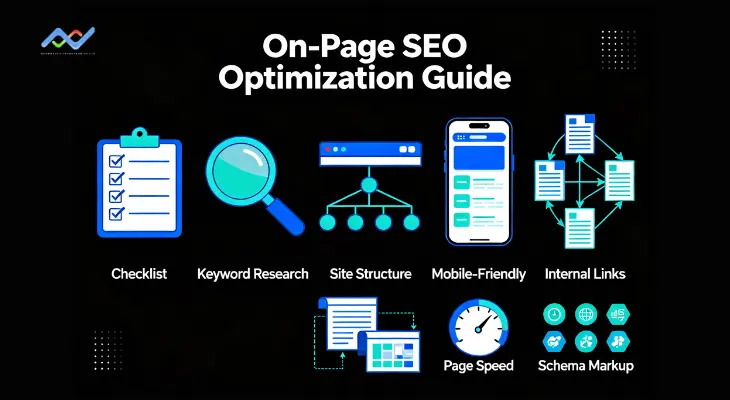
On-Page SEO Activities List You Must Follow for Higher Google Rankings
Want your website to rank higher on Google in 2025? On-page SEO is your most powerful tool for controlling how search engines understand and rank your content. While many website owners chase backlinks and social signals, they often overlook the foundational elements right under their fingertips, the content and structure of their own web pages. This comprehensive guide walks you through every essential on-page SEO activity that actually moves the needle. We'll cover everything from keyword research and title tag optimization to schema markup and user engagement strategies. Whether you're a beginner or looking to sharpen your existing skills, these actionable techniques will help you climb the rankings and attract more qualified traffic. What Is On-Page SEO and Why Should You Care? On-page SEO refers to all the actions you take directly on your website to improve its visibility in search results. This includes optimizing your page titles, meta descriptions, header tags, content structure, internal links, image alt text, and URL structure. Unlike off-page SEO, which focuses on building authority through external activities like backlinks and social media marketing, on-page SEO gives you complete control. Here's the key difference you need to understand: On-page SEO targets the internal quality of your webpage, its structure, and user experience. In contrast, off-page SEO increases your site's credibility through external activities like earning backlinks and building brand mentions. You need both, but on-page SEO is where you start because it's the foundation that everything else builds upon. When you optimize your on-page elements correctly, you achieve three critical outcomes. First, search engines can better crawl and understand your content. Second, users find what they're looking for faster, which improves engagement. Third, your pages become eligible for rich results and featured snippets that dramatically increase visibility. Why Does On-Page SEO Matter More Than Ever in 2025? Google is focusing more than ever on helpful content, semantic search, page experience, and user intent. The March 2025 Helpful Content Update reinforced Google's commitment to people-first content, making on-page optimization essential for aligning with these expectations. Consider these ranking factors that depend on on-page SEO: According to recent analysis, consistent publication of high-quality content accounts for approximately 23% of Google's ranking algorithm, while keyword optimization in meta titles accounts for approximately 14%. Searcher engagement, which on-page SEO directly influences, accounts for about 12%. These aren't minor factors; they're the backbone of how Google decides which pages deserve top positions. Click-through rate matters because it signals to search engines that your page is relevant and engaging. When users click your result and stay on your page, Google interprets this as a positive signal. Conversely, high bounce rates can hurt your rankings because they suggest your content didn't satisfy the search intent. The rise of AI-driven search has made structured, well-organized content even more valuable. Search engines now prioritize content that's easy for both humans and algorithms to parse. Your on-page SEO determines whether AI systems can accurately understand and cite your content. How Do You Conduct Keyword Research and Match Search Intent? Effective keyword research is the foundation of every successful on-page SEO strategy. But in 2025, it's not enough to just find high-volume keywords; you must understand the intent behind them. The four types of search intent you need to recognize: Informational intent: The user wants to learn something, such as "how to paint a house." Navigational intent: The user seeks a specific website or brand, like "Home Depot paint section." Transactional intent: The user is ready to buy, such as "buy paint online." Commercial intent: The user is comparing options, like "best paint brand for interiors." Understanding intent helps you create content that truly satisfies users' needs. Long-tail keywords often reveal intent more clearly because they're more specific. For example, "cheap hotels in Goa with sea view" signals transactional intent, while "how to choose the right running shoes" indicates informational intent. Where to place your keywords for maximum impact: Your primary keyword should appear in your title tag, URL, H1 heading, first paragraph, and throughout your subheadings. Google scans these sections to understand your page's topic, and readers will quickly see if your content meets their needs. However, avoid keyword stuffing; use keywords naturally where they make sense to human readers. LSI (Latent Semantic Indexing) keywords, related terms, and synonyms help search engines understand context. If you're writing about "Paris," including semantic keywords such as "Capital City of France," "City of Love," and "Eiffel Tower" helps Google understand you're discussing the city, not something else. What Makes an SEO-Friendly Title Tag That Drives Clicks? Your title tag is arguably the most important on-page SEO element because it's the first thing users see in search results. A compelling title tag can dramatically improve your click-through rate, which indirectly boosts your rankings. Here are the rules for crafting perfect title tags: Keep your title under 60 characters to ensure it displays correctly without truncation. Place your primary keyword at the beginning of the title. This grabs attention and signals relevance to search engines. According to Moz, title tags that start with a keyword tend to perform better than those that place the keyword at the end. Use power words to increase CTR. Emotional words like "ultimate," "essential," "proven," and "fast" inspire curiosity and urgency. Numbers work exceptionally well. "10 Tips" or "7 Steps" help users set expectations. Questions in titles can align your content with "People Also Ask" boxes and voice search queries. Avoid over-optimized titles that look spammy. Instead of "Cheap Holidays and Cheap Trips to New York | Book Cheap Flights Today," aim for something cleaner like "Book Cheap Holidays & Flights to New York Today | Tripster". The second version is more readable and trustworthy. Include your brand name when it adds value, typically at the end of the title, separated by a pipe (|) or dash. This reinforces brand recognition without sacrificing keyword placement. How Do You Write a Compelling Meta Description That Converts? Your meta description is the short blurb that appears under your title in search results. While it doesn't directly impact rankings, a well-crafted meta description significantly influences click-through rates and user engagement. The formula for compelling meta descriptions: Keep your meta description between 150 and 160 characters so it displays fully in Google. Include your primary keyword. Google often bolds keywords that match the user's search, making your listing stand out. Start with action verbs like "Learn," "Discover," or "Find out" to encourage clicks. Most importantly, include a clear call to action. Phrases like "try for free," "learn more," or "get started today" motivate users to click. Clearly mention the benefit or solution your page offers, so users know what's in it for them. Here's something interesting: Google rewrites an estimated 60-70% of meta descriptions to match user queries better. However, well-written descriptions aligned with search intent are more likely to be preserved. Focus on context and answering specific questions, especially with the rise of voice search and AI tools. As schema markup becomes more critical, your meta description should work alongside structured data to create rich, informative search results. Entity-based descriptions that reflect people, places, or things relevant to your page help Google connect topics. What's the Best Way to Structure Header Tags for SEO? Header tags (H1, H2, H3, etc.) create a clear hierarchy that helps both search engines and users understand your content structure. Think of them as the skeleton of your page; they organize information and make it easier to scan. Follow these header tag best practices: Use only one H1 tag per page, and include your primary keyword in it. Your H1 should clearly state what the page covers. Then use H2 tags for main sections and H3 tags for subsections within those sections. This logical structure guides readers through your content and helps Google understand the relationships between topics. Use LSI keywords and related terms in your subheadings. This reinforces your page's topical relevance without keyword stuffing. For example, if your H1 is "Complete Guide to On-Page SEO," your H2s might include "Keyword Research Strategies," "Title Tag Optimization," and "Content Structure Best Practices." Most website visitors scan rather than read every word. Clear, descriptive headers act as signposts guiding them to relevant information. "Our Quality Assurance Process for Medical Devices" is much more helpful than just "Quality Assurance" because it tells readers exactly what they'll learn. Maintain a logical flow, don't skip from H1 to H4 without the intermediate levels. This consistency helps search engine crawlers understand your content hierarchy and improves accessibility for screen readers. How Do You Create High-Quality, Helpful Content That Ranks? Google's Helpful Content System prioritizes content that genuinely helps users over content created primarily for search engines. In 2025, this means your content must demonstrate E-E-A-T: Experience, Expertise, Authoritativeness, and Trustworthiness. What does high-quality content look like? Aim for comprehensive coverage. Studies show that the average first-page Google result contains about 1,400 words. However, length alone isn't enough. Your content must satisfy search intent by providing the information users are actually looking for. Add factual insights, step-by-step instructions, real examples, and original perspectives that go beyond what AI-generated content typically offers. Focus on depth and context rather than keyword density. Google uses sophisticated semantic understanding to evaluate whether your page covers a topic thoroughly. Pages that address every angle of a topic have an edge over pages that only cover it partially. Include elements that demonstrate expertise: Case studies and real-world examples Original research and data Expert quotes and citations Before-and-after results Video testimonials and visual proof Avoid keyword stuffing. Google penalizes content that unnaturally forces keywords into text. Instead, write naturally and let keywords flow where they make sense. The goal is content that reads well to humans while being optimized for search engines. Update your content regularly to maintain accuracy and freshness. Outdated information signals to Google that your page may no longer be the best result for a query. What's the Ideal URL Structure for SEO? Your URL structure affects both the user experience and the search engine's understanding of your pages. Clean, descriptive URLs improve click-through rates and help Google determine what your page is about. Follow these URL optimization rules: Keep URLs short, simple, and keyword-focused. Remove unnecessary words like "the," "and," "a," and "an" to make URLs more readable. For example, "yoursite.com/blog/pet-obesity-prevention" is better than "yoursite.com/blog/2018/10/18/obesity-in-our-pets-an-ounce-of-prevention-is-worth-a-pound-of-cure". Use hyphens to separate words, never underscores or spaces. Hyphens are recognized as word separators by search engines, while underscores are not. Stick with lowercase letters to avoid duplicate content issues and redirect problems. Include your target keyword in the URL, but don't stuff multiple keywords. One or two relevant keywords are sufficient. Avoid complex parameters and dynamic URLs when possible; they're harder for users to read and remember. Use HTTPS rather than HTTP. Google has confirmed that site security is a ranking factor, and users trust secure sites more. If you haven't already, migrate your site to HTTPS. How Should You Optimize Images and Alt Text? Images make your content more engaging, but they also present SEO opportunities that many websites miss. Proper image optimization improves your chances of ranking in Google Image search and helps search engines understand your page content. Essential image optimization steps: Compress your images before uploading to reduce file sizes without sacrificing quality. Large images slow down your pages, which hurts both user experience and rankings. Use modern formats like WebP for better compression. Write descriptive alt text for every image. Alt text serves multiple purposes: it describes images to visually impaired users, displays when images fail to load, and helps search engines understand image content. Google places relatively high value on alt text when determining what images are about and how they relate to the surrounding content. Include your focus keyword in alt text where it's appropriate, but don't force it into every image. If your keyword doesn't naturally describe the image, use a semantic variation instead. For example, if your focus keyphrase is "writing image SEO alt text," you might use "optimizing image alt text for SEO" in your alt text. Keep alt text under 125 characters. Too-long descriptions are complex for screen readers and not optimal for search engines. Be specific and descriptive rather than generic. "Woman optimizing WordPress website for SEO" is better than just "Woman at computer". What's the Best Internal Linking Strategy for SEO? Internal links connect your pages, distribute authority throughout your site, and help search engines discover and index your content. A strong internal linking strategy can significantly boost your rankings. How to build an effective internal linking structure: Link to 4-6 relevant pages from each piece of content. Use keyword-rich anchor text that clearly describes the destination page. Instead of "click here," use descriptive text such as "internal linking best practices" to link to a page on that topic. Organize your content into topic clusters with a central pillar page and supporting internal pages. This approach signals topical depth and authority to search engines. For example, a leading "On-Page SEO Guide" might link to supporting articles on keyword research, meta descriptions, and image optimization. Interlink both new and old pages immediately after publication: Include at least two internal links when creating a new page Find older, related content and link back to the new page you created This practice helps new content get indexed faster and distributes link equity across your site. Avoid orphan pages every significant page should have at least one internal link pointing to it. Use internal links to guide visitors through a journey on your site. When someone reads about keyword research, they might naturally want to learn about on-page optimization next. Strategic internal linking keeps users engaged longer and reduces bounce rates. How Do You Optimize Content Readability for Better Rankings? Readability isn't just about making content pleasant to read it directly affects SEO through user engagement metrics. Content that's easy to understand keeps visitors on your page longer, reducing bounce rates and signaling quality to search engines. What makes content readable: Use short sentences and simple language. Avoid jargon unless your audience expects technical terminology. Google prefers content with a reading level between Grade 6 and 9 for featured snippets and voice search responses. Tools like Hemingway Editor and Grammarly can help you assess and improve readability. Structure your content for scanning: Use short paragraphs (1-3 sentences) Add bullet points and numbered lists for steps or features Include relevant visuals to break up text blocks Use bold and italics to emphasize key points Avoid long, monotonous blocks of text. Visual variety images, graphs, quotes, and info boxes prevents visitors from leaving too soon and encourages them to continue reading. Short paragraphs, bold text, and clear formatting improve the overall user experience. Readability is both a direct and indirect ranking factor. Google's algorithms can assess content complexity, and simple, grammatically correct content tends to perform better for most queries. High readability also improves dwell time and reduces bounce rates behavioral signals that influence rankings. Why Is Page Speed Critical for SEO Success? Page speed directly impacts your rankings and user experience. Google has confirmed that slow-loading pages are less likely to rank well, and studies show users abandon pages that take more than three seconds to load. Key metrics to optimize: Focus on Core Web Vitals, which Google uses as ranking signals: Largest Contentful Paint (LCP): Main content should load within 2.5 seconds Interaction to Next Paint (INP): Pages should respond quickly to user interactions Cumulative Layout Shift (CLS): Visual elements shouldn't jump around during loading Practical steps to improve page speed: Compress images and use modern formats like WebP. Enable browser caching so returning visitors load pages faster. Use a Content Delivery Network (CDN) to serve content from servers closer to your users' physical locations. Minify JavaScript, CSS, and HTML to reduce file sizes. Remove unused code and defer non-essential scripts. These technical optimizations can dramatically improve loading times. One performance marketing agency reported that fixing Core Web Vitals for a client increased page 1 rankings by 28%. Another site saw Google impressions increase by 300% after improving its Core Web Vitals scores. Speed matters invest time in optimization. How Important Is Mobile-Friendliness for SEO in 2025? Mobile optimization isn't optional it's essential. Google uses mobile-first indexing, meaning it primarily uses the mobile version of your pages for indexing and ranking. If your site doesn't perform well on mobile devices, your rankings will suffer regardless of desktop performance. What mobile-friendly optimization requires: Ensure a responsive design that adapts to all screen sizes without horizontal scrolling. Test your site with Google's Mobile-Friendly Test to identify issues. Key mobile SEO best practices include fast-loading pages, easy navigation, and clear calls to action. Avoid plugins like Flash that don't work on mobile devices. Make font sizes readable without zooming, and ensure tap targets (buttons and links) are large enough to tap accurately. Simple, vertical navigation works better than complex dropdown menus on mobile. Mobile users behave differently from desktop users. They're typically looking to achieve a goal quickly find information, make a purchase, or locate a business. Design your mobile experience to facilitate these goals with minimal friction. Sites that don't optimize for mobile experience reduced visibility in search results because Google can't properly index content that isn't mobile-accessible. A study found that sites that were not mobile-friendly before Google's mobile update saw a 50%+ reduction in traffic. What Is Schema Markup and How Does It Boost SEO? Schema markup is structured data code that helps search engines understand your content's meaning and relationships. While it doesn't directly improve rankings, it enables rich results those enhanced search listings with stars, prices, images, or FAQ dropdowns that dramatically increase click-through rates. The most valuable schema types for SEO: Article Schema: Helps Google understand news articles and blog posts FAQ Schema: Displays expandable questions and answers in search results Product Schema: Shows prices, availability, and reviews for e-commerce Local Business Schema: Displays address, hours, and reviews for physical businesses How-To Schema: Creates step-by-step visual guides in search results Implementing the FAQ schema on key landing pages can increase organic traffic by 20%+ and improve CTR through rich snippets. Even when rich results aren't displayed, structured data helps search engines better understand and rank your content. Use JSON-LD for schema markup; it's Google's recommended format and the most straightforward to implement. Place the code in your website's header or footer without interrupting your visible page content. Tools like Google's Structured Data Testing Tool can validate your implementation. In the AI-driven search landscape of 2025, schema markup has become even more critical. AI systems use structured data to understand entities, relationships, and key facts, making properly marked-up content more likely to be cited in AI-generated responses. How Do You Optimize for User Engagement and CTAs? User engagement signals such as time on page, scroll depth, and interaction rates shape how Google evaluates your content. High engagement tells search engines that your content satisfies user intent. Strategies to boost engagement: Add clear calls to action (CTAs) throughout your content. Tell readers what to do next "Download our free checklist," "Start your free trial," or "Contact us for a consultation". Well-crafted CTAs guide users through your conversion funnel and reduce bounce rates. Include FAQ sections to answer common questions and keep users engaged longer. FAQ content captures long-tail keywords, voice search queries, and featured snippets. Properly structured FAQs can get "34% more visibility" than standard text blocks. Make your content interactive: Ask questions that encourage comments Include downloadable resources Embed relevant videos Add social sharing buttons Use interactive elements like calculators or quizzes Monitor your bounce rate and average engagement time. High bounce rates may signal that content doesn't match search intent or that page layout fails to guide readers forward. Lower bounce rates indicate better user experience and can positively impact rankings. Remember that engagement metrics matter more than ever as Google prioritizes helpful content. When visitors stay, interact, and explore your site, you're sending all the right signals to search engines. Your On-Page SEO Action Plan? You now have a complete roadmap for optimizing every on-page element that impacts your Google rankings. The key is consistent implementation don't try to fix everything at once, but prioritize based on impact. Start with these high-priority actions: Audit your title tags and meta descriptions for keyword placement and compelling copy Review your header structure to ensure logical hierarchy with H1, H2, and H3 tags Check page speed using Google PageSpeed Insights and address critical issues Verify mobile-friendliness with Google's Mobile-Friendly Test Add schema markup to your most important pages On-page SEO isn't a one-time task it's an ongoing process of optimization and refinement. As Google's algorithms evolve, your approach should too. Regular content updates, continuous monitoring of engagement metrics, and staying up to date with SEO best practices will keep your rankings strong. Ready to improve your search visibility? Start implementing these on-page SEO activities today. Pick one section of this guide, apply the recommendations to your most important pages, and measure the results. With consistent effort, you'll see your rankings climb and your organic traffic grow.

Off Page SEO Checklist 2025 to boost Backlinks, Trust & Better Search Rankings?
Remember the days when you could stuff keywords into a webpage and watch it climb to the top of Google? Those days are long gone. In 2025, the search landscape has evolved into something far more sophisticated and, honestly, far more human. If your website feels invisible despite all your hard work, you're not alone. The truth is, what happens outside your website now matters just as much as what's on it. This is where off-page SEO becomes your secret weapon, the bridge between obscurity and visibility, between being ignored and being trusted. Let me walk you through everything you need to know to transform your online presence this year. By the end of this guide, you'll have a clear roadmap to build the authority, credibility, and connections that Google desperately wants to reward. Why Off-Page SEO Matters More Than Ever in 2025? The internet has changed. Every minute, thousands of new pages are published, artificial intelligence generates mountains of content, and users have become increasingly sceptical about what they read online. Google responded to this chaos by fundamentally shifting how it evaluates websites. Here's the reality: 94% of all online content receives zero external backlinks, and only 2.2% acquire links from multiple websites. This statistic should shake you awake. It means the vast majority of content creators are essentially shouting into a void, while a small percentage captures most of the attention and traffic. The search giant's AI-powered systems now weigh consistent publication of satisfying content at 23%, followed by backlinks at 13% and niche expertise at 13%. Clearly explain how off-page signals influence your search rankings and visibility, giving your audience confidence in their efforts. The search giant's AI-powered systems now examine not just whether links exist, but the intent and context behind them. They ask questions like: Does this link sit naturally within the content? Is the linking Site trusted and user-friendly? Do users actually engage after clicking? Ensuring your off-page strategies focus on high-quality, relevant sources helps maintain your website's authority and avoid penalties. Engage with online communities and industry groups to build relationships and demonstrate your credibility, helping your audience feel supported and connected in their SEO journey. The Numbers That Should Change How You Think About SEO It include tracking your efforts to see tangible progress, giving your audience confidence in their strategies and clarity on what works. Metrics such as backlink quality, referral traffic, and brand mentions are essential for evaluating your off-page SEO performance and ensuring your efforts lead to measurable results. Statistic What It Means Top-ranking pages have 3.8x more backlinks than pages ranked 2-10 Quality links are non-negotiable for top positions Long-form content (3,000+ words) attracts 3.5x more backlinks Depth and thoroughness earn links naturally 52.3% of marketers consider link building the most challenging SEO aspect You're not alone in struggling with this 93.8% of link builders prioritize quality over quantity One great link beats ten mediocre ones 66.5% of all backlinks are broken or inactive The link landscape is constantly shifting Average backlink costs $361.44 Quality link acquisition requires investment High-Authority Backlink Building is the Foundation of SEO If backlinks are votes of ranking, then high-authority backlinks are endorsements from respected leaders in your field. They tell Google, "This website deserves attention." Which Type of Guest Posting Works? Guest posting remains one of the most effective ways to earn quality backlinks in 2025, but focusing on creating genuine value, like original research or fresh insights, helps your audience feel purposeful and authentic in their efforts. The modern approach focuses on: Creating genuine value for the host website's audience rather than just extracting a link helps your audience feel purposeful and authentic in their efforts. When you contribute something meaningful, like original research or a fresh perspective, editors are eager to feature your work. Targeting websites where your audience already spends time. A single guest post on a highly relevant industry blog will outperform dozens of articles scattered across unrelated sites. Building relationships before pitching. Comment on their posts, share their content, and engage authentically. When you finally reach out, you're not a stranger asking for favours, you're a colleague contributing to a shared conversation. Link Insertions to Boost Authority Unlike guest posts, where you create new content, link insertions (also called niche edits) involve placing your links into already-published, indexed articles. This approach offers several distinct advantages. These links exist on pages that have already proven their value to Google. They're indexed, they're ranking, and they may already have their own backlinks. Your link benefits immediately from this established authority. The process is straightforward: identify relevant articles in your industry, reach out to web admins, and propose adding your link where it genuinely improves the reader's experience. The article may mention a topic you've covered comprehensively, or references statistics you can provide more context for. A well-executed link insertion outreach email might look like this: acknowledge their existing content, explain your resource, and clearly demonstrate how including it benefits their readers, not just you. Digital PR can Link Through Storytelling Digital PR has evolved from a nice-to-have into an essential component of modern SEO strategy. It combines traditional public relations tactics with SEO goals, earning editorial backlinks that boost organic rankings while simultaneously building brand recognition. The most effective digital PR strategies include: Creating original research that journalists want to cite. Data-driven content attracts links naturally because reporters need credible sources to support their stories. Developing newsworthy campaigns tied to current events, seasonal trends, or emerging issues in your industry. When a journalist is working on a deadline, your well-timed press release or expert commentary becomes invaluable. Building relationships with niche media outlets rather than just chasing mainstream publications. A feature in a respected industry blog often delivers more relevant traffic than a mention in a general news outlet. When digital PR works, it creates a ripple effect. One story gets picked up, then syndicated, then quoted in other articles. Each touch point strengthens your link profile and brand visibility. HARO Link Building is the Expert Sources Trust HARO (Help A Reporter Out) connects journalists seeking expert sources with professionals who can provide insights. For SEO purposes, it represents one of the most legitimate ways to earn editorial links from high-authority publications. The platform has evolved significantly. In April 2025, Featured.com brought it back after some operational changes, maintaining the email-based format that made it popular. When you provide a journalist with a valuable quote, data, or perspective, they often link to your website as attribution, and these links come from publications like Forbes, HuffPost, and industry-specific authorities. Success on HARO requires: Speed and relevance. Journalists receive hundreds of responses; standing out means responding quickly with genuinely helpful information rather than self-promotional pitches. Proof of expertise. Your response should demonstrate that you actually know what you're talking about, cite your experience, reference your credentials, and share specific examples. Realistic expectations. HARO links are earned, not guaranteed. But when they come through, a single placement on an authority Site can deliver what twenty smaller backlinks cannot. Content Syndication & Distribution to Boost Your Reach Creating exceptional content means nothing if nobody sees it. Strategically republishing your content on third-party platforms extends your reach to audiences who might never find your website otherwise. Platforms That Move the Needle Medium offers built-in audiences hungry for quality content. Its algorithm rewards engagement, meaning good writing can reach readers far beyond your existing network. LinkedIn Articles have become surprisingly powerful for SEO. They rank quickly in both LinkedIn and Google search results, humanise your brand, and serve as long-term assets that continue building momentum. Quora and Reddit deserve special attention in 2025. Google now indexes and highly ranks content from these platforms because they represent genuine user intent and authentic discussions. When you provide valuable answers on Quora or participate meaningfully in relevant subreddits, you're not just building links, you're establishing topical authority in spaces Google increasingly trusts. WordPress remains foundational for content distribution. Whether through your own WordPress Site or guest contributions to WordPress-powered publications, the platform's ubiquity makes it essential for any content strategy. The Art of Strategic Syndication Syndication isn't about copying and pasting. It requires thoughtful adaptation: Use canonical tags when republishing to tell search engines which version is the original. This prevents duplicate content issues while preserving SEO value. Repurpose intelligently. Transform a blog post into a LinkedIn article, distil it into a Quora answer, or expand key points into a Medium piece. Each platform has its own culture and expectations. Track what resonates. Monitor which syndicated content generates engagement, backlinks, and referral traffic. Double down on what works. Brand Mentions & Digital PR can Build Trust Beyond Links. Here's something fascinating: Google increasingly factors in unlinked brand mentions, instances where your brand is discussed but not directly linked. These mentions serve as trust signals, even without the traditional SEO benefit of a hyperlink. According to an Ahrefs study, branded web mentions showed a correlation of 0.664 with appearing in AI Overviews, compared to just 0.218 for traditional backlinks. This suggests that in the era of AI-powered search, being talked about matters tremendously. Why Brand Authority Matters in 2025? When people consistently reference your brand across trusted platforms, industry blogs, forums, review sites, and social media, search engines interpret these mentions as proof of relevance and reliability. 72% of B2B buyers research brands online before making a purchase decision. They're reading discussions, checking reviews, and looking for mentions in trusted publications. If your brand exists only on your own website, you're invisible to these researchers. Earning Mentions on News Sites Getting your brand mentioned by journalists requires providing genuine value: Become a resource. Develop expertise that reporters can rely on. When they need a quote about your industry, be the person they call. Create newsworthy moments. Product launches, company milestones, charitable initiatives, and industry reports give journalists reasons to write about you. Make journalists' jobs easier. Provide data, statistics, and quotable insights that save them research time. Collaborations with Niche Bloggers Industry bloggers often have greater influence within specific niches than major publications do. Their audiences trust their recommendations implicitly. Identify bloggers whose audiences overlap with yours. Reach out not with requests, but with valuable, exclusive information, early access, and genuine support for their work. Co-create content. Collaborative pieces expose both parties to new audiences and often generate organic backlinks from interested readers. Press Releases for Brand Visibility While press release links themselves carry less direct SEO weight than they once did, their indirect benefits remain substantial. A well-distributed press release can: Generate branded search traffic as people look you up after seeing coverage. Attract editorial coverage from journalists who discover your announcement. Create citation trails that strengthen your overall online presence. The key is treating press releases as starting points for conversations rather than ends in themselves. Local SEO Off-Page Essentials For businesses serving specific geographic areas, local SEO is among the highest-value optimisation work available. 46% of all Google searches have local intent, and appearing in the Local Pack can transform a struggling business into a thriving one. Google Business Profile Optimisation Your Google Business Profile is often the first thing potential customers see. Businesses with complete profiles are 2.7 times more likely to be seen as reputable, making customers 70% more likely to visit and 50% more likely to purchase. Optimisation priorities for 2025: Complete every section. Business description, services, products, hours, and attributes leave nothing to chance—Google rewards comprehensiveness. Structure content for AI. Voice search and AI Overviews pull directly from GBP data. Write descriptions that answer questions naturally. Post regularly. Weekly updates signal active management and keep your profile fresh in Google's eyes. Upload quality visuals. Geo-tagged photos and videos of your team, location, and work build trust and engagement. The Power of Reviews Across Platforms Online reviews have evolved from nice-to-haves into critical ranking signals. Research shows that 98% of people check reviews before choosing a local business, and businesses with 50+ reviews and a 4.5+ star rating see up to 30% better visibility in local search rankings. Platform Why It Matters Google Reviews Directly influences Local Pack rankings and builds trust Yelp Popular for restaurants, services; detailed reviews influence consumer decisions Trustpilot Strong for e-commerce and service businesses; builds credibility Industry-Specific Sites Relevant reviews on niche platforms strengthen topical authority Generating reviews requires active effort: Ask satisfied customers directly; most won't think to leave a review unless prompted. Make the process simple with direct links and clear instructions. Respond to every review, positive or negative, demonstrating engagement and care. Forum Submission & Community Participation In an age of algorithm-curated feeds and AI-generated content, authentic community participation stands out. Forums and Q&A platforms offer opportunities to demonstrate expertise while building backlinks and brand awareness. Niche Forums: Where Experts Gather Industry-specific forums attract people genuinely interested in your field. Meaningful participation builds reputation over time: Provide helpful answers without immediately promoting your business. Earn trust through consistent value. Include links naturally when they genuinely serve the discussion. A relevant resource that answers someone's question will be appreciated; a forced promotional link will be ignored or deleted. Build relationships with other active members. These connections often lead to collaboration opportunities and organic mentions. Q&A Platforms: Quora and Reddit Google now prominently features Quora and Reddit content in search results because these platforms represent authentic user intent. Strategic participation can significantly boost your visibility: On Quora, focus on questions where you have genuine expertise. Detailed, helpful answers often rank for years, generating consistent traffic. On Reddit, understand subreddit culture before participating. Each community has its own rules and expectations. Valuable contributions earn karma and credibility; self-promotion typically gets deleted or downvoted. Content Marketing for Off-Page Growth Content created specifically for off-page distribution operates differently from content designed for your own website. The goal is to develop assets others want to share, link to, and reference. Publishing Shareable Content Original research generates backlinks naturally. When you produce data nobody else has, journalists and bloggers cite you as the source. Comprehensive guides become reference materials. If your guide is the most thorough resource on a topic, others link to it rather than recreating the work themselves. Controversial or thought-provoking perspectives spark discussion and sharing. Taking a stand (when you can back it up) generates more engagement than safe, generic content. Infographics: Visual Content That Earns Links Blog posts with infographics receive 178% more inbound links and 72% more views than those without. Visual content gets liked and shared more on social media, creating additional distribution channels. Effective infographics: Simplify complex information into scannable, memorable visuals. Include clear branding so it shares credit with your company. Provide embed codes that make it easy for others to include on their sites. Podcasts: Building Authority Through Conversation Appearing as a guest on industry podcasts builds authority while generating backlinks from show notes. Podcasts humanise your brand, allowing audiences to connect with the people behind the business. Find relevant podcasts in your industry and pitch yourself as a guest. Please focus on the value you can provide to their audience rather than what you'll gain. Directory & Bookmarking Submission (2025 Safe List) Directory submission has evolved. While many old directories became spam-filled wastelands, quality directories remain valuable for building foundational backlinks and increasing discoverability. High-Authority Directories Worth Your Time Social Bookmarking Sites: Quality social bookmarking sites like Pinterest (DA 95) Flipboard (DA 90) Diigo Scoop.it Pocket Can drive traffic and provide secondary backlinks when used appropriately. Best practices: Focus on: Quality over quantity. A few listings on high-authority directories beat dozens on spam sites. Keep information consistent across all listings. NAP (Name, Address, Phone) consistency matters for local SEO. Update regularly to maintain accuracy and signal active management. Tracking & Measuring Off-Page SEO Performance You can't improve what you don't measure. Fortunately, several powerful tools make tracking off-page SEO performance accessible and actionable. The Essential Tool Stack Directory Type Examples Value Major Business Directories Yelp, Manta, Hotfrog, Brownbook DA 60-90+, strong local signals Local/Maps Platforms Google Business, Bing Places, Apple Maps Essential for local search visibility Industry-Specific Relevant professional associations, niche databases Highly relevant backlinks Ahrefs stands as the undisputed champion of backlink analysis. Its crawler, second only to Google's, provides the most extensive and freshest backlink index available. Use it for: Monitoring your backlink profile, tracking new and lost links. Competitor analysis: see where their links come from and pursue similar opportunities. Identifying toxic links that might harm your rankings. SEMrush offers comprehensive competitive analysis alongside solid backlink tools. Its strength lies in combining multiple data sources, organic traffic, paid keywords, and backlinks into unified reports. Moz pioneered Domain Authority, a metric that helps benchmark your progress. While DA isn't a Google ranking factor, it provides useful shorthand for comparing link profiles. Google Search Console remains essential and free. It shows: Which queries bring traffic to your Site? How your pages appear in search results. Technical issues affecting performance. Which sites link to you (though less comprehensive than paid tools)? Google Analytics connects SEO efforts to business outcomes. Track: Organic traffic trends over time. Which landing pages engage visitors from search? Conversions attributed to organic traffic. User behaviour signals that might indicate content quality issues. Conclusion Off-page SEO isn't about gaming algorithms; it's about building genuine authority and trust across the digital landscape. The tactics that worked through shortcuts and manipulation have long since stopped working. What remains effective is authentic relationship building, valuable content creation, and consistent community participation. Start with the foundation: Claim and optimise your Google Business Profile completely Ensure directory listings are accurate and consistent Set up tracking in Google Search Console and Analytics Build momentum through content: Create linkable assets, original research, comprehensive guides, and valuable tools Develop a guest posting strategy targeting relevant publications Participate authentically in communities where your audience gathers Amplify through relationships: Connect with journalists and bloggers in your industry Respond to HARO queries in your area of expertise Collaborate with complementary businesses and influencers Monitor and adapt: Track backlink acquisition weekly Monitor brand mentions and respond appropriately Review competitors' link profiles quarterly for new opportunities The businesses winning in 2025 aren't those with the most links; they're the ones whose brands appear naturally across trusted platforms, whose content gets referenced in industry conversations, whose reviews reflect genuine customer satisfaction. Search engines have become remarkably good at identifying authentic authority. The path forward isn't finding clever tricks; it's becoming genuinely valuable to your industry and making sure the right people know about it. For businesses seeking expert guidance in implementing these strategies, professional SEO services can accelerate results while ensuring consistent adherence to best practices. The websites that will dominate search results next year are the ones building their off-page authority today. Every quality backlink earned, every positive review generated, every brand mention secured compounds into a sustainable competitive advantage over time. Your move. The checklist is in front of you. What will you build?

Shopify Website Development for Indian E-Commerce Brands: Key Features
India's e-commerce landscape is experiencing explosive growth, projected to reach $163 billion by 2025 with a remarkable compound annual growth rate of 27%. As digital commerce becomes the backbone of retail in India, choosing the right platform for your online store has never been more critical. Shopify has emerged as a leading solution for Indian e-commerce brands, powering over 90,000 stores across the country and growing at an unprecedented pace. For Indian businesses looking to establish or expand their online presence, Shopify offers a powerful combination of ease of use, scalability, and India-specific features that address unique market requirements. From seamless payment gateway integrations supporting UPI and cash-on-delivery to multi-language support and logistics partnerships with Indian courier services, Shopify provides the infrastructure needed to succeed in one of the world's fastest-growing digital markets. This comprehensive guide explores the essential features of Shopify website development tailored specifically for Indian e-commerce brands, helping you make informed decisions about building a robust online presence that drives growth and customer satisfaction. Understanding Shopify for Indian E-Commerce Shopify is a cloud-based Software-as-a-Service (SaaS) e-commerce platform that enables businesses to create, customize, and manage online stores without extensive technical knowledge. For Indian entrepreneurs and established brands alike, Shopify offers a turnkey solution that eliminates the complexities of traditional web development while providing enterprise-grade features. Why Shopify Works for Indian Businesses The Indian e-commerce market presents unique challenges and opportunities. With over 900 million internet users expected by 2025 and more than 70% of transactions occurring on mobile devices, businesses need platforms that are inherently mobile-first and scalable. Shopify addresses these requirements through: Hosted Infrastructure: Unlike self-hosted solutions like WooCommerce, Shopify handles all hosting, security, and maintenance automatically. This means Indian businesses can focus on growth rather than technical management, with Shopify guaranteeing 99.98% uptime. PCI DSS Level 1 Compliance: Every Shopify store automatically includes the highest security standard for payment processing, along with free 256-bit SSL certificates to encrypt customer data. This built-in security is crucial for building trust with Indian customers who are increasingly concerned about online payment safety. Global Reach with Local Relevance: While Shopify powers stores in 175 countries worldwide, it offers specific features tailored to the Indian market, including integration with local payment gateways, support for cash-on-delivery, and compatibility with Indian logistics providers. The Growth of Shopify in India The adoption of Shopify among Indian businesses has accelerated dramatically. Between 2024 and 2025, India saw 31,845 new Shopify stores—one of the highest growth rates globally. This surge reflects both the platform's effectiveness and the broader digitalization of Indian commerce, driven by factors such as: UPI adoption: Digital payments now comprise 65% of orders in tier-2 and tier-3 cities, reducing reliance on cash-on-delivery Affordable data plans: With data costs below $1 per GB, mobile commerce has become accessible to hundreds of millions of new shoppers Direct-to-consumer (D2C) brand boom: Indian startups are leveraging Shopify to reach customers directly, bypassing traditional retail channels Essential Shopify Features for Indian E-Commerce Development 1. Payment Gateway Integration for Indian Markets Payment flexibility is critical in India's diverse e-commerce landscape. Shopify supports integration with multiple payment gateways specifically designed for the Indian market, enabling businesses to accept various payment methods, including UPI, credit/debit cards, net banking, and digital wallets. Key Payment Gateways for Indian Shopify Stores: Payment Gateway Transaction Fees Key Features Best For Razorpay 2% per transaction UPI, Cards, Wallets, Net Banking Businesses of all sizes Cashfree 1.90% per transaction Fast settlements (24-48 hrs), 180+ payment options Businesses prioritizing speed PayU Money Varies by method User-friendly, versatile User-friendly interface seekers CCAvenue Varies by card type Wide payment options, global reach Global businesses Paytm Varies by method All-in-one platform Small eCommerce businesses Instamojo 2% + ₹3 per transaction Simple, affordable for startups Startups and small businesses PayKun 1.75% per transaction No hidden fees, user-friendly Businesses seeking affordability Note: Shopify Payments is not currently available in India, making third-party payment gateway integration essential for Indian merchants. Cash-on-Delivery (COD) Support: Despite the growth of digital payments, COD remains crucial for Indian e-commerce, especially in tier-2 and tier-3 cities. According to recent data, 24.8% of Shopify stores with COD apps are in Colombia, followed by Pakistan (11.9%) and India (9.5%). Shopify allows merchants to enable COD as a manual payment method, with specialized apps available to manage COD-specific workflows, including: Setting COD availability based on postal codes and order values Adding COD-specific fees to cover operational costs Implementing OTP verification for COD orders to reduce fraud Managing COD reconciliation and failed delivery scenarios 2. Mobile Optimization and Responsive Design With mobile commerce accounting for over 70% of e-commerce transactions in India, mobile optimization is non-negotiable. Shopify themes are built with responsive design principles, automatically adapting to different screen sizes and devices. Critical Mobile Optimization Features: Responsive Themes: Shopify's Theme Store offers over 100+ professionally designed themes, many specifically optimized for mobile-first markets. Popular mobile-optimized themes include Bullet (97.1% Core Web Vitals pass rate), Exhibit (96.7%), and Taiga (95.4%). Touch-Friendly Navigation: Shopify themes incorporate large, tap-friendly buttons and simplified navigation menus designed for thumb-based interaction. Sticky navigation bars keep essential menu options visible while users scroll, improving the mobile browsing experience. Image Optimization: Shopify automatically serves appropriately sized images based on device type using responsive image techniques. Merchants can further optimize by: Compressing images to under 500KB using tools like TinyPNG Implementing lazy loading so images load only when visible Using WebP format for better compression without quality loss Mobile Checkout Optimization: Shopify's one-page checkout, rolled out globally in 2023, consolidates all checkout steps into a single, fast-loading page explicitly designed for mobile screens. This approach has helped reduce mobile checkout abandonment from 85.7% closer to desktop levels. 3. Multi-Channel Selling Capabilities Shopify's multi-channel selling features enable Indian brands to reach customers wherever they shop—from social media platforms to online marketplaces—all managed from a single dashboard. Integrated Sales Channels Include: Social Commerce: Create shoppable posts on Instagram and Facebook, allowing customers to purchase directly from their social media feeds. This is particularly relevant in India, where social media penetration continues to grow rapidly. Online Marketplaces: Integrate with Amazon India, Flipkart, and other local marketplaces to expand reach while maintaining centralized inventory management. WhatsApp Commerce: Given WhatsApp's dominance in India with over 400 million users, integrating WhatsApp for order updates, customer service, and abandoned cart recovery is essential. Apps like Gallabox enable automated WhatsApp communications directly from Shopify. Point of Sale (POS): For businesses with physical retail locations, Shopify POS synchronizes online and offline inventory, enabling seamless omnichannel experiences. Revenue Impact: According to Shopify's research, selling on additional channels increases revenue by an average of 38% with the first added channel, 120% with two channels, and 190% with three channels. 4. SEO and Marketing Tools Search engine optimization is crucial for driving organic traffic to Indian e-commerce stores. Shopify includes built-in SEO features while allowing extensive customization for advanced optimization. Built-in SEO Features: Automatic sitemap generation for easy search engine indexing Customizable meta titles and descriptions for all pages, products, and collections Clean URL structures that are SEO-friendly by default Schema markup support for rich snippets in search results Mobile-responsive design, which is a critical ranking factor for Google SSL certificates are included free, providing the secure HTTPS that search engines favor Advanced SEO Strategies for Indian Markets: Keyword Research and Localization: Use tools like Google Keyword Planner, SEMrush, or Ahrefs to identify keywords relevant to Indian audiences. Consider: Regional language keywords for non-English speaking audiences Location-specific terms (e.g., "online shopping in Mumbai") Long-tail keywords that capture specific purchase intent Content Marketing: Shopify's built-in blogging platform enables Indian brands to create helpful content that addresses customer questions and builds organic search visibility. Content should: Answer common queries in the FAQ sections Provide buying guides specific to Indian contexts Address regional preferences and cultural considerations Technical SEO: Ensure your Shopify store follows technical best practices: Optimize loading times (target under 3 seconds) Implement structured data using Schema.org markup Fix broken links and optimize the internal linking structure Submit sitemaps to Google Search Console and Bing Webmaster Tools 5. Inventory and Order Management Efficient inventory management is essential for Indian e-commerce businesses dealing with diverse product catalogs, multiple warehouses, and complex fulfillment requirements. Shopify Inventory Features: Multi-Location Inventory Tracking: Track stock levels across multiple warehouses, retail stores, or fulfillment centers. This is particularly valuable for Indian businesses with: Regional warehouses serving different parts of the country Retail stores that also fulfill online orders Third-party logistics (3PL) partnerships Automated Inventory Updates: Shopify automatically updates inventory levels across all sales channels when a purchase is made, preventing overselling. Real-time synchronization ensures that whether a customer buys on your Shopify store, Amazon, or in person, inventory reflects accurately everywhere. Low Stock Alerts: Set up automatic notifications when inventory falls below specified thresholds, enabling proactive reordering. This is crucial during high-demand periods like Diwali, Durga Puja, and other festival seasons when Indian e-commerce experiences massive sales spikes. Seasonal Demand Management: Advanced inventory features help manage the dramatic demand fluctuations common in Indian markets: Analyze historical festival season data to predict inventory needs Coordinate with suppliers for increased production during peak periods Manage post-festival inventory normalization Integration with Indian Logistics Providers: Shopify integrates seamlessly with popular Indian shipping and logistics partners, including: Shiprocket: Connects to 17+ courier partners with coverage across 24,000+ pin codes Delhivery: Provides extensive reach in tier-2 and tier-3 cities Xpressbees, Ecom Express, and Bluedart: Enable competitive shipping rates and reliable delivery. Shopify Plans Comparison for Indian Businesses Choosing the right Shopify plan depends on your business size, transaction volume, and feature requirements. Here's a comprehensive comparison tailored for Indian e-commerce brands: Feature Basic Shopify Shopify Advanced Shopify Shopify Plus Monthly Cost (INR) ₹2,000/month ₹6,500/month ₹26,000/month ₹1,75,000+/month Staff Accounts 2 accounts 5 accounts 15 accounts Unlimited Expansion Stores Not available Not available Not available 9 free stores API Rate Limits Standard Standard Standard Up to 500% higher Checkout Customization Limited Limited Limited Full control Automation (Shopify Flow) Not available Not available Not available Included Wholesale/B2B Features Not available Not available Not available Built-in B2B Multi-currency Support Basic Yes Yes Advanced Priority Support Standard Standard Priority 24/7 dedicated Transaction Fees 2% (third-party) 1% (third-party) 0.5% (third-party) Negotiable Which Plan is Right for Your Indian Business? Basic Shopify (₹2,000/month): Ideal for startups and small businesses just entering e-commerce with limited product catalogs and team sizes. Shopify (₹6,500/month): Suitable for growing businesses with expanding product lines and small teams needing basic reporting features. Advanced Shopify (₹26,000/month): Best for established businesses with larger teams requiring advanced reporting and lower transaction fees. Shopify Plus (₹1,75,000+/month): Designed for high-volume enterprises processing significant monthly revenue. The investment becomes justified for businesses consistently exceeding ₹1 crore in monthly revenue. Key Plus features include: Unlimited staff accounts for large organizations 9 free expansion stores for regional or market-specific storefronts Shopify Flow for workflow automation Customizable checkout for optimized conversions Dedicated account management and priority support Essential Shopify Apps for Indian E-Commerce Success Shopify's App Store contains over 8,000 apps, but Indian businesses should focus on apps that address specific local market needs. Here are the must-have apps for Indian Shopify stores: App Name Category Key Benefit Pricing Razorpay Payment Gateway Accept UPI, cards, wallets seamlessly Free to install Shiprocket Shipping & Logistics Multiple courier partners, COD support Free to install Gallabox (WhatsApp) Customer Communication WhatsApp automation for orders Free plan available Delhivery Shipping & Logistics Coverage in tier-2/3 cities Free to install Klaviyo Email Marketing Personalized email campaigns Free plan available SEO Manager SEO Optimization Improve search rankings From ₹1,500/month Smile: Loyalty & Rewards Customer Retention Build customer loyalty programs Free plan available Payment and Checkout Apps: Beyond Razorpay, consider Cashfree for the fastest settlement cycles (24-48 hours) in India, or implement Razorpay Magic Checkout for one-click checkout experiences that can increase conversions by up to 30%. Shipping and Fulfillment Apps: Given India's complex logistics landscape, shipping apps that integrate multiple courier partners are essential. These apps enable: Automatic courier selection based on serviceability and cost Real-time tracking updates sent to customers Simplified COD reconciliation and failed delivery management NDR (Non-Delivery Report) automation to reduce return-to-origin shipments Marketing and Customer Engagement Apps: WhatsApp marketing has become critical in India, with apps like Gallabox and SuperLemon enabling: Automated order confirmation and shipping updates via WhatsApp Abandoned cart recovery messages Customer support through shared team inboxes Promotional campaigns with high open rates Advanced Features for Growing Indian Brands Theme Customization and Branding While Shopify offers numerous pre-built themes, customization is essential for standing out in India's competitive e-commerce market. Theme Selection Best Practices: Choose themes with excellent Core Web Vitals scores for fast loading Prioritize mobile-responsive designs with clean navigation Select themes that support regional language switching if targeting non-English markets Ensure the theme supports right-to-left (RTL) text if planning to translate to Urdu or Arabic Customization Using the Theme Editor: Shopify's visual theme editor allows extensive customization without coding: Adjust color palettes to match brand guidelines using hexadecimal codes Configure typography by selecting appropriate font families Arrange sections and blocks to create unique page layouts Customize the homepage, product pages, and collection pages independently Advanced Customization with Liquid: For unique functionality, Shopify's Liquid templating language enables developers to create custom theme features. This includes: Custom product filters and search functionality Dynamic pricing displays (e.g., showing savings in INR) Personalized product recommendations based on browsing behavior Custom checkout fields for Indian-specific requirements (e.g., GST numbers for B2B customers) Security and Trust Building Security is paramount for building customer trust in Indian e-commerce, where concerns about online payment safety persist. Shopify's Built-in Security Features: PCI DSS Level 1 Compliance: The highest payment security standard automatically applied to all Shopify stores SSL/TLS Encryption: Free SSL certificates encrypt all data transmission between customers and your store DDoS Protection: Built-in protection against distributed denial-of-service attacks ensures your store remains accessible during traffic spikes Fraud Analysis: Machine learning-powered fraud detection automatically flags suspicious orders Additional Security Measures for Indian Stores: Enable two-factor authentication (2FA) for all staff accounts Regularly audit and remove unused third-party apps that have access to your store data Implement Content Security Policy (CSP) headers to prevent cross-site scripting attacks Use strong, unique passwords and implement the principle of least privilege for staff permissions Add reCAPTCHA to contact forms and checkout to avoid submissions from bots International Expansion from India Many Indian brands use Shopify as a platform to expand internationally. Shopify Plus offers advanced features for global commerce: Multi-Currency Support: Display prices in customers' local currencies based on their location, with automatic conversion. This increases trust and reduces cart abandonment for international customers. Multi-Language Stores: Create translated versions of your store for different markets, essential when expanding to regions with other primary languages. Regional Pricing: Set different prices for different markets to account for local purchasing power, competition, and operational costs. Localized Checkout: Customize checkout experiences for different regions, including local payment methods and address formats. Indian E-Commerce Market Growth Context Understanding the broader market context helps Indian businesses make strategic decisions about their Shopify development: Key Market Insights: Mobile-First Market: More than 70% of e-commerce transactions in India occur on mobile devices, making mobile optimization non-negotiable. Shopify's mobile-responsive themes and one-page mobile checkout address this requirement effectively. Digital Payment Revolution: UPI transactions have transformed Indian e-commerce, with digital payments now comprising 65-75% of transactions in tier-2 and tier-3 cities. This shift reduces the operational burden of COD while enabling faster order processing. Tier 2/3 City Growth: Between 50-60% of new online shoppers are expected to come from non-metro cities by 2025. This expansion requires: Regional language support on e-commerce platforms Logistics partnerships with extensive tier-2/3 city coverage Payment options that work across diverse connectivity conditions Festival Season Impact: Indian e-commerce experiences 10x order increases during festival seasons like Diwali. Shopify's cloud infrastructure handles these traffic spikes automatically, maintaining performance without additional configuration. Best Practices for Shopify Development in India Performance Optimization Site speed directly impacts conversions and search rankings. Google's research shows that 53% of mobile users abandon sites that take longer than 3 seconds to load. Speed Optimization Techniques: Image Compression: Compress all images to under 500KB using tools like TinyPNG or ShortPixel Lazy Loading: Implement lazy loading so images and videos load only when users scroll to them Minimize Apps: Each app adds code to your store; regularly audit and remove unused apps. Use a Content Delivery Network (CDN): Shopify automatically uses CDN for faster content delivery, but optimize your external assets. Eliminate Render-Blocking Resources: Minimize JavaScript and CSS that prevent page rendering. Monitor Performance: Use Shopify's built-in Performance Dashboard and Google PageSpeed Insights to track Core Web Vitals. SEO Implementation Checklist Following a systematic SEO checklist ensures your Indian Shopify store ranks well in search results: Technical SEO: Install an SEO-friendly, fast-loading theme Set up Google Search Console and Google Analytics Submit XML sitemap to search engines Ensure all pages have unique, keyword-optimized meta titles and descriptions Implement schema markup for products and reviews Create a logical Site structure with straightforward navigation Optimize URL structures (keep them short and descriptive) On-Page SEO: ✓ Conduct keyword research specific to Indian markets ✓ Optimize product titles, descriptions, and images with relevant keywords ✓ Add descriptive alt text to all images ✓ Create helpful blog content addressing customer questions ✓ Implement an internal linking strategy to distribute page authority Off-Page SEO: ✓ Build quality backlinks through guest posting and partnerships ✓ Leverage social media to drive traffic and brand mentions ✓ Encourage customer reviews and testimonials User Experience (UX) Design Principles Excellent UX drives conversions and builds customer loyalty. For Indian e-commerce stores, consider these principles: Simplified Navigation: Indian shoppers should find products within three clicks from the homepage. Implement: Clear category organization Prominent search functionality Filters for price, brand, and other relevant attributes Trust Signals: Build confidence with: Prominent display of SSL certificate (padlock icon) Trust badges from payment providers Customer reviews and ratings Clear return and refund policies Contact information, including WhatsApp numbers Localized Experience: Display prices in INR with no hidden conversion fees Show estimated delivery dates specific to Indian logistics Provide multiple payment options, including COD, UPI, and wallets Offer customer support in regional languages where appropriate Clear Calls-to-Action (CTAs): Use action-oriented, locally relevant CTAs like "Add to Cart" or "Buy Now" in prominent positions with contrasting colors. Integrating with Indian Business Systems GST Compliance For Indian businesses, GST (Goods and Services Tax) compliance is mandatory. While Shopify doesn't include built-in GST management for India, several solutions exist: GST Compliance Apps: Install apps from the Shopify App Store that: Automatically calculate GST based on customer location Generate GST-compliant invoices Maintain records for tax filing purposes Manual GST Management: For smaller businesses, configure tax settings manually in Shopify's admin: Set up tax rates for different states Include GST number fields in checkout for B2B customers Maintain separate records for tax filing ERP and CRM Integration As Indian businesses scale, integrating Shopify with enterprise resource planning (ERP) and customer relationship management (CRM) systems becomes essential. Popular Integrations for Indian Businesses: Zoho: Popular Indian CRM with native Shopify integration Tally: Widely used accounting software in India, integrable via third-party connectors SAP and Oracle: For large enterprises, Shopify Plus offers advanced API capabilities for ERP integration Benefits of Integration: Synchronized inventory across online and offline channels Unified customer data for personalized marketing Automated order processing and fulfillment workflows Consolidated financial reporting Future-Proofing Your Shopify Store Emerging Trends in Indian E-Commerce Staying ahead of trends ensures long-term success in India's rapidly evolving e-commerce landscape: Artificial Intelligence and Personalization: AI-driven product recommendations, chatbots, and personalized marketing are expected to power 40%+ of e-commerce interactions by 2025. Shopify apps like Klaviyo offer AI-powered personalization capabilities. Social Commerce Growth: With social media penetration increasing, platforms like Instagram and Facebook are becoming primary shopping destinations—Shopify's native social commerce integrations position brands to capitalize on this trend. Voice Commerce: As smart speakers and voice assistants gain adoption in Indian households, optimizing for voice search becomes essential—structure content to answer natural language queries. Augmented Reality (AR) Shopping: AR features that allow customers to visualize products in their space before purchasing are gaining traction. Shopify's AR capabilities enable brands to offer immersive shopping experiences. Quick Commerce: The rise of 10-minute delivery services is changing customer expectations. While primarily focused on groceries, this trend is expanding to other categories. Sustainability Focus: Indian consumers increasingly prefer eco-friendly and ethical brands. Highlight sustainable practices and packaging in product descriptions. Continuous Optimization E-commerce success requires ongoing optimization based on data and customer feedback: Analytics and Reporting: Regularly review Shopify Analytics to understand: Traffic sources and conversion rates by channel Best-performing products and categories Customer behavior patterns and drop-off points Mobile vs. desktop performance differences A/B Testing: Continuously test different elements: Product page layouts and descriptions Checkout flow modifications Homepage hero images and messaging Call-to-action button text and colors Customer Feedback: Actively solicit and implement customer feedback through: Post-purchase surveys Review collection and analysis Social media monitoring Customer support interaction analysis Conclusion Shopify website development offers Indian e-commerce brands a robust, scalable platform that addresses the unique requirements of the rapidly growing Indian digital market. With a 163 billion USD projected market size by 2025 and over 90,000 Indian stores already on the platform, Shopify has proven its value for businesses ranging from startups to established enterprises. The key to success lies in leveraging Shopify's extensive features—from mobile optimization and multi-channel selling to payment gateway integration and SEO tools—while adapting them to India's specific market conditions. By implementing local payment methods, including UPI and COD, partnering with Indian logistics providers, and optimizing for mobile-first shoppers, Indian brands can create exceptional e-commerce experiences that drive growth and customer loyalty. Whether you're launching your first online store or scaling an established brand, Shopify provides the infrastructure, flexibility, and ecosystem support needed to thrive in India's dynamic e-commerce landscape. The platform's continuous evolution, robust app marketplace, and commitment to supporting emerging markets position it as an ideal choice for Indian businesses looking to establish and expand their digital commerce presence. By following the best practices, implementing the essential features outlined in this guide, and staying attuned to evolving market trends, Indian e-commerce brands can leverage Shopify to build successful, sustainable online businesses that serve India's diverse and growing consumer base. Ready to Start Your Shopify Journey? Begin with Shopify's free trial and explore how the platform can transform your business vision into a thriving online store. With the right strategy and implementation, your Indian e-commerce brand can join the thousands of successful businesses already leveraging Shopify to reach customers across India and beyond.

SASE vs. SD-WAN: Choosing the Right Secure Access Service Edge for Your Enterprise
In today's hybrid work environment, SASE (Secure Access Service Edge) and SD-WAN (Software-Defined Wide Area Networking) have emerged as critical solutions for enterprise network security and connectivity. While SD-WAN focuses on optimizing network performance across multiple sites, SASE converges networking and security into a unified cloud-native platform. For organizations navigating digital transformation, understanding which solution aligns with your infrastructure needs—whether you require basic branch connectivity or comprehensive zero-trust security for a distributed workforce—is essential for making the right investment. This guide explores both architectures, their key differences, and helps enterprises determine the optimal path forward based on specific business requirements, compliance needs, and security posture. Understanding SD-WAN: The Foundation of Modern Connectivity Software-Defined Wide Area Networking (SD-WAN) revolutionized how organizations connect their branch offices, data centers, and cloud services. Instead of depending on expensive private circuits like MPLS, SD-WAN uses multiple transport types simultaneously—including broadband internet, LTE, and other available connections. How SD-WAN Works? SD-WAN separates the control and data planes, allowing policies to steer traffic across the best available path in real time based on application requirements and business rules rather than static routing. The network automatically shifts traffic if a link becomes congested or fails, ensuring applications like voice or video maintain quality while less sensitive traffic routes over cheaper links. The architecture consists of two primary elements: an underlay network (which may include public and private WAN connections) and an overlay network created on top that provides a private, encrypted WAN connecting multiple sites. This intelligent routing is why SD-WAN is sometimes called a "smart virtual private network". Key Benefits of SD-WAN SD-WAN delivers significant advantages for enterprises with traditional branch office structures: Cost Efficiency: Replaces expensive MPLS circuits with more affordable broadband connections Dynamic Path Selection: Automatically routes traffic based on real-time performance metrics Centralized Management: Simplifies network administration across multiple locations Application Prioritization: Ensures business-critical applications receive optimal bandwidth Enhanced Performance: Improves connectivity to cloud services and applications Scalability: Easily adds new branch locations without complex configuration SD-WAN's Security Limitations While SD-WAN provides basic encryption, it fundamentally lacks integrated security capabilities. SD-WAN appliances encrypt traffic but don't protect against malware or network-based threats. They lack features such as Next-Generation Firewall (NGFW), Intrusion Prevention System (IPS), Secure Web Gateway (SWG), or anti-malware detection engines. This creates a critical problem: SD-WAN adoption often goes hand-in-hand with increased internet-bound traffic. Without direct internet access at branches, SD-WAN loses its cost savings and cloud performance benefits. Yet without advanced security, SD-WAN exposes companies to internet-borne threats. Studies found that enterprises with completed SD-WAN implementations were 30% more likely to experience a breach at a branch office. For both MPLS and appliance-based SD-WAN, the "add appliances to add security" approach introduces several shortcomings: Complexity and Difficulty to Scale: Each additional appliance increases network complexity and introduces potential for oversights, leading to costly breaches Expensive: Each discrete appliance must be sourced, licensed, provisioned, and maintained Limited for Cloud and Mobile: Appliance-based architectures are inherently site-focused without simple ways to add cloud or mobile support Understanding SASE: The Convergence of Networking and Security Secure Access Service Edge (SASE) represents the evolution beyond SD-WAN by converging network and security services into a single, cloud-delivered platform. First conceptualized by Gartner in 2019, SASE has matured significantly, with organizations increasingly adopting it to address the challenges of distributed workforces, cloud adoption, and sophisticated cyber threats. How SD-WAN Works? SD-WAN separates the control and data planes, allowing policies to steer traffic across the best available path in real time based on application requirements and business rules rather than static routing. The network automatically shifts traffic if a link becomes congested or fails, ensuring applications like voice or video maintain quality while less sensitive traffic routes over cheaper links. The architecture consists of two primary elements: an underlay network (which may include public and private WAN connections) and an overlay network created on top that provides a private, encrypted WAN connecting multiple sites. This intelligent routing is why SD-WAN is sometimes called a "smart virtual private network". Key Benefits of SD-WAN? SD-WAN delivers significant advantages for enterprises with traditional branch office structures: Cost Efficiency: Replaces expensive MPLS circuits with more affordable broadband connections Dynamic Path Selection: Automatically routes traffic based on real-time performance metrics Centralized Management: Simplifies network administration across multiple locations Application Prioritization: Ensures business-critical applications receive optimal bandwidth Enhanced Performance: Improves connectivity to cloud services and applications Scalability: Easily adds new branch locations without complex configuration SD-WAN's Security Limitations While SD-WAN provides basic encryption, it fundamentally lacks integrated security capabilities. SD-WAN appliances encrypt traffic but don't protect against malware or network-based threats. They lack features such as Next-Generation Firewall (NGFW), Intrusion Prevention System (IPS), Secure Web Gateway (SWG), or anti-malware detection engines. This creates a critical problem: SD-WAN adoption often goes hand-in-hand with increased internet-bound traffic. Without direct internet access at branches, SD-WAN loses its cost savings and cloud performance benefits. Yet without advanced security, SD-WAN exposes companies to internet-borne threats. Studies found that enterprises with completed SD-WAN implementations were 30% more likely to experience a breach at a branch office. For both MPLS and appliance-based SD-WAN, the "add appliances to add security" approach introduces several shortcomings: Complexity and Difficulty to Scale: Each additional appliance increases network complexity and introduces potential for oversights, leading to costly breaches Expensive: Each discrete appliance must be sourced, licensed, provisioned, and maintained Limited for Cloud and Mobile: Appliance-based architectures are inherently site-focused without simple ways to add cloud or mobile support Understanding SASE: The Convergence of Networking and Security Secure Access Service Edge (SASE) represents the evolution beyond SD-WAN by converging network and security services into a single, cloud-delivered platform. First conceptualized by Gartner in 2019, SASE has matured significantly, with organizations increasingly adopting it to address the challenges of distributed workforces, cloud adoption, and sophisticated cyber threats. The SASE Architecture SASE is a cloud-native architecture that delivers both networking capabilities and comprehensive security services from the edge. Rather than routing traffic through centralized data centers, SASE leverages distributed cloud nodes to minimize latency and optimize performance, providing secure access to applications and data from any location. The framework integrates several critical components: Core SASE Components in Detail Software-Defined WAN (SD-WAN): Forms the networking foundation, enabling intelligent traffic routing and multi-link connectivity Zero Trust Network Access (ZTNA): Operates on "never trust, always verify" principles, verifying user and device identities before granting access to specific applications. ZTNA eliminates implicit trust and implements least-privilege access controls Secure Web Gateway (SWG): Screens links, decrypts SSL traffic, and prevents exploits during web sessions. SWG protects users from web-based threats by enforcing acceptable use policies and preventing access to malicious websites Cloud Access Security Broker (CASB): Sits between cloud service users and cloud applications, identifying and protecting sensitive data. CASB provides visibility and control over cloud services, enforcing security policies even when cloud services are outside direct control Firewall as a Service (FWaaS): Delivers cloud-based next-generation firewall capabilities, including network access control, intrusion prevention, and threat detection, without requiring hardware appliances. Data Loss Prevention (DLP): Prevents specific sensitive data from leaving the enterprise, ensuring compliance with data protection regulations How SASE Works in Practice SASE functions through distributed cloud nodes that provide secure access regardless of user location. When a user attempts to connect, SASE enforces centralized security and access policies consistently across all users and devices, reducing misconfiguration risks. The platform integrates real-time threat intelligence to proactively identify and respond to potential threats, continuously analyzing data from diverse sources and dynamically adjusting its security stance. Advanced analytics and machine learning enable SASE to detect anomalies in user behavior and network traffic, triggering alerts for potential security incidents. Instead of sending users to security checkpoints, SASE brings security to the user, enforcing protection close to what needs securing. This approach eliminates the poor user experience and expanded attack surface associated with traditional VPNs that expose IP addresses. SASE vs. SD-WAN: Key Differences That Matter Understanding the fundamental distinctions between SASE and SD-WAN is critical for enterprise decision-making. While SASE encompasses SD-WAN functionality, it extends far beyond basic connectivity optimization. Deployment and Architecture Differences Organizations can deploy SD-WAN through physical appliances, software clients, or cloud connections, depending on IT needs. Enterprises typically deploy SD-WAN appliances or software at each branch location, enabling connectivity to data center resources. SD-WAN offers three deployment models: Managed SD-WAN: Organization outsources control to a service provider. DIY SD-WAN: Network teams deploy and manage services themselves Hybrid SD-WAN: Organization and vendor share responsibility SASE, conversely, is fundamentally cloud-based and distributed. Organizations deploy SASE client software for mobile users, remote workers, applications, data centers, and more. This cloud functionality makes SASE more customizable and eliminates the need for extensive hardware at each location. The architectural difference is profound: SD-WAN follows the traditional networking concept where all infrastructure centers around the organization's data center, while SASE considers the data center just another service edge. Security Integration: The Critical Divide The most significant distinction lies in security capabilities. SD-WAN primarily addresses connectivity, with security features typically limited to basic encryption and traffic segmentation. Although SD-WAN can integrate with external security services, it doesn't inherently include a strong security stack. SASE is designed with security at the forefront, incorporating a zero-trust architecture that provides granular access control. SASE's integrated security stack ensures safe and reliable connectivity for remote workers, while SD-WAN primarily addresses connectivity, leaving organizations to manage security through additional solutions. By default, SD-WAN solutions lack integrated security, making it necessary to route all traffic through a full security stack for inspection and threat prevention. This forces many organizations to choose between not securing traffic on the corporate WAN or losing SD-WAN benefits by backhauling all traffic to the data center for inspection. Remote Access and User Experience SD-WAN requires separate VPN solutions for remote access, which often deliver poor user experiences and broaden attack surfaces by exposing IP addresses. VPNs create latency issues and security blind spots that frustrate distributed workforces. SASE provides native secure access through ZTNA, eliminating VPN requirements. This approach delivers fast, seamless user experiences by enforcing security close to users rather than forcing traffic through distant centralized security checkpoints. SASE intelligently manages connections at internet exchanges in real time and optimizes connections to cloud applications and services to ensure low latency. Users experience consistent performance whether accessing on-premises resources, SaaS applications, or multi-cloud environments. Management Complexity and Operational Efficiency Managing SD-WAN alongside separate security solutions creates operational complexity. Organizations must maintain multiple management platforms, coordinate security policies across disparate systems, and ensure consistent enforcement. SASE dramatically reduces complexity through unified management consoles that control both networking and security functions. This consolidation reduces the time and resources spent on updates, patching, device maintenance, and configuration management. IT teams gain a single pane of glass for identity management, security policies, and network traffic monitoring. When to Choose SD-WAN: Optimal Use Cases Despite SASE's comprehensive capabilities, SD-WAN remains the appropriate choice for specific enterprise scenarios. Ideal SD-WAN Scenarios Office-Centric Organizations with Established Security: Enterprises with primarily office-based workforces, multiple branch locations, and existing robust security infrastructure benefit from SD-WAN's cost-effective connectivity enhancement without disrupting working security investments. Budget-Conscious Network Upgrades: Organizations seeking to optimize network performance while controlling costs can implement SD-WAN to replace expensive MPLS circuits with more affordable broadband connections while leveraging existing security appliances. Network Performance Priority: When the primary goal is enhancing network performance and streamlining connectivity management—rather than comprehensive security transformation—SD-WAN provides targeted solutions without broader architectural changes. Gradual Security Modernization: Enterprises with well-established on-premises security infrastructure who aren't ready for full cloud-native security transformation can add SD-WAN capabilities while planning future security evolution. When to Choose SASE: Strategic Advantages SASE represents the optimal choice for organizations embracing digital transformation, distributed workforces, and cloud-first strategies. Compelling SASE Use Cases Distributed and Hybrid Workforces: With 63% of companies now embracing hybrid work, SASE addresses the fundamental challenge of securing distributed users across corporate offices, home settings, and public networks. SASE overcomes the scalability limitations and security blind spots of legacy VPNs by providing cloud-native, identity-led security at the edge. Cloud-First and Multi-Cloud Strategies: Organizations with significant cloud adoption benefit immensely from SASE's native cloud connectivity and security. SASE delivers unified policy management for traffic flowing between public cloud, private cloud, and on-premises resources, simplifying compliance and supporting end-to-end encryption. Remote Workforce Access: SASE enables secure, efficient access to corporate applications and resources for remote workers through identity-based authentication and continuous traffic inspection. The cloud-native model reduces latency while allowing IT teams to manage centrally defined policies across thousands of distributed workers. SaaS Application Security: Enterprises leveraging SaaS platforms like Microsoft 365, Salesforce, and Google Workspace require SASE's integrated CASB and SWG functions to provide visibility into application usage while enforcing data protection and compliance policies. Real-time traffic inspection blocks threats such as malware and phishing while protecting data across cloud environments. Branch Office Modernization: Traditional branch connectivity required individual security appliances at each site with manual configuration, creating complexity and increased risk. SASE replaces these legacy models with cloud-delivered SD-WAN and security services that can be provisioned rapidly at any branch or remote site. Centralized management enables consistent policies, optimized traffic routing, and quick incident response across distributed branches. Rapid Scaling and Global Expansion: Organizations planning aggressive growth benefit from SASE's cloud-native architecture that scales instantly without hardware provisioning at new locations. Distributed Points of Presence (PoPs) serve companies as they expand globally, avoiding traffic bottlenecks. Compliance-Driven Security Requirements: Industries facing stringent regulatory requirements—healthcare (HIPAA), finance (PCI-DSS), or data protection (GDPR)—benefit from SASE's unified compliance reporting and consistent policy enforcement. SASE's end-to-end encryption, comprehensive audit trails, and identity-centric access controls directly address regulatory mandates. Limited Security Expertise: Organizations without extensive in-house cybersecurity teams can leverage SASE managed services to access enterprise-grade security without building specialized internal capabilities. Managed Security Service Providers (MSSPs) handle infrastructure maintenance, security policy implementation, and ongoing management. The Role of Managed Security Service Providers in SASE Adoption The complexity of SASE implementation makes Managed Security Service Providers (MSSPs) invaluable partners in successful deployment. Why Organizations Partner with MSSPs for SASE Expertise and Experience: MSSPs specializing in SASE have extensive experience navigating vendor platforms, product analysis, and network security architecture design. They possess the specialized knowledge many organizations lack internally, particularly regarding 24/7 security monitoring. Overcoming Skills Shortages: According to recent studies, 57% of organizations have been negatively impacted by the cybersecurity skills shortage. Rather than attempting to hire and retain technicians with specialized SASE skillsets—particularly expensive for 24/7 monitoring requirements—many organizations find it more financially sensible and risk-effective to outsource to trusted third parties. Navigating Vendor Complexity: While many technology providers claim complete SASE portfolios, SASE is not an off-the-shelf solution. Market consolidation has resulted in vendors acquiring companies to build comprehensive suites, often resulting in multiple management platforms. MSSPs help organizations navigate this complexity and identify truly unified solutions. Implementation and Ongoing Management: SASE is not a "one and done" or plug-and-play solution. MSSPs handle the entire journey—from initial assessment and vendor selection through deployment, configuration, policy implementation, and ongoing optimization. MSSP Service Offerings for SASE Leading MSSPs provide comprehensive services, including: Threat detection and response with continuous monitoring Firewall management and configuration Intrusion detection and prevention systems Vulnerability management and assessment Security Information and Event Management (SIEM) Incident response and forensics Compliance reporting for regulations like GDPR, HIPAA, and PCI-DSS SASE Adoption Trends and Market Outlook The SASE market is experiencing explosive growth driven by fundamental shifts in how organizations operate and secure their networks. Current Adoption Statistics According to the 2025 Gartner CIO and Technology Executive Survey, 14% of organizations have already deployed SASE, with an additional 47% planning deployment by 2027. This represents remarkable adoption for a framework introduced just six years ago. Research reveals that 64% of businesses are adopting or plan to adopt SASE, with 34% claiming to already be adopting SASE in the past year and an additional 30% planning adoption within the next six to twelve months. However, despite this rapid uptake, 69% of IT and security professionals surveyed remain confused about SASE's true meaning, indicating education gaps remain. The pace of adoption correlates directly with company size. Larger enterprises have adopted SASE at significantly higher rates compared with organizations having fewer than 1,000 employees, indicating SASE adoption maturity has a direct correlation with company size. Small businesses are the most aggressive in deploying SASE, with 28% undergoing their first deployment and 38% planning deployment within two years, likely due to SASE's cost-effectiveness and flexibility. Market Growth Projections The SASE market is experiencing 29% compound annual growth, projected to reach over $25 billion by 2027. Gartner predicts that by 2028, 50% of new SASE deployments will be based on single-vendor SASE platform offerings, up from 30% in 2025. Additionally, Gartner forecasts that by 2028, 30% of large organizations with expiring dual-vendor SASE contracts will not renew and instead consolidate to a single SASE platform, driven by desires for simplified management and reduced operational complexity. Driving Forces Behind SASE Adoption Several key trends accelerate SASE adoption: Hybrid Work Permanence: 84% of businesses accelerated digital transformation and cloud migration during the pandemic, with 44% anticipating employees will continue working remotely or in hybrid arrangements. This permanent shift necessitates security architectures designed for distributed access rather than perimeter-based models. Cloud Services Proliferation: 98% of organizations surveyed use public cloud services. As corporate resources migrate from on-premises data centers to cloud environments, networking and security architectures must adapt to efficiently and securely connect users to multi-cloud applications. Zero Trust Initiatives: Organizations with broad zero trust initiatives underway are much more likely to have begun SASE implementation, at 61% adoption rates. The alignment between SASE architecture and zero-trust principles drives this correlation. Compliance Requirements: Regulatory frameworks increasingly demand stronger controls over data privacy, user access, and system integrity, making SASE's integrated approach to compliance enforcement highly attractive. Gartner Predictions: The Future of SASE and Zero Trust Recent Gartner research provides critical insights into how SASE and zero trust technologies will evolve through 2028. Key Predictions for 2025-2028 Location-Agnostic Enforcement Expansion: By 2027, 40% of large organizations with remote Zero Trust Network Access (ZTNA) will extend to location-agnostic enforcement, replacing legacy technologies to simplify access policies and reduce attack surfaces—up from less than 10% in 2024. Zero Trust Program Challenges: By 2028, 30% of organizations will abandon zero trust programs due to budget constraints, complexity, cultural resistance, and vendor product value issues. This sobering prediction underscores that successful SASE and zero trust implementation requires more than technology—it demands organizational commitment and change management. AI Integration in Security: By 2028, 60% of zero trust technologies will actively use AI capabilities to identify anomalous behavior and potential threats in real-time, enabling preemptive cybersecurity measures. This evolution will significantly enhance SASE platforms' threat detection and response capabilities. Single-Vendor SASE Consolidation: The market trend clearly favors unified platforms over multi-vendor approaches, with organizations prioritizing simplified management and integrated capabilities over best-of-breed point solutions. Leading SASE and SD-WAN Vendors The competitive landscape features established networking vendors, pure-play security companies, and cloud-native platforms, each bringing distinct strengths. Gartner Magic Quadrant Leaders According to the 2025 Gartner Magic Quadrant for SASE Platforms, the leader category includes: Palo Alto Networks: Recognized as a leader for the third consecutive year, Palo Alto Networks' Prisma SASE unifies Prisma SD-WAN, Prisma Access (SSE), GlobalProtect, and Autonomous Digital Experience Management (ADEM) across a global backbone. The platform serves 5,500+ enterprise customers and ranks as a leader in multiple Magic Quadrants, including Network Firewalls, SSE, and Endpoint Protection Platforms. Fortinet: Recognized as a leader with tightly integrated Unified SASE powered by a single operating system (FortiOS) and managed through one console. Fortinet ranks #1 in the Secure Branch Network Modernization use case and is the only vendor recognized in four different network security Magic Quadrants: SD-WAN, SSE, Enterprise Wired and Wireless LAN Infrastructure, and SASE Platforms. Netskope: Strong leader position with a focus on data-centric security and comprehensive cloud access controls. Cato Networks: Leader known for its cloud-native platform with global private backbone infrastructure. Other Notable Vendors Visionaries: Zscaler (focusing on SSE with extensive global data centers) and Cloudflare (edge-based security with global performance optimization). Challengers: Cisco (a comprehensive platform combining Umbrella and SD-WAN capabilities) and Versa Networks (integrated SD-WAN and security services). Specialized Players: Check Point, HPE Aruba, and SonicWall occupy niche positions with particular strengths in specific use cases. Cybersecurity Compliance and SASE For regulated industries, SASE's architecture directly addresses complex compliance requirements across multiple frameworks. Compliance Frameworks SASE Supports HIPAA (Healthcare): SASE provides the required controls for protected health information (PHI) through end-to-end encryption, segmented network access via ZTNA, and comprehensive audit trails documenting all access to sensitive data. PCI-DSS (Payment Card Industry): SASE's Firewall as a Service (FWaaS) and ZTNA isolate cardholder data environments, minimizing compliance scope. Continuous monitoring and detailed logging support required audit processes. GDPR (General Data Protection Regulation): SASE ensures secure data transit through encryption, controls over personal data access via identity-based authentication, and provides detailed records for demonstrating compliance with data protection requirements. NIST 800-53: SASE's dynamic access control, reduced attack surface, continuous monitoring, and unified security framework directly map to NIST 800-53 control families, including Access Control, Configuration Management, System and Communications Protection, and Audit and Accountability. Best Practices for SASE-Enabled Compliance Organizations maximizing SASE for regulatory compliance should: Conduct thorough risk assessments before implementation to identify specific compliance requirements Develop comprehensive policy frameworks aligning with regulatory mandates Implement strong identity and access management leveraging SASE's ZTNA capabilities Utilize built-in encryption for data in transit and at rest Regularly update and test security controls to address evolving threats Provide ongoing user training on security best practices within the SASE framework Leverage automation to streamline compliance processes and reduce human error Maintain comprehensive audit trails demonstrating regulatory adherence Partner with experienced SASE vendors or MSSPs with industry-specific compliance expertise Compliance Challenges with Fragmented Approaches Despite SASE's promise, implementation can create compliance gaps if not properly managed. The 2025 Secure Network Access Report found that 23% of cybersecurity professionals cited the complexity of managing access policies across platforms as a top challenge. Users connecting through SASE from anywhere on the internet often need to access resources in data centers or cloud environments, requiring significant policy alignment work. Organizations must understand how traffic moves from the entry point to the destination, including every control that permits or blocks access, to maintain compliance effectively. Without aligned policies across tools, SASE can introduce compliance gaps rather than eliminate them. Implementation Roadmap: Transitioning to SASE Successfully transitioning from traditional architectures or SD-WAN to SASE requires strategic planning and phased execution. Phase 1: Assessment and Planning Evaluate Current Infrastructure: Document existing network architecture, security tools, application dependencies, and user distribution. Identify gaps in the current security posture and areas where user experience suffers. Define Business Drivers: Clearly articulate why SASE adoption matters for your organization—whether supporting hybrid work, improving cloud access, achieving compliance, or reducing complexity. Establish Success Metrics: Define measurable goals, including security improvements, user experience metrics, cost reductions, and operational efficiency gains. Phase 2: Vendor Selection and Pilot Vendor Evaluation: Assess SASE vendors based on security capabilities, global footprint, and Points of Presence (PoPs), single-vendor vs. multi-vendor approach, management platform usability, integration with existing tools, and compliance support for relevant regulations. Pilot Deployment: Begin with a single use case, such as remote access or SaaS visibility, and gradually expand. This phased approach minimizes risk and simplifies change management. Proof of Concept: Test the SASE solution with a representative user group to validate performance, security effectiveness, and user experience before full deployment. Phase 3: Phased Rollout Prioritize User Groups: Start with remote workers who benefit most immediately from SASE's capabilities, then expand to branch offices and eventually headquarters locations. Incremental Migration: Gradually migrate applications and user populations to avoid disruption. Many organizations begin with internet-bound traffic, then migrate to SaaS applications, and finally to private application access. Policy Development: Create comprehensive security policies that align with business needs and compliance requirements, leveraging SASE's centralized policy management. Phase 4: Optimization and Expansion Continuous Monitoring: Utilize SASE's analytics and reporting capabilities to monitor security posture, network performance, and user experience. Policy Refinement: Regularly review and update policies based on threat intelligence, business changes, and lessons learned. Feature Adoption: Progressively activate additional SASE capabilities such as advanced DLP, enhanced CASB functions, or integration with SIEM platforms. User Training and Support: Provide ongoing education to users about new security practices and their role in maintaining security within the SASE framework. Cost Considerations: Total Cost of Ownership Understanding the complete financial picture requires analyzing both immediate and long-term costs. SD-WAN Cost Structure Lower Initial Investment: SD-WAN typically requires lower upfront costs, particularly when leveraging existing security infrastructure. Hardware and Licensing: Costs include SD-WAN appliances or software licenses for each location, annual maintenance and support fees, and bandwidth costs for internet connections. Security Add-ons: Organizations must budget separately for firewall appliances, intrusion prevention systems, secure web gateways, and other security tools. Operational Expenses: Ongoing costs include managing multiple platforms, security updates across disparate systems, and staffing for network and security management. SASE Cost Structure Higher Initial Investment: SASE typically requires higher upfront costs for platform licensing and implementation services. Subscription-Based Model: SASE uses consumption-based pricing, including per-user or per-device licensing, bandwidth-based charges, and unified platform access. Reduced Hardware Requirements: Minimal on-premises hardware needed, eliminating appliance procurement, maintenance, and refresh cycles. Operational Savings: Significant reductions in management time through unified console, fewer vendors to manage, automated updates and policy deployment, and reduced need for specialized security staff with managed services options. TCO Analysis While SASE often presents higher initial costs, the total cost of ownership typically favors SASE over three to five years due to: Elimination of hardware refresh cycles Reduced operational complexity and associated labor costs Avoidance of security breach costs through comprehensive protection Improved productivity from a better user experience Faster scaling without capital expenditures for new locations Organizations should conduct a thorough TCO analysis, including all direct and indirect costs over a multi-year period, rather than focusing solely on initial acquisition costs. Best Practices for Enterprise Network Security in 2025 Regardless of whether organizations choose SD-WAN or SASE, implementing fundamental security best practices remains critical. Essential Security Practices Zero Trust Architecture: Eliminate implicit trust and verify every access attempt based on identity, device posture, and context. Zero trust principles apply whether implemented through SASE or layered with SD-WAN. Multi-Factor Authentication (MFA): Add layers of security beyond passwords for all user access, particularly for administrative functions and sensitive data access. Network Segmentation: Contain breaches by isolating network sections, preventing lateral movement of threats. SASE implements this through microsegmentation, while SD-WAN can leverage VLANs and security appliances. Continuous Security Monitoring: Deploy Security Information and Event Management (SIEM) and network traffic analysis tools to detect suspicious activity and potential threats in real-time. Data Encryption: Protect sensitive information both in transit and at rest using strong encryption protocols. Both SD-WAN and SASE provide encryption capabilities. Regular Security Audits: Periodically review security policies, audit existing strategies, and implement necessary changes as threats evolve and compliance regulations change. Incident Response Planning: Develop and regularly test comprehensive incident response plans that define roles, responsibilities, and procedures for security events. User Education: Conduct ongoing security awareness training to help users recognize phishing attempts, social engineering, and other threats. Backup and Recovery: Implement robust data backup strategies with regular testing of recovery procedures. Vulnerability Management: Conduct regular vulnerability scanning and prioritize patching based on risk assessment. Networsys Technologies: Your Partner in Secure Network Transformation As enterprises navigate the complex landscape of network security solutions, partnering with experienced providers makes the difference between successful transformation and costly missteps. About Networsys Technologies LLP Since launching in 2016 with a mission to revolutionize IT Managed Services, Infrastructure, Networking & Cybersecurity, Networsys Technologies has evolved into a comprehensive IT partner[Query]. The company's journey demonstrates commitment to innovation and client success: 2016: Launched with a focus on IT Managed Services, Infrastructure, Networking & Cybersecurity 2017: Expanded into the US market with cutting-edge cybersecurity and IT solutions 2019: Rolled out SEO, social media, and performance marketing offerings 2021: Strengthened VAPT (Vulnerability Assessment and Penetration Testing) and risk assessment verticals 2023: Expanded into ERP, LMS, and Mobile App Development Networsys Approach to Network Security Networsys Technologies operates on the principle: Your Vision. Our Expertise. Your Success. This philosophy translates into comprehensive services spanning: Managed Security Services: Proactive monitoring, threat detection, and incident response Network Security Solutions: Implementation of SD-WAN, SASE, firewalls, and intrusion prevention systems Cybersecurity Compliance: Guidance on HIPAA, GDPR, PCI-DSS, and other regulatory frameworks Cybersecurity Techniques: Advanced threat prevention, zero trust implementation, and security architecture design Infrastructure Services: Network design, implementation, and optimization Performance Marketing: Digital presence optimization, complementing security initiatives As a managed security service provider, Networsys Technologies helps organizations navigate complex decisions between SD-WAN and SASE, providing expert guidance based on specific business requirements, security posture, and compliance needs. Conclusion: The decision between SASE and SD-WAN fundamentally depends on your organization's specific needs, existing infrastructure, security requirements, and strategic direction. Choose SD-WAN when: Your workforce is primarily office-based across multiple branch locations You have an existing robust security infrastructure that you want to leverage Budget constraints favor a lower initial investment Network performance optimization is the primary goal You're planning a gradual security transformation Choose SASE when: You have a significant remote or hybrid workforce Cloud applications are central to your operations You're pursuing multi-cloud strategies Compliance requirements demand unified security and audit capabilities You lack extensive in-house security expertise You need to scale rapidly without hardware constraints Simplified management through a single platform is a priority The Hybrid Path Forward Many organizations don't face an either/or decision. Implementing SD-WAN as a stepping stone while planning SASE migration allows leveraging existing investments while moving toward comprehensive cloud-native security. This phased approach reduces risk and allows organizations to build expertise incrementally. Gartner's prediction that 50% of new SASE deployments will be single-vendor platforms by 2028 suggests the market is maturing toward unified solutions. Organizations beginning their journey today should consider how their choices position them for this converged future. Taking Action The rapid pace of SASE adoption—with 61% of enterprises expected to implement by 2027—means delaying decisions creates competitive disadvantages. Organizations should: Assess Current State: Document existing network architecture, security posture, and user distribution Define Requirements: Clarify business drivers, compliance needs, and success metrics Evaluate Options: Consider both SD-WAN and SASE against specific requirements Engage Experts: Partner with experienced managed security service providers for guidance Plan Implementation: Develop a phased approach that minimizes disruption Measure Results: Establish metrics to validate improvements in security, performance, and efficiency The convergence of networking and security through SASE represents the evolution of enterprise infrastructure for the cloud era. While not every organization needs full SASE implementation immediately, understanding the direction of the market and planning accordingly ensures your network security strategy remains effective, efficient, and aligned with business objectives. Whether you choose SD-WAN, SASE, or a hybrid approach, the critical imperative is action—evaluating your needs, understanding available solutions, and implementing architectures that protect your organization in today's threat landscape while positioning you for tomorrow's challenges.
How to Secure Cloud Perimeter: Top Network Security Solutions for Multi-Cloud Environments | Networsys Technologies
Securing the cloud perimeter across a multi-cloud environment—i.e., AWS, Azure, and GCP—is no longer optional; it’s mission-critical. In this blog, you’ll learn how to mitigate misconfiguration risks, why cloud-native firewalls and CSPM are indispensable, and how to integrate network security across AWS, Azure, and GCP. The result? A unified, resilient, and defendable multi-cloud perimeter. We’ll cover: The risks of misconfiguration in multi-cloud perimeters Cloud-native firewall options per platform What is CSPM and how it fights drift & compliance issues Strategies to integrate network security across clouds Real case studies and first-hand insights Let’s get into it. 1. Misconfiguration Risks: The Silent Threat at the Cloud Perimeter Misconfiguration is one of the top causes of cloud security breaches. Even when using “managed services,” a misstep in setting up a VPC, firewall rules, IAM policies, or subnet routing can expose your data or allow lateral movement. 1.1 Common misconfiguration scenarios Here are real-world errors that weaken the cloud perimeter: Misconfiguration Risk / Impact Example Open security groups / NSGs Allows unwanted ingress/egress traffic EC2 or VM wide open to internet on SSH (port 22) Publicly exposed storage buckets Data leak or exfiltration S3 bucket set as public read/write Unrestricted IAM roles or over-permissioned roles Lateral privilege escalation A VM can assume admin role on other projects Route table or peering misconfigurations Traffic bypassing inspection Traffic going east-west without firewall inspection Missing network segmentation (no microsegmentation) One breach cascades across workloads All workloads in same flat network zone Case in point: According to a survey, 79% of companies have experienced a cloud data breach in an 18-month period, often driven by misconfiguration issues. Another study proposed using active behavioral analysis to reduce false positives in CSPM alerts: by simulating attacks rather than just flagging every open port, false positives reduced by ~93%. 1.2 Why multi-cloud magnifies the risk When you operate across AWS, Azure, and GCP: Each cloud has its own APIs, naming, networking constructs (VPC / Virtual Network / VPC Network), and firewall systems. Drift between environments is common when teams work independently. Visibility gaps emerge – you may not realize that an Azure subnet is misrouted or that a GCP firewall rule is too permissive. Compliance requirements (e.g. GDPR, HIPAA) often span clouds; inconsistent policies can lead to audit failures. Because of this complexity, traditional, static perimeter defense is insufficient. You must bake network security and posture assurance into all environments, continuously. 2. Cloud-Native Firewalls: Enforcing Network Boundaries in the Cloud A key pillar to securing your cloud perimeter is deploying cloud-native firewalls — not just on-prem legacy appliances dropped into the cloud. Let’s see what options are available, and how to choose and deploy them across AWS, Azure, and GCP. 2.1 What is a cloud-native firewall? A cloud-native firewall is a virtual firewall or managed firewall service that: Is deployed using cloud APIs (as instances, container services, or managed services) Integrates with native cloud networking constructs (VPC, subnet, peering) Can auto-scale, adapt to dynamic workloads, and support east-west inspection Offers application-aware controls, logging, and threat intelligence These firewalls complement CSPM (which handles posture) by enforcing boundaries and inspecting traffic flows. 2.2 Options per cloud Here’s a breakdown: Cloud Native / First-Party Firewall Key Capabilities & Notes AWS AWS Network Firewall (NFW) Stateful filtering, intrusion detection, inline inspection, central deployment via Transit Gateway AWS Firewall Manager Helps standardize rules across accounts Azure Azure Firewall Fully managed, with threat intelligence, FQDN filtering, DNAT, network rules Azure Virtual WAN Firewall / Hub For hub-and-spoke topologies GCP (Google doesn’t provide a traditional managed firewall product) Use third-party firewalls in VPCs, or partner firewall/NGFW in front of load balancers / transit VPC Additionally, several third-party or external vendors offer cloud firewall insertion across all three clouds, with unified policy. Cisco Multicloud Defense is one such example: it provides a single control plane and deploys gateway instances into each cloud for policy enforcement. In fact, Cisco’s architecture uses a “Service VPC” pattern, connecting spoke VPCs and using Gateway Load Balancers to route traffic to inspection instances. Another approach is using a cloud backbone (or backbone fabric) that carries inter-cloud traffic through firewall inspection points, e.g. F5 Distributed Cloud Connect can insert Palo Alto Network security service across clouds. 2.3 Best practices when deploying cloud firewalls Centralized hub & spoke topology: Use a central inspection hub (or “security VPC/hub”) that routes ingress, egress, and east-west traffic through firewall nodes. East-West inspection: Don’t just inspect traffic at ingress/egress; enforce segmentation between workloads (microsegmentation). Auto-scale firewall instances: Use infrastructure as code and auto-scaling policies to dynamically scale firewall capacity as traffic grows. High availability and failover: Deploy firewalls in multi-AZ (availability zones) or multi-region pairs. Logging and telemetry integration: Stream firewall logs into SIEM or cloud-native log analytics for alerting and auditing. Policy synchronization: Use a central management plane (or orchestration) so that firewall rules are consistent across clouds. With these in place, your network perimeter has an active enforcement mechanism. 3. CSPM — The Watchful Eye Over Cloud Configurations Cloud Security Posture Management (CSPM) is the foundation layer that complements your firewall-based enforcement. While firewalls ensure traffic control, CSPM ensures your cloud configuration (IAM, subnets, encryption, etc.) remains secure over time. 3.1 What is CSPM? A CSPM tool continuously monitors your cloud infrastructure, detects misconfigurations or compliance violations, and in advanced setups automatically remediates them. Key functions: Discovery & visibility: Inventory all cloud assets, accounts, projects, and services Policy comparison: Compare against best practices, industry standards (CIS, NIST, ISO) Alerting & prioritization: Raise alerts for exposures (e.g. open S3 bucket, insecure IAM role) Remediation / auto-fix: Optional automation to fix misconfigurations Compliance reporting: Prepare evidence for audits (HIPAA, GDPR, PCI-DSS) DevOps integration: Build checks into CI/CD pipelines and IaC templates CSPM’s strength is especially apparent when human drift or mistakes introduce weakness; it forms a guardrail for your cloud perimeter. 3.2 Why CSPM is indispensable in multi-cloud Single pane for all clouds: Rather than juggling alerts on separate consoles, CSPM aggregates posture across AWS, Azure, GCP. Detection of cross-cloud misconfigurations: It can detect policy violation patterns spanning clouds (e.g. role across accounts). Prevention of drift: As teams make changes, CSPM helps ensure nothing slips from hardened policy. Accelerated compliance: CSPM simplifies evidence collection across clouds for compliance audits. Auto-remediation: Some CSPMs can revert changes or auto-fix low-risk misconfigurations, reducing manual burden. Modern CSPM tools also incorporate behavioral testing to reduce false positives — e.g. simulating whether a flagged open port is truly exploitable. 3.3 Steps to adopt CSPM Define baseline security posture and compliance standards (e.g. CIS, internal policies). Enable read-only access for CSPM across all cloud accounts/projects. Start with “detect only” mode to calibrate alerts and weed out noise. Prioritize high-risk findings (e.g. public S3, wildcard IAM). Gradually enable auto-remediation for safe categories. Integrate CSPM into CI/CD and IaC pipelines (i.e. shift left). Review and evolve your rule sets regularly. CSPM doesn’t replace your firewalls — it ensures that your perimeter and cloud configurations remain aligned and secure. 4. Integrating Network Security Across AWS, Azure & GCP Securing each cloud individually is insufficient; your defense must span across them with consistency and visibility. Let’s cover architecture and strategy. 4.1 Architectural models for multi-cloud perimeter Here are common network topologies for integrating network security: Hub & Spoke / Transit Model A central “security hub” (or VPC/Virtual Network) acts as a choke point. All ingress (internet) and egress traffic, and east-west inter-cloud traffic, flows through the hub and is inspected by firewall nodes. Spoke VPCs attach via VPN, AWS Transit Gateway, Azure Virtual WAN, or GCP Shared VPC. Mesh / Full Interconnect Every cloud connects to each other (e.g. AWS ↔ Azure ↔ GCP). You can insert security links or firewall proxies in each path. More complex, but offers direct traffic paths. Cloud Backbone or Interconnect Fabric + Firewalls Use a private backbone or third-party interconnect (e.g. Equinix, SD-WAN, cloud exchange), and insert firewall appliances or virtual firewalls in-line. This approach centralizes traffic across clouds in a controlled backbone. Example: Cisco Multicloud Defense orchestrates gateways in each cloud and routes traffic to them. Firewall-as-a-Service (FWaaS) Some cloud or vendor services offer firewall-as-a-service that abstract away infrastructure. You point all traffic to the managed firewall service. 4.2 Policy coherence and orchestration To avoid divergence, you need: Unified policy engine / control plane: One place to define, manage, and sync firewall rules across clouds. Policy abstraction layer: Use intent-based rules (e.g. “web-tier to database-tier”) rather than cloud-specific syntax. Automation / IaC enforcement: Deploy and enforce firewall rules as code, so changes go through review pipelines. Drift detection: Use CSPM or config management to detect deviations in firewall rules. Versioning and audit trails: Keep track of rule changes, rollback capability, and change logs. 4.3 Handling traffic flow (north-south, east-west) North-South (ingress/egress): Funnel through VPN / load balancer → perimeter firewall → internal networks. East-West (inter-service / inter-VPC): Microsegment services; use service firewall nodes (e.g. sidecars, service mesh) or dedicated firewall clusters in each zone. Inter-cloud traffic: Route through your hub or backbone so that cross-cloud services are inspected centrally. 4.4 IAM, identity, and Zero Trust integration An effective network perimeter is useless if identity is weak. Ensure: Least privilege across cloud IAMs Federated identity / SSO / MFA Just-in-time access for admins Continuous identity posture monitoring (CIEM or similar) This ties into network security because the identity domain defines who can cross network boundaries. 4.5 Logging, visibility, and response Centralize firewall logs, flow logs (VPC Flow, NSG logs, etc.), and CSPM alerts to a SIEM or Security Analytics tool. Use correlation across network, identity, and CSPM alerts. Automate triggering of playbooks (e.g. quarantine subnet, revoke IAM session). Conduct regular red-teaming, penetration testing, and network path simulations. 4.6 Pilot project & phased rollout approach Choose a low-risk service (e.g. development environment). Configure hub-and-spoke with firewall nodes and CSPM. Validate traffic flow, latency, failover. Gradually onboard more VPCs/projects. Enforce policies via automation. Monitor and refine over time. Lessons from field experience (from MSSPs and customers): Start small, prove value: Begin with development or staging environments. Reviewer fatigue is real: Too many low-value alerts can overwhelm; tune thresholds carefully. Latency matters: Poorly architected firewalls or backbone routes can add delay — measure overhead. Cross-team alignment is critical: Cloud engineering, network, security, compliance must collaborate. Plan for scale: As traffic grows, firewall nodes and control plane scale must keep pace. Continuous audits: Even with automation, perform periodic audits to catch blind spots. 5. Integrating with Networsys Technologies’ Approach At Networsys Technologies LLP, we see multi-cloud perimeter security as a core competency. Here’s how we frame it for clients: Your Vision. Our Expertise. Your Success.We align security design with your business goals — your multi-cloud architecture, latency budget, compliance needs, and risk appetite. Our Approach Design a baseline blueprint (hub & spoke / backbone) Deploy CSPM, cloud-native firewalls, and orchestration Automate via infrastructure as code Monitor and iterate Managed Security Service Partner (MSSP)As a managed security service provider, we deliver continuous surveillance, incident response, and policy tuning. Our team can absorb the 24x7 operations, letting your team focus on innovation. Cybersecurity Compliance AssuranceWe ensure compliance (GDPR, PCI, HIPAA, etc.) across all clouds via CSPM rulesets, audit reporting, and evidence generation. Bridging DevOps & SecurityWe embed security into CI/CD, scan IaC, enforce guardrails, and minimize friction between dev and security teams. With Networsys, you don’t just “bolt on” security — we build multi-cloud networks that are resilient, auditable, and cost-effective. 6. FAQs on Multi-Cloud Perimeter Security Q1: Can we rely solely on cloud provider firewalls?Cloud provider firewalls (e.g. AWS NFW, Azure Firewall) are powerful, but only for that environment. They lack cross-cloud orchestration and visibility. For true perimeter security across AWS, Azure, GCP, you need a unified approach (hybrid or third-party). Q2: Will CSPM tools slow down my dev cycles?A well-configured CSPM shouldn’t block pipelines — it should provide timely feedback. Integrate in “scan and alert” mode initially, then gradually enable failures or gates for the riskiest checks. Q3: How do I maintain low latency after firewall routing?Use local ingress/egress points per region, deploy firewall nodes in each region, and architect your hub or backbone to minimize detours. Measure Round-Trip Time (RTT) before and after. Q4: How often should we review firewall policies?Quarterly reviews at a minimum. Also, trigger reviews after major app changes or cloud migration waves. Q5: What are the costs involved in adopting this approach?Costs include firewall node licenses, data processing, CSPM tool subscription, logging ingestion, and network egress. However, relative to breach recovery or compliance fines, the ROI is strong. Conclusion Securing the cloud perimeter in multi-cloud environments like AWS, Azure, and GCP requires a blend of cloud-native firewalls, robust CSPM, and orchestrated network flows. Start by addressing misconfiguration risks, deploy inspection points via firewall gateways, and monitor posture continuously via CSPM. Then integrate everything via shared policy, automation, and logging. With the right architecture — and a trusted partner like Networsys Technologies LLP — you can transform your infrastructure from fragmented to fortress-like. Meta conclusion (reinforcing keywords):By leveraging modern network security solutions, adopting a managed security service provider approach, and aligning with cybersecurity compliance and cybersecurity techniques, you can truly secure your cloud perimeter in a multi-cloud world.

How Google Just Crushed ChatGPT and Perplexity in Their Own Game
The tech world has been buzzing with predictions about Google's supposed downfall for the past three years. Social media influencers declared that "Google is dead," ChatGPT would dominate everything, and tech executives should create profiles on emerging platforms. We've watched countless discussions about how Google's 200,000 engineers were supposedly sitting idle while AI startups seized their market. But here's what actually happened in 2024-2025: Google just pulled off one of the most spectacular comebacks in tech history. How Google Still Dominates by Massive Margins? Despite all the noise about AI search replacing traditional search engines, the numbers tell a completely different story. Google processes approximately 14 billion searches daily, while ChatGPT handles just 37.5 million search-like prompts – making Google 373 times larger than ChatGPT in actual search volume. Even with ChatGPT's explosive growth to 2.5 billion total prompts daily, only about 21.3% of these are actually search-related queries. The market share reality is equally telling. Google maintains a commanding 93.57% market share in search, while ChatGPT captures less than 1% of the total search market. Even DuckDuckGo, with its 0.73% market share, significantly outperforms ChatGPT in actual search referrals. This isn't the dramatic disruption that everyone predicted – it's more like a gentle ripple in Google's vast ocean of dominance. Google's Four-Phase Counter-Attack Strategy Phase 1: The Gemini Comeback While OpenAI struggled to deliver meaningful improvements beyond GPT-4, Google quietly revolutionized its Gemini model. The latest Gemini 2.0 Flash now outperforms GPT-4 on key benchmarks while running twice as fast. For those of us who work with these tools daily, the difference is noticeable. Gemini provides faster, more accurate responses, especially for deep research tasks that previously took much longer with ChatGPT. The introduction of Deep Research, an agentic feature in Gemini Advanced, saves users hours of research work by creating and executing multi-step plans for complex questions. This isn't just incremental improvement – it's the kind of leap forward that changes how we approach information gathering. Phase 2: The Nano Banana Image Revolution Remember when ChatGPT's image generation went viral and everyone was creating those "Ghibli-style" images? Google's response was Nano Banana (officially known as Gemini 2.5 Flash Image), an image generation and editing model that doesn't just create images – it understands and manipulates them with surgical precision. You can upload a photo and ask Nano Banana to create a clickbait version for YouTube thumbnails, and the results are genuinely impressive. Some content creators report 25% higher click-through rates using Gemini-generated thumbnails compared to human-designed ones. The model handles text rendering with remarkable accuracy, supports multiple image blending, and maintains character consistency across different scenarios. Phase 3: The SERP API Chess Move Here's where Google made its most brilliant strategic move. For years, AI search engines like ChatGPT and Perplexity were essentially parasites living off Google's search infrastructure. They used SERP APIs and scraping services to pull Google's search results, then repackaged them as "AI-powered answers". The secret weapon was a simple URL parameter called "num=100" that allowed these services to pull 100 search results instead of the usual 10, dramatically reducing their API costs. Instead of paying for 10 separate API calls to get results from multiple pages, they could get everything in one request. Google knew about this exploitation but tolerated it because it benefited the broader SEO ecosystem. But when ChatGPT and Perplexity started directly competing with Google's core search business, Google quietly disabled the num=100 parameter without any announcement. Overnight, the cost for these AI search engines increased 10-fold. What used to cost $5 now costs $50, making their business models far less sustainable. Phase 4: Chrome as the Ultimate AI Operating System Google's most audacious move is turning Chrome into an AI-powered browser that makes standalone AI tools look primitive. The new Chrome features include: Gemini Integration: A built-in AI assistant accessible with one click from the address barProject Mariner: An experimental AI agent that can control your cursor, fill out forms, and complete complex web tasks across multiple tabsMulti-tab Intelligence: Gemini can analyze information across 50+ open tabs and provide consolidated insightsSmart Task Automation: From booking travel tickets to managing shopping carts, Chrome can handle multi-step processes autonomously Unlike ChatGPT's limited AI agent mode that works within a single virtual window, Chrome's AI integration works across your entire browsing experience. It can access Gmail, YouTube, Google Calendar, and Google Search seamlessly – something competing AI tools simply cannot do. The AI Traffic Surge: Real Data from Real Websites While Google maintained its search dominance, something interesting happened with AI-referred traffic. According to Previsible's 2025 AI Traffic Report, AI-sourced website sessions jumped 527% between January and May 2025. Some websites now see over 1% of their total traffic coming from AI platforms like ChatGPT, Claude, and Perplexity. This growth is particularly strong in specific industries: Legal websites: 0.37% → 0.86% of sessions from AI platforms Health websites: 0.17% → 0.56% of sessions Finance and SaaS: Over 1% of total traffic in some cases However, this AI traffic growth hasn't come at Google's expense. Research shows that when people adopt AI tools, their Google searches actually increase rather than decrease. The two platforms serve complementary rather than competing purposes. What This Means for Your Business and SEO Strategy The implications for businesses and content creators are significant. We're entering what experts call the "instant surfacing era" of SEO, where content can be discovered by AI platforms immediately without waiting for traditional search engine indexing. For your SEO strategy, this means: Focus on Top 10 Rankings: Since AI tools now primarily scrape from the top 10 Google results (rather than the top 100), ranking in those positions is more critical than ever Optimize for AI Citations: Structure your content with clear, factual information that AI models can easily cite and trust Don't Abandon Traditional SEO: Google still drives the vast majority of organic traffic, and AI traffic complements rather than replaces traditional search Prepare for Conversational Queries: AI platforms excel at handling complex, multi-part questions that traditional keyword-focused content might miss The Competitive Landscape: Perplexity's Desperate Chrome Bid The desperation of Google's competitors became evident when Perplexity AI made a $34.5 billion bid to acquire Chrome – nearly twice their own $18 billion valuation. This bold move reveals just how critical browser control has become in the AI search race. By owning Chrome, Perplexity would gain access to over 3 billion users and the valuable browsing data that comes with them. However, this bid also highlights the fundamental weakness of current AI search competitors: they lack the infrastructure and user base to truly compete with Google's integrated ecosystem. Perplexity's own admission that they want Chrome as a "central hub for AI-fueled web experience" shows they're still thinking like a startup trying to acquire what Google already owns. The Future: Coexistence, Not Replacement Despite the dramatic headlines, the evidence suggests we're heading toward coexistence rather than replacement. ChatGPT currently captures about 9% of total digital queries while Google maintains 81.6%, but their average session durations tell an interesting story: ChatGPT users spend 14 minutes and 9 seconds per session compared to Google's 5 minutes and 12 seconds. This indicates that people use these platforms for different purposes: Google: Quick information retrieval, navigation, and transactional searches AI Platforms: Deep research, complex problem-solving, and conversational interactions The demographic split is also revealing. Younger users (13-24) show 17% adoption of ChatGPT, while users over 65 show only 5% adoption. This suggests a gradual shift rather than a sudden replacement of search behaviors. Your Action Plan for the AI Era Given these developments, here's what you should focus on: Diversify Your Discovery Strategy: Optimize for both traditional search and AI citations, but don't abandon proven SEO fundamentals Create Comprehensive, Structured Content: AI platforms favor detailed, well-structured content that provides complete answers to complex questions Monitor AI Traffic: Use tools like Google Analytics to track referrals from AI platforms and adjust your strategy accordingly Stay Agile: The landscape is evolving rapidly, with new AI features rolling out monthly Focus on User Value: Whether through traditional search or AI platforms, the fundamental rule remains: create genuinely helpful content that serves your audience's needs The AI revolution in search is real, but it's not the apocalyptic replacement scenario that many predicted. Instead, we're witnessing the emergence of a more sophisticated, multi-channel discovery ecosystem where traditional search and AI-powered tools complement each other. Google's strategic response shows that established tech giants shouldn't be underestimated – especially when they control the fundamental infrastructure that their competitors depend on. As we move forward, the winners will be those who understand and optimize for this new reality rather than betting everything on a single platform or approach. The search landscape is expanding, not replacing itself, and there's room for multiple approaches to information discovery in our increasingly complex digital world.