Our Blogs
- Home
- Blog
How We've Empowered
Businesses
with InnovativeTech Solutions
On-Page SEO Activities List You Must Follow for Higher Google Rankings
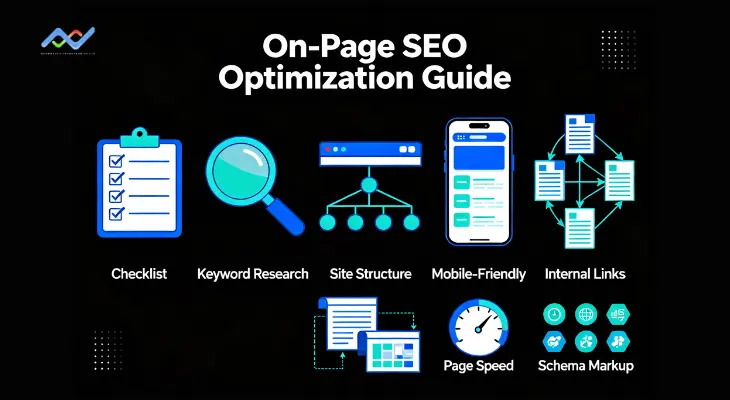
Want your website to rank higher on Google in 2025? On-page SEO is your most powerful tool for controlling how search engines understand and rank your content. While many website owners chase backlinks and social signals, they often overlook the foundational elements right under their fingertips, the content and structure of their own web pages. This comprehensive guide walks you through every essential on-page SEO activity that actually moves the needle. We'll cover everything from keyword research and title tag optimization to schema markup and user engagement strategies. Whether you're a beginner or looking to sharpen your existing skills, these actionable techniques will help you climb the rankings and attract more qualified traffic. What Is On-Page SEO and Why Should You Care? On-page SEO refers to all the actions you take directly on your website to improve its visibility in search results. This includes optimizing your page titles, meta descriptions, header tags, content structure, internal links, image alt text, and URL structure. Unlike off-page SEO, which focuses on building authority through external activities like backlinks and social media marketing, on-page SEO gives you complete control. Here's the key difference you need to understand: On-page SEO targets the internal quality of your webpage, its structure, and user experience. In contrast, off-page SEO increases your site's credibility through external activities like earning backlinks and building brand mentions. You need both, but on-page SEO is where you start because it's the foundation that everything else builds upon. When you optimize your on-page elements correctly, you achieve three critical outcomes. First, search engines can better crawl and understand your content. Second, users find what they're looking for faster, which improves engagement. Third, your pages become eligible for rich results and featured snippets that dramatically increase visibility. Why Does On-Page SEO Matter More Than Ever in 2025? Google is focusing more than ever on helpful content, semantic search, page experience, and user intent. The March 2025 Helpful Content Update reinforced Google's commitment to people-first content, making on-page optimization essential for aligning with these expectations. Consider these ranking factors that depend on on-page SEO: According to recent analysis, consistent publication of high-quality content accounts for approximately 23% of Google's ranking algorithm, while keyword optimization in meta titles accounts for approximately 14%. Searcher engagement, which on-page SEO directly influences, accounts for about 12%. These aren't minor factors; they're the backbone of how Google decides which pages deserve top positions. Click-through rate matters because it signals to search engines that your page is relevant and engaging. When users click your result and stay on your page, Google interprets this as a positive signal. Conversely, high bounce rates can hurt your rankings because they suggest your content didn't satisfy the search intent. The rise of AI-driven search has made structured, well-organized content even more valuable. Search engines now prioritize content that's easy for both humans and algorithms to parse. Your on-page SEO determines whether AI systems can accurately understand and cite your content. How Do You Conduct Keyword Research and Match Search Intent? Effective keyword research is the foundation of every successful on-page SEO strategy. But in 2025, it's not enough to just find high-volume keywords; you must understand the intent behind them. The four types of search intent you need to recognize: Informational intent: The user wants to learn something, such as "how to paint a house." Navigational intent: The user seeks a specific website or brand, like "Home Depot paint section." Transactional intent: The user is ready to buy, such as "buy paint online." Commercial intent: The user is comparing options, like "best paint brand for interiors." Understanding intent helps you create content that truly satisfies users' needs. Long-tail keywords often reveal intent more clearly because they're more specific. For example, "cheap hotels in Goa with sea view" signals transactional intent, while "how to choose the right running shoes" indicates informational intent. Where to place your keywords for maximum impact: Your primary keyword should appear in your title tag, URL, H1 heading, first paragraph, and throughout your subheadings. Google scans these sections to understand your page's topic, and readers will quickly see if your content meets their needs. However, avoid keyword stuffing; use keywords naturally where they make sense to human readers. LSI (Latent Semantic Indexing) keywords, related terms, and synonyms help search engines understand context. If you're writing about "Paris," including semantic keywords such as "Capital City of France," "City of Love," and "Eiffel Tower" helps Google understand you're discussing the city, not something else. What Makes an SEO-Friendly Title Tag That Drives Clicks? Your title tag is arguably the most important on-page SEO element because it's the first thing users see in search results. A compelling title tag can dramatically improve your click-through rate, which indirectly boosts your rankings. Here are the rules for crafting perfect title tags: Keep your title under 60 characters to ensure it displays correctly without truncation. Place your primary keyword at the beginning of the title. This grabs attention and signals relevance to search engines. According to Moz, title tags that start with a keyword tend to perform better than those that place the keyword at the end. Use power words to increase CTR. Emotional words like "ultimate," "essential," "proven," and "fast" inspire curiosity and urgency. Numbers work exceptionally well. "10 Tips" or "7 Steps" help users set expectations. Questions in titles can align your content with "People Also Ask" boxes and voice search queries. Avoid over-optimized titles that look spammy. Instead of "Cheap Holidays and Cheap Trips to New York | Book Cheap Flights Today," aim for something cleaner like "Book Cheap Holidays & Flights to New York Today | Tripster". The second version is more readable and trustworthy. Include your brand name when it adds value, typically at the end of the title, separated by a pipe (|) or dash. This reinforces brand recognition without sacrificing keyword placement. How Do You Write a Compelling Meta Description That Converts? Your meta description is the short blurb that appears under your title in search results. While it doesn't directly impact rankings, a well-crafted meta description significantly influences click-through rates and user engagement. The formula for compelling meta descriptions: Keep your meta description between 150 and 160 characters so it displays fully in Google. Include your primary keyword. Google often bolds keywords that match the user's search, making your listing stand out. Start with action verbs like "Learn," "Discover," or "Find out" to encourage clicks. Most importantly, include a clear call to action. Phrases like "try for free," "learn more," or "get started today" motivate users to click. Clearly mention the benefit or solution your page offers, so users know what's in it for them. Here's something interesting: Google rewrites an estimated 60-70% of meta descriptions to match user queries better. However, well-written descriptions aligned with search intent are more likely to be preserved. Focus on context and answering specific questions, especially with the rise of voice search and AI tools. As schema markup becomes more critical, your meta description should work alongside structured data to create rich, informative search results. Entity-based descriptions that reflect people, places, or things relevant to your page help Google connect topics. What's the Best Way to Structure Header Tags for SEO? Header tags (H1, H2, H3, etc.) create a clear hierarchy that helps both search engines and users understand your content structure. Think of them as the skeleton of your page; they organize information and make it easier to scan. Follow these header tag best practices: Use only one H1 tag per page, and include your primary keyword in it. Your H1 should clearly state what the page covers. Then use H2 tags for main sections and H3 tags for subsections within those sections. This logical structure guides readers through your content and helps Google understand the relationships between topics. Use LSI keywords and related terms in your subheadings. This reinforces your page's topical relevance without keyword stuffing. For example, if your H1 is "Complete Guide to On-Page SEO," your H2s might include "Keyword Research Strategies," "Title Tag Optimization," and "Content Structure Best Practices." Most website visitors scan rather than read every word. Clear, descriptive headers act as signposts guiding them to relevant information. "Our Quality Assurance Process for Medical Devices" is much more helpful than just "Quality Assurance" because it tells readers exactly what they'll learn. Maintain a logical flow, don't skip from H1 to H4 without the intermediate levels. This consistency helps search engine crawlers understand your content hierarchy and improves accessibility for screen readers. How Do You Create High-Quality, Helpful Content That Ranks? Google's Helpful Content System prioritizes content that genuinely helps users over content created primarily for search engines. In 2025, this means your content must demonstrate E-E-A-T: Experience, Expertise, Authoritativeness, and Trustworthiness. What does high-quality content look like? Aim for comprehensive coverage. Studies show that the average first-page Google result contains about 1,400 words. However, length alone isn't enough. Your content must satisfy search intent by providing the information users are actually looking for. Add factual insights, step-by-step instructions, real examples, and original perspectives that go beyond what AI-generated content typically offers. Focus on depth and context rather than keyword density. Google uses sophisticated semantic understanding to evaluate whether your page covers a topic thoroughly. Pages that address every angle of a topic have an edge over pages that only cover it partially. Include elements that demonstrate expertise: Case studies and real-world examples Original research and data Expert quotes and citations Before-and-after results Video testimonials and visual proof Avoid keyword stuffing. Google penalizes content that unnaturally forces keywords into text. Instead, write naturally and let keywords flow where they make sense. The goal is content that reads well to humans while being optimized for search engines. Update your content regularly to maintain accuracy and freshness. Outdated information signals to Google that your page may no longer be the best result for a query. What's the Ideal URL Structure for SEO? Your URL structure affects both the user experience and the search engine's understanding of your pages. Clean, descriptive URLs improve click-through rates and help Google determine what your page is about. Follow these URL optimization rules: Keep URLs short, simple, and keyword-focused. Remove unnecessary words like "the," "and," "a," and "an" to make URLs more readable. For example, "yoursite.com/blog/pet-obesity-prevention" is better than "yoursite.com/blog/2018/10/18/obesity-in-our-pets-an-ounce-of-prevention-is-worth-a-pound-of-cure". Use hyphens to separate words, never underscores or spaces. Hyphens are recognized as word separators by search engines, while underscores are not. Stick with lowercase letters to avoid duplicate content issues and redirect problems. Include your target keyword in the URL, but don't stuff multiple keywords. One or two relevant keywords are sufficient. Avoid complex parameters and dynamic URLs when possible; they're harder for users to read and remember. Use HTTPS rather than HTTP. Google has confirmed that site security is a ranking factor, and users trust secure sites more. If you haven't already, migrate your site to HTTPS. How Should You Optimize Images and Alt Text? Images make your content more engaging, but they also present SEO opportunities that many websites miss. Proper image optimization improves your chances of ranking in Google Image search and helps search engines understand your page content. Essential image optimization steps: Compress your images before uploading to reduce file sizes without sacrificing quality. Large images slow down your pages, which hurts both user experience and rankings. Use modern formats like WebP for better compression. Write descriptive alt text for every image. Alt text serves multiple purposes: it describes images to visually impaired users, displays when images fail to load, and helps search engines understand image content. Google places relatively high value on alt text when determining what images are about and how they relate to the surrounding content. Include your focus keyword in alt text where it's appropriate, but don't force it into every image. If your keyword doesn't naturally describe the image, use a semantic variation instead. For example, if your focus keyphrase is "writing image SEO alt text," you might use "optimizing image alt text for SEO" in your alt text. Keep alt text under 125 characters. Too-long descriptions are complex for screen readers and not optimal for search engines. Be specific and descriptive rather than generic. "Woman optimizing WordPress website for SEO" is better than just "Woman at computer". What's the Best Internal Linking Strategy for SEO? Internal links connect your pages, distribute authority throughout your site, and help search engines discover and index your content. A strong internal linking strategy can significantly boost your rankings. How to build an effective internal linking structure: Link to 4-6 relevant pages from each piece of content. Use keyword-rich anchor text that clearly describes the destination page. Instead of "click here," use descriptive text such as "internal linking best practices" to link to a page on that topic. Organize your content into topic clusters with a central pillar page and supporting internal pages. This approach signals topical depth and authority to search engines. For example, a leading "On-Page SEO Guide" might link to supporting articles on keyword research, meta descriptions, and image optimization. Interlink both new and old pages immediately after publication: Include at least two internal links when creating a new page Find older, related content and link back to the new page you created This practice helps new content get indexed faster and distributes link equity across your site. Avoid orphan pages every significant page should have at least one internal link pointing to it. Use internal links to guide visitors through a journey on your site. When someone reads about keyword research, they might naturally want to learn about on-page optimization next. Strategic internal linking keeps users engaged longer and reduces bounce rates. How Do You Optimize Content Readability for Better Rankings? Readability isn't just about making content pleasant to read it directly affects SEO through user engagement metrics. Content that's easy to understand keeps visitors on your page longer, reducing bounce rates and signaling quality to search engines. What makes content readable: Use short sentences and simple language. Avoid jargon unless your audience expects technical terminology. Google prefers content with a reading level between Grade 6 and 9 for featured snippets and voice search responses. Tools like Hemingway Editor and Grammarly can help you assess and improve readability. Structure your content for scanning: Use short paragraphs (1-3 sentences) Add bullet points and numbered lists for steps or features Include relevant visuals to break up text blocks Use bold and italics to emphasize key points Avoid long, monotonous blocks of text. Visual variety images, graphs, quotes, and info boxes prevents visitors from leaving too soon and encourages them to continue reading. Short paragraphs, bold text, and clear formatting improve the overall user experience. Readability is both a direct and indirect ranking factor. Google's algorithms can assess content complexity, and simple, grammatically correct content tends to perform better for most queries. High readability also improves dwell time and reduces bounce rates behavioral signals that influence rankings. Why Is Page Speed Critical for SEO Success? Page speed directly impacts your rankings and user experience. Google has confirmed that slow-loading pages are less likely to rank well, and studies show users abandon pages that take more than three seconds to load. Key metrics to optimize: Focus on Core Web Vitals, which Google uses as ranking signals: Largest Contentful Paint (LCP): Main content should load within 2.5 seconds Interaction to Next Paint (INP): Pages should respond quickly to user interactions Cumulative Layout Shift (CLS): Visual elements shouldn't jump around during loading Practical steps to improve page speed: Compress images and use modern formats like WebP. Enable browser caching so returning visitors load pages faster. Use a Content Delivery Network (CDN) to serve content from servers closer to your users' physical locations. Minify JavaScript, CSS, and HTML to reduce file sizes. Remove unused code and defer non-essential scripts. These technical optimizations can dramatically improve loading times. One performance marketing agency reported that fixing Core Web Vitals for a client increased page 1 rankings by 28%. Another site saw Google impressions increase by 300% after improving its Core Web Vitals scores. Speed matters invest time in optimization. How Important Is Mobile-Friendliness for SEO in 2025? Mobile optimization isn't optional it's essential. Google uses mobile-first indexing, meaning it primarily uses the mobile version of your pages for indexing and ranking. If your site doesn't perform well on mobile devices, your rankings will suffer regardless of desktop performance. What mobile-friendly optimization requires: Ensure a responsive design that adapts to all screen sizes without horizontal scrolling. Test your site with Google's Mobile-Friendly Test to identify issues. Key mobile SEO best practices include fast-loading pages, easy navigation, and clear calls to action. Avoid plugins like Flash that don't work on mobile devices. Make font sizes readable without zooming, and ensure tap targets (buttons and links) are large enough to tap accurately. Simple, vertical navigation works better than complex dropdown menus on mobile. Mobile users behave differently from desktop users. They're typically looking to achieve a goal quickly find information, make a purchase, or locate a business. Design your mobile experience to facilitate these goals with minimal friction. Sites that don't optimize for mobile experience reduced visibility in search results because Google can't properly index content that isn't mobile-accessible. A study found that sites that were not mobile-friendly before Google's mobile update saw a 50%+ reduction in traffic. What Is Schema Markup and How Does It Boost SEO? Schema markup is structured data code that helps search engines understand your content's meaning and relationships. While it doesn't directly improve rankings, it enables rich results those enhanced search listings with stars, prices, images, or FAQ dropdowns that dramatically increase click-through rates. The most valuable schema types for SEO: Article Schema: Helps Google understand news articles and blog posts FAQ Schema: Displays expandable questions and answers in search results Product Schema: Shows prices, availability, and reviews for e-commerce Local Business Schema: Displays address, hours, and reviews for physical businesses How-To Schema: Creates step-by-step visual guides in search results Implementing the FAQ schema on key landing pages can increase organic traffic by 20%+ and improve CTR through rich snippets. Even when rich results aren't displayed, structured data helps search engines better understand and rank your content. Use JSON-LD for schema markup; it's Google's recommended format and the most straightforward to implement. Place the code in your website's header or footer without interrupting your visible page content. Tools like Google's Structured Data Testing Tool can validate your implementation. In the AI-driven search landscape of 2025, schema markup has become even more critical. AI systems use structured data to understand entities, relationships, and key facts, making properly marked-up content more likely to be cited in AI-generated responses. How Do You Optimize for User Engagement and CTAs? User engagement signals such as time on page, scroll depth, and interaction rates shape how Google evaluates your content. High engagement tells search engines that your content satisfies user intent. Strategies to boost engagement: Add clear calls to action (CTAs) throughout your content. Tell readers what to do next "Download our free checklist," "Start your free trial," or "Contact us for a consultation". Well-crafted CTAs guide users through your conversion funnel and reduce bounce rates. Include FAQ sections to answer common questions and keep users engaged longer. FAQ content captures long-tail keywords, voice search queries, and featured snippets. Properly structured FAQs can get "34% more visibility" than standard text blocks. Make your content interactive: Ask questions that encourage comments Include downloadable resources Embed relevant videos Add social sharing buttons Use interactive elements like calculators or quizzes Monitor your bounce rate and average engagement time. High bounce rates may signal that content doesn't match search intent or that page layout fails to guide readers forward. Lower bounce rates indicate better user experience and can positively impact rankings. Remember that engagement metrics matter more than ever as Google prioritizes helpful content. When visitors stay, interact, and explore your site, you're sending all the right signals to search engines. Your On-Page SEO Action Plan? You now have a complete roadmap for optimizing every on-page element that impacts your Google rankings. The key is consistent implementation don't try to fix everything at once, but prioritize based on impact. Start with these high-priority actions: Audit your title tags and meta descriptions for keyword placement and compelling copy Review your header structure to ensure logical hierarchy with H1, H2, and H3 tags Check page speed using Google PageSpeed Insights and address critical issues Verify mobile-friendliness with Google's Mobile-Friendly Test Add schema markup to your most important pages On-page SEO isn't a one-time task it's an ongoing process of optimization and refinement. As Google's algorithms evolve, your approach should too. Regular content updates, continuous monitoring of engagement metrics, and staying up to date with SEO best practices will keep your rankings strong. Ready to improve your search visibility? Start implementing these on-page SEO activities today. Pick one section of this guide, apply the recommendations to your most important pages, and measure the results. With consistent effort, you'll see your rankings climb and your organic traffic grow.
The Complete Guide to SEO Activities: Your Roadmap to Higher Rankings in 2025
You're launching a new website. Your product is solid. Your design looks stunning. But three months later, crickets. No organic traffic. No leads. Your competitors dominate Google while your pages collect digital dust. Sound familiar? You're not alone. Over 91% of web pages get zero traffic from Google. The difference between those who win and those who disappear? Strategic SEO activities. This guide reveals exactly what SEO activities drive results, how to prioritise them using the 80/20 rule, and the proven 3-month strategy that delivers measurable rankings. What Are SEO Activities? SEO activities are the systematic tasks you perform to improve your website's visibility in search engine results. These actions help search engines understand, trust, and rank your content above competitors. Think of SEO activities as building a house. You need a strong foundation (technical SEO), solid walls (on-page optimisation), quality materials (content), and good relationships with neighbours (off-page authority). Skip any piece, and the structure collapses. These activities fall into four distinct categories. Each serves a specific purpose in your overall strategy. The Four Pillars of SEO: What Are the 4 Types? Search engine optimisation rests on four fundamental pillars. Understanding these gives you the framework for every SEO activity you'll ever perform. Pillar 1: Technical SEO Technical SEO ensures search engines can crawl, index, and render your website efficiently. It's the plumbing and electrical work behind your walls—unseen but critical. Pillar 2: On-Page SEO On-page SEO optimises visible page elements for both users and search engines. This includes titles, headers, content, and internal links. Pillar 3: Content Strategy Content is the reason users visit. High-quality, relevant content satisfies search intent and earns rankings. Pillar 4: Off-Page SEO Off-page SEO builds authority through backlinks, brand mentions, and social signals from external sources. SEO Pillar Primary Focus Key Activities Impact Timeline Technical SEO Crawlability & Indexation Site speed, mobile optimization, XML sitemaps Immediate to 1 month On-Page SEO Content Relevance Title tags, meta descriptions, header optimization 2-4 weeks Content Strategy User Value Creation Blog posts, guides, video content 1-3 months Off-Page SEO Authority Building Link building, brand mentions, PR 3-6 months Each pillar supports the others. Neglect one, and your entire SEO strategy weakens. What Is Included in On-Page SEO? On-page SEO activities happen directly on your website. You control these completely, making them the fastest way to improve rankings. Your On-Page SEO Checklist Start with these high-impact activities: Identify Target Keywords: Research what your audience actually searches for. Use tools like Google Keyword Planner or SEMrush. Focus on terms with search volume and manageable competition. Create Optimised URLs: Keep URLs short, descriptive, and keyword-rich. Avoid numbers and parameters. A clean URL structure helps both users and search engines understand page content. Write Compelling Title Tags: Place your primary keyword near the beginning. Keep titles under 60 characters. Make them click-worthy. Title tags remain a top-ranking factor. Craft SEO-Rich Meta Descriptions: Write unique descriptions for each page. Include your primary keyword naturally. Add a clear call-to-action. While not a direct ranking factor, meta descriptions dramatically affect click-through rates. Use Header Tags Strategically: Structure the content with a single H1 tag for the main headline. Use H2S and H3S for subsections. Include secondary keywords naturally. This creates a clear hierarchy for search engines. Add Internal Links: Connect related pages using descriptive anchor text. Link from high-authority pages to newer content. This distributes page authority and helps users navigate your site. Optimize Images: Use descriptive file names. Add alt text that describes the image while including relevant keywords. Compress images to improve page speed. Optimise for Readability: Use short paragraphs. Break up text with subheadings. Write in plain language. Readability keeps users engaged longer, signalling value to Google. Include Structured Data: Add schema markup for FAQs, reviews, or products. This helps search engines understand your content and can earn rich snippets in search results. On-page SEO activities deliver quick wins. You can implement these changes today and see ranking improvements within weeks. Off-Page SEO Activities: Building Authority Beyond Your Site Off-page SEO activities happen outside your website. They prove to search engines that others trust and value your content. What Does Off-Page SEO Include? Link Building Strategies: Earn high-quality backlinks from reputable websites. Focus on relevance over quantity. One link from a respected industry blog beats 100 links from spammy directories. Brand Mentions: Monitor mentions of your brand across the web. Reach out to sites that mention you but don't link to you. Ask them to add a link. Even unlinked mentions build authority. Social Media Engagement: Share content consistently on platforms your audience uses. Engage in conversations. Build visibility. Social signals indirectly impact rankings by driving traffic and attention. Content Promotion: After publishing excellent content, reach out to journalists, bloggers, and influencers. Personalise your pitch. Explain why your content adds value to their audience. Community Participation: Answer questions on Quora, Reddit, and industry forums. Provide genuine value. Please link back to your site only when it naturally fits. This builds brand awareness and can attract backlinks. Local SEO: List your business in relevant directories. Maintain consistent Name, Address, and Phone (NAP) information. Encourage customer reviews on Google Business Profile. Off-page SEO activities take time. Results typically appear after 3-6 months of consistent effort. But they compound, creating lasting authority that's hard for competitors to replicate. Technical SEO Activities: The Foundation Everything Rests On Technical SEO activities ensure search engines can access and understand your site. Without this foundation, your other efforts collapse. Your Technical SEO Checklist Set Up Google Search Console and Bing Webmaster Tools: These free tools show how search engines view your site. Submit XML sitemaps. Monitor crawl errors. Track keyword performance. Install Google Analytics 4: Measure traffic sources, user behaviour, and conversions. Link it to Search Console for deeper insights. You cannot improve what you don't measure. Implement HTTPS Security: Secure your site with an SSL certificate. HTTPS is a confirmed ranking factor. Users trust secure sites more. Optimise Page Speed: Target Largest Contentful Paint (LCP) under 2.5 seconds. Compress images. Enable browser caching. Minimise CSS and JavaScript files. Speed directly impacts rankings and user experience. Ensure Mobile-First Design: Google indexes mobile versions first. Test every page on mobile devices. Ensure text is readable without zooming. Make buttons easy to tap. Create and Submit XML Sitemap: Generate a sitemap listing all critical pages. Submit it via Search Console. Update it automatically when you add new content. Set Up Robots.txt: Control what search engines crawl. Block low-value pages like login screens. Ensure you don't accidentally block important content. Fix Broken Links and Redirects: Run regular crawls to find 404 errors. Fix internal broken links. Consolidate redirect chains. Broken links waste crawl budget and hurt user experience. Use Canonical Tags: For similar or duplicate content, specify which version search engines should index. This prevents duplicate content issues. Monitor Core Web Vitals: Track LCP, Cumulative Layout Shift (CLS), and Interaction to Next Paint (INP) using PageSpeed Insights. Aim for "good" scores across all metrics. Technical SEO activities often deliver immediate improvements. Fixing a single technical issue can boost rankings across your entire site. What Is the 80/20 Rule of SEO? The Pareto Principle states that 80% of results come from 20% of efforts. This applies powerfully to SEO activities. How Does the 80/20 Rule Work in SEO? Identify which 20% of your pages generate 80% of organic traffic. Focus your optimisation efforts there. Which 20% of keywords drive most conversions? Prioritise those. Practical Application: Analyse your Google Analytics data Identify top-performing pages and keywords Double down on what's already working Deprioritise low-impact activities For example, 20% of your blog posts generate 80% of traffic. Optimise those posts further. Add internal links. Update the content. Build backlinks specifically to them. The 80/20 rule prevents you from spreading resources too thin. It forces focus on high-impact activities that deliver disproportionate results. Example of 80/20 in Action A SaaS company analysed their traffic. They found that three blog posts drove 75% of organic signups. Instead of creating new content, they: Updated those posts with fresh data Added compelling CTAs Built targeted backlinks to each post Created internal link clusters around them Result? Signups increased 150% in 60 days with minimal new content creation. Apply this principle quarterly. As you optimise your top 20%, new opportunities emerge. Your priorities should evolve as your site grows. What Is a 3 Month SEO Strategy? SEO is a long-term game. But a focused 3-month sprint can deliver dramatic improvements and quickly prove ROI. Month 1: Lay the Technical Foundation Week 1-2: Technical Audit and Fixes Run a comprehensive site crawl Fix all broken links and 404 errors Improve page speed above 80/100 on PageSpeed Insights Ensure mobile usability passes all tests Set up Google Search Console and Analytics Week 3-4: Initial On-Page Optimisation Optimise title tags and meta descriptions for the top 20 pages Implement proper header structure (H1, H2, H3) Add internal links between related content Optimise images with alt text and compression By month's end, expect improved user experience and initial ranking shifts. Month 2: Content Acceleration Week 5-6: Content Creation and Refresh Publish 2-3 new high-quality articles targeting long-tail keywords Update existing content with fresh statistics and insights Expand thin content to match competitor depth Create pillar pages for core topics Week 7-8: User Experience Enhancement Improve site navigation and menu structure Add clear calls-to-action on key pages Implement schema markup for FAQs and articles Enhance readability with better formatting Month 2 builds topical authority and improves engagement metrics. Month 3: Authority Building Week 9-10: Link Building Outreach Identify 50 relevant websites for guest posting Launch personalised outreach campaigns Create linkable assets like infographics or research Pursue broken link building opportunities Week 11-12: Amplification and Monitoring Share content across social media channels Engage in industry communities and forums Monitor brand mentions and request links Track ranking improvements and adjust strategy By day 90, you should see measurable traffic increases and ranking improvements for target keywords. How to Get 100% SEO Results? Perfection is impossible. Search algorithms change constantly. Competitors adapt. But you can achieve comprehensive SEO excellence. The Path to Maximum SEO Performance Cover All Four Pillars: Don't just focus on one area. Technical, on-page, content, and off-page SEO work synergistically. Missing one pillar limits overall success. Create Exceptional Content: Content quality outweighs quantity. One outstanding piece can outrank 100 mediocre posts. Focus on depth, originality, and user value. Build Genuine Authority: Earn backlinks naturally by creating link-worthy content. Fake links get penalised—absolute authority compounds over time. Measure and Iterate: Use data to guide decisions. Test different approaches. What works for one site may fail for another. Your audience is unique. Stay Current: SEO evolves rapidly. Follow industry blogs. Test new features. Adapt to algorithm updates. What worked yesterday might not work tomorrow. Think User-First: Google's goal is to satisfy users. Make that your goal too. Fast sites, explicit content, and excellent experiences win in the long term. "100% SEO" means maximising your specific potential, not achieving perfection. Focus on consistent improvement, not mythical perfection. SEO Activities Checklist: Your Action Plan Use this prioritised checklist to guide your efforts: Immediate Actions (Week 1) Set up Google Search Console and Analytics Fix critical technical errors (404s, speed issues) Optimise the top 10 pages for target keywords Short-Term Activities (Month 1) Complete a full technical SEO audit Implement proper site structure and internal linking Create a content calendar based on keyword research Begin link-building outreach Medium-Term Activities (Months 2-3) Publish 2-3 quality articles weekly Build relationships with industry influencers Monitor and improve Core Web Vitals Expand topical clusters with pillar pages Ongoing Activities Regular content updates and refreshes Continuous backlink profile monitoring Competitor analysis and strategy adjustment User experience testing and improvement Track progress weekly. Adjust based on data. Celebrate small wins. SEO success builds momentum. Common SEO Activity Mistakes That Kill Progress Avoid these costly errors: Chasing Vanity Metrics: Ranking #1 for a keyword with zero search volume brings no traffic. Focus on keywords that drive business results. Ignoring Technical SEO: You can write brilliant content. If Google can't crawl your site, it doesn't matter. Technical foundation comes first. Buying Links: Purchased links violate Google's guidelines. They bring short-term gains and long-term penalties. Earn links instead. Keyword Stuffing: Forcing keywords into content makes it unreadable. Google penalises this. Write naturally for humans first. Neglecting Mobile: Over 60% of searches are done on mobile devices. If your site breaks on mobile devices, you lose most of your potential traffic. Inconsistent Effort: SEO requires sustained activity. Sporadic efforts produce sporadic results. Build consistent habits. Copying Competitors Blindly: What works for them might not work for you. Use competitor research for inspiration, not imitation. Your unique value proposition matters. Measuring SEO Activities Success Track these key metrics: Organic Traffic Growth: Use Google Analytics to monitor total organic sessions. Look for steady upward trends over the course of months. Keyword Rankings: Track target keyword positions weekly. Focus on movement for your priority terms. Conversion Rate: Measure how organic traffic converts into leads or sales. Traffic without conversions is just noise. Backlink Quantity and Quality: Monitor new referring domains—Prioritise links from authoritative, relevant sites. Core Web Vitals: Ensure your site meets Google's performance thresholds. Speed impacts both rankings and user experience. Engagement Metrics: Watch bounce rate, time on page, and pages per session. These indicate content quality and relevance. Set up monthly reporting. Review trends, not daily fluctuations. SEO is a marathon, not a sprint. Conclusion You now have the complete framework. The only missing ingredient is action. This Week: Run a free technical SEO audit using Google Search Console Identify your 20% of pages that drive 80% of traffic Choose three target keywords to focus on This Month: Fix all critical technical issues Optimise your top 10 pages completely Publish one exceptional piece of content Reach out to five websites for link building This Quarter: Follow the 3-month strategy outlined above Build consistent SEO habits Measure results weekly and adjust The businesses dominating search results aren't more intelligent than you. They execute strategic SEO activities consistently. They prioritise the 20% that matters. They follow proven frameworks. You can do the same. Start today. The longer you wait, the more ground you lose to competitors. Your future customers are searching right now. Will they find you or your competitors? The choice is yours.