Our Blogs
- Home
- Blog
How We've Empowered
Businesses
with InnovativeTech Solutions
How to Secure Cloud Perimeter: Network Security Solutions for Multi-Cloud Environments ?
In today's rapidly evolving digital landscape, securing cloud perimeters has become critical as organizations increasingly adopt multi-cloud strategies across AWS, Azure, and Google Cloud Platform. With 80% of data security breaches attributed to misconfigurations and cyber threats becoming more sophisticated, establishing robust network security solutions is no longer optional it's essential for business survival. Understanding Cloud Perimeter Security in the Modern Era: In the rapidly evolving digital landscape, a deep understanding of cloud perimeter security is crucial. This understanding sets the stage for the remainder of the document, enabling readers to grasp the evolving nature of cloud security. Cloud perimeter security represents a fundamental shift from traditional network boundaries to dynamic, software-defined security perimeters that protect distributed cloud resources. Unlike conventional perimeter security, which relies on physical firewalls, today's cloud environments require a comprehensive approach that encompasses identity-aware access controls, continuous monitoring, and automated threat response. The traditional concept of a secure network perimeter has undergone significant evolution. In 2025, organizations must recognize that the perimeter is no longer a fixed boundary but rather a collection of security controls that move with your data and applications across multiple cloud environments. This paradigm shift requires businesses to implement zero-trust security models and embrace cloud-native security solutions. The Critical Risks of Cloud Misconfigurations Cloud misconfigurations pose one of the most significant security threats facing organizations today. Understanding the severity of these risks is crucial, as it underscores the need for immediate action. Understanding Misconfiguration Vulnerabilities Cloud misconfigurations represent one of the most significant security threats facing organizations today. These occur when cloud services are improperly configured, leaving sensitive data and applications exposed to unauthorized access. The complexity of managing multiple cloud platforms significantly increases the likelihood of configuration errors. Common misconfiguration types include: Publicly accessible storage buckets exposing sensitive customer data Inadequate Identity and Access Management (IAM) controls violate least-privilege principles Unencrypted data in storage and transit Default security settings that fail to meet compliance requirements Poorly configured network security groups with overly permissive access rules The Business Impact of Security Gaps: The potential business impact of security gaps is significant. Understanding these consequences is key to realizing the importance of proactive security measures. Research indicates that 99% of cloud environment failures will be attributed to human errors through 2025, making proper configuration management absolutely critical. These misconfigurations can result in: Regulatory fines and penalties under frameworks like GDPR, HIPAA, and PCI DSS Data breaches affect customer trust and brand reputation Operational disruptions impacting business continuity Financial losses from cybersecurity incidents and recovery costs Cloud-Native Firewalls: The Evolution of Network Protection Next-Generation Firewall Integration Cloud-native firewalls have emerged as essential components of modern multi-cloud security architectures. Unlike traditional hardware-based firewalls, these solutions are designed specifically for cloud environments and offer deep packet inspection, application awareness, and threat intelligence integration. Key advantages of cloud-native firewalls include: Scalable protection that automatically adjusts to changing workload demands Application-layer filtering with URL filtering and malware prevention East-west traffic inspection between cloud segments Integration with cloud provider APIs for seamless management Zero-trust enforcement with identity-aware access controls Implementing Firewall Strategies Across Providers Each primary cloud provider offers distinct firewall capabilities that organizations must understand and leverage effectively: AWS: AWS WAF provides application-layer protection, while Security Groups and NACLs control network-level access. AWS Shield offers DDoS protection. Azure: Network Security Groups (NSGs) and Azure Firewall provide comprehensive network protection, with Application Gateway offering web application firewall capabilities. GCP: VPC Service Controls create security perimeters around PaaS resources, while Cloud Armor provides DDoS and application attack protection. Cloud Security Posture Management (CSPM): The Foundation of Proactive Security Cloud Security Posture Management (CSPM) is not just a response to threats, but a proactive cornerstone of modern cloud security strategies. It provides continuous visibility, automated compliance checking, and rapid remediation across multi-cloud environments, ensuring that your organization is always prepared and one step ahead of potential security risks. Core CSPM capabilities include: Configuration assessment against security benchmarks like CIS and NIST frameworks Vulnerability scanning with prioritized remediation recommendations Identity and Access Management analysis, ensuring least-privilege access Threat detection using AI and machine learning algorithms Automated remediation for common security misconfigurations Leading CSPM Solutions for 2025 The market offers several robust CSPM platforms, each with unique strengths: Top-tier CSPM providers include: SentinelOne Singularity Cloud: Offers agentless deployment with real-time secret scanning and offensive security testing Palo Alto Prisma Cloud: Provides comprehensive cloud-native application protection with strong DevOps integration Microsoft Defender for Cloud: Delivers multi-cloud visibility with deep Azure integration Check Point CloudGuard: Features advanced threat prevention with centralized policy management Integrating Network Security Across AWS, Azure, and GCP Multi-Cloud Network Architecture Design Successful multi-cloud security requires a unified approach that leverages the strengths of each cloud provider while maintaining consistent security policies across all platforms. Organizations must design network architectures that enable secure connectivity, traffic segmentation, and centralized monitoring across all cloud environments. Essential integration strategies include: Standardized Infrastructure as Code (IaC) templates for consistent deployments Centralized key management for encryption across all platforms Unified monitoring and logging with SIEM integration Cross-cloud network segmentation using VPCs and virtual networks Identity federation enabling single sign-on across cloud providers Provider-Specific Security Integration AWS Security Integration: Leverage Security Hub as a central dashboard, integrate GuardDuty for threat detection, and use AWS Config for compliance monitoring. Connect with third-party CSPM solutions via APIs for enhanced visibility and control. Azure Security Integration: Utilize Defender for Cloud as the primary security management platform, implement Azure Policy for governance, and integrate with Microsoft Entra ID for identity management. Enable cross-subscription monitoring for comprehensive coverage. GCP Security Integration: Deploy Security Command Center for centralized visibility, use Cloud Asset Inventory for resource tracking, and implement VPC Service Controls for data perimeter protection—Leverage Policy Intelligence for access optimization. Cybersecurity Compliance in Multi-Cloud Environments Regulatory Framework Navigation Understanding the unique challenges of multi-cloud compliance is crucial, as organizations must adhere to various regulatory requirements across different cloud platforms and jurisdictions. This understanding, combined with the implementation of consistent controls across all environments, will ensure your organization is always compliant and prepared for any regulatory audit. Key compliance considerations include: Data residency requirements ensure that data stays within the required geographical boundaries Encryption standards meeting specific regulatory mandates Access controls implementing role-based access with audit trails Incident response procedures with required notification timelines Regular compliance assessments with third-party validation Automated Compliance Management Automation is not just a convenience, but a necessity for maintaining compliance across complex multi-cloud environments. Modern CSPM solutions provide continuous compliance monitoring, automated evidence collection, and streamlined reporting, thereby reducing manual overhead and ensuring consistent adherence to regulatory requirements, thereby giving you the confidence that your organization is always compliant. Compliance automation features include: Real-time policy violation detection with immediate alerts Automated remediation for common compliance gaps Audit-ready reporting for frameworks like SOC 2, ISO 27001, and PCI DSS Risk scoring to prioritize compliance remediation efforts Integration with GRC platforms for enterprise risk management Advanced Cybersecurity Techniques for Cloud Protection AI-Powered Threat Detection Artificial intelligence and machine learning are revolutionizing cloud security by enabling real-time behavioral analysis, anomaly detection, and predictive threat intelligence. These technologies can process vast amounts of cloud data to identify patterns that human analysts might miss. Advanced AI capabilities include: Behavioral baseline establishment for normal cloud operations Anomaly detection identifies unusual user or system behavior Automated threat correlation connecting disparate security events Predictive threat modeling, anticipating potential attack vectors Intelligent incident response with automated containment actions Zero-Trust Architecture Implementation Zero-trust security models have become fundamental to cloud security, operating on the principle that no entity should be trusted by default, regardless of location or credentials. This approach is particularly crucial in multi-cloud environments where traditional perimeter controls are insufficient. Zero-trust implementation requires: Identity verification for every access request Microsegmentation of network resources Least-privilege access with just-in-time permissions Continuous monitoring of all user and system activities Encrypted communications for all data transfers Managed Security Service Providers: Strategic Partnerships The Role of MSSPs in Cloud Security Managed Security Service Providers (MSSPs) play a crucial role in helping organizations achieve comprehensive cloud security without requiring extensive in-house expertise. These providers offer 24/7 monitoring, threat detection, and incident response services specifically designed for cloud environments. MSSP services typically include: Security Operations Center (SOC) monitoring with expert analysts Threat intelligence integration and analysis Compliance management with regulatory reporting Incident response with forensic investigation capabilities Security tool management and optimization Selecting the Right MSSP Partner Choosing an appropriate MSSP requires careful evaluation of their cloud security expertise, tool integration capabilities, and compliance credentials. Organizations should prioritize providers with cloud-specific certifications and proven experience across multiple clouds. Key selection criteria include: Cloud provider certifications (AWS, Azure, GCP competencies) Industry-specific compliance expertise Integration capabilities with existing security tools Scalability to support business growth Geographic coverage for global operations Top Cybersecurity Companies Leading Cloud Innovation Industry Leaders in 2025 The cybersecurity landscape continues to evolve rapidly, with several companies emerging as leaders in cloud-native security solutions and multi-cloud protection. These organizations are driving innovation in areas such as CSPM, cloud workload protection, and automated threat response. Leading cybersecurity companies include: Palo Alto Networks: Pioneering next-generation firewalls and comprehensive cloud security platforms CrowdStrike: Leading endpoint detection and response with cloud workload protection Check Point: Providing unified threat prevention across hybrid environments Fortinet: Offering integrated security fabric for multi-cloud deployments Microsoft: Delivering cloud-native security through Azure Defender and integrated services Emerging Technologies and Trends Advances in artificial intelligence, quantum-resistant encryption, and automated response capabilities are shaping the future of cloud security. Organizations must stay informed about these developments to maintain competitive security postures. Key trends for 2025 include: AI-driven security orchestration with automated playbook execution Quantum-safe cryptography preparation for future threats Extended detection and response (XDR) across cloud and on-premises environments DevSecOps integration with security-as-code practices Cloud-native application protection platforms (CNAPPs) for comprehensive coverage Best Practices for Multi-Cloud Security Implementation Strategic Planning and Architecture Successful multi-cloud security requires a comprehensive strategy that addresses governance, technical implementation, and ongoing operations. Organizations must develop clear policies and procedures that work consistently across all cloud providers. Essential best practices include: Comprehensive asset inventory across all cloud environments Standardized security policies with provider-specific implementations Regular security assessments, including penetration testing Employee training programs on cloud security best practices Incident response procedures tailored for cloud environments Continuous Improvement and Monitoring Security is not a one-time implementation; instead, it requires ongoing attention and improvement. Organizations must establish processes for continuous monitoring, regular updates, and adaptive security measures that evolve in response to the changing threat landscape. Key operational practices include: Regular policy reviews and updates based on new threats Automated security testing integrated into CI/CD pipelines Threat intelligence integration for proactive defense Performance monitoring to ensure security doesn't impact operations Vendor management for third-party security tools and services Conclusion: Securing cloud perimeters in multi-cloud environments requires a comprehensive approach that combines advanced technology, strategic planning, and continuous vigilance. Organizations must embrace cloud-native security solutions, implement robust CSPM practices, and maintain consistent security policies across all cloud providers. The journey toward comprehensive cloud security involves understanding the unique risks associated with each cloud platform, implementing appropriate technical controls, and maintaining ongoing compliance with relevant regulatory requirements. By partnering with experienced managed security service providers and leveraging leading cybersecurity technologies, organizations can build resilient security postures that protect against evolving threats while enabling business growth and innovation. Success in multi-cloud security ultimately depends on taking a proactive approach that prioritizes visibility, automation, and continuous improvement. As cloud environments continue to evolve, organizations that invest in comprehensive security strategies today will be best positioned to defend against tomorrow's threats while maximizing the benefits of their multi-cloud investments.
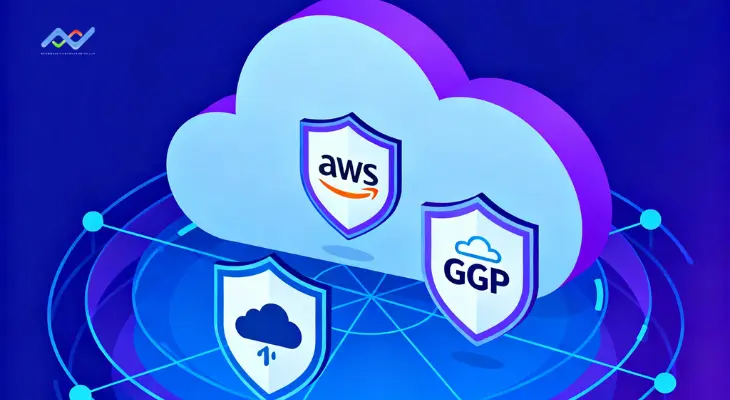
How to Secure Cloud Perimeter: Top Network Security Solutions for Multi-Cloud Environments | Networsys Technologies
Securing the cloud perimeter across a multi-cloud environment—i.e., AWS, Azure, and GCP—is no longer optional; it’s mission-critical. In this blog, you’ll learn how to mitigate misconfiguration risks, why cloud-native firewalls and CSPM are indispensable, and how to integrate network security across AWS, Azure, and GCP. The result? A unified, resilient, and defendable multi-cloud perimeter. We’ll cover: The risks of misconfiguration in multi-cloud perimeters Cloud-native firewall options per platform What is CSPM and how it fights drift & compliance issues Strategies to integrate network security across clouds Real case studies and first-hand insights Let’s get into it. 1. Misconfiguration Risks: The Silent Threat at the Cloud Perimeter Misconfiguration is one of the top causes of cloud security breaches. Even when using “managed services,” a misstep in setting up a VPC, firewall rules, IAM policies, or subnet routing can expose your data or allow lateral movement. 1.1 Common misconfiguration scenarios Here are real-world errors that weaken the cloud perimeter: Misconfiguration Risk / Impact Example Open security groups / NSGs Allows unwanted ingress/egress traffic EC2 or VM wide open to internet on SSH (port 22) Publicly exposed storage buckets Data leak or exfiltration S3 bucket set as public read/write Unrestricted IAM roles or over-permissioned roles Lateral privilege escalation A VM can assume admin role on other projects Route table or peering misconfigurations Traffic bypassing inspection Traffic going east-west without firewall inspection Missing network segmentation (no microsegmentation) One breach cascades across workloads All workloads in same flat network zone Case in point: According to a survey, 79% of companies have experienced a cloud data breach in an 18-month period, often driven by misconfiguration issues. Another study proposed using active behavioral analysis to reduce false positives in CSPM alerts: by simulating attacks rather than just flagging every open port, false positives reduced by ~93%. 1.2 Why multi-cloud magnifies the risk When you operate across AWS, Azure, and GCP: Each cloud has its own APIs, naming, networking constructs (VPC / Virtual Network / VPC Network), and firewall systems. Drift between environments is common when teams work independently. Visibility gaps emerge – you may not realize that an Azure subnet is misrouted or that a GCP firewall rule is too permissive. Compliance requirements (e.g. GDPR, HIPAA) often span clouds; inconsistent policies can lead to audit failures. Because of this complexity, traditional, static perimeter defense is insufficient. You must bake network security and posture assurance into all environments, continuously. 2. Cloud-Native Firewalls: Enforcing Network Boundaries in the Cloud A key pillar to securing your cloud perimeter is deploying cloud-native firewalls — not just on-prem legacy appliances dropped into the cloud. Let’s see what options are available, and how to choose and deploy them across AWS, Azure, and GCP. 2.1 What is a cloud-native firewall? A cloud-native firewall is a virtual firewall or managed firewall service that: Is deployed using cloud APIs (as instances, container services, or managed services) Integrates with native cloud networking constructs (VPC, subnet, peering) Can auto-scale, adapt to dynamic workloads, and support east-west inspection Offers application-aware controls, logging, and threat intelligence These firewalls complement CSPM (which handles posture) by enforcing boundaries and inspecting traffic flows. 2.2 Options per cloud Here’s a breakdown: Cloud Native / First-Party Firewall Key Capabilities & Notes AWS AWS Network Firewall (NFW) Stateful filtering, intrusion detection, inline inspection, central deployment via Transit Gateway AWS Firewall Manager Helps standardize rules across accounts Azure Azure Firewall Fully managed, with threat intelligence, FQDN filtering, DNAT, network rules Azure Virtual WAN Firewall / Hub For hub-and-spoke topologies GCP (Google doesn’t provide a traditional managed firewall product) Use third-party firewalls in VPCs, or partner firewall/NGFW in front of load balancers / transit VPC Additionally, several third-party or external vendors offer cloud firewall insertion across all three clouds, with unified policy. Cisco Multicloud Defense is one such example: it provides a single control plane and deploys gateway instances into each cloud for policy enforcement. In fact, Cisco’s architecture uses a “Service VPC” pattern, connecting spoke VPCs and using Gateway Load Balancers to route traffic to inspection instances. Another approach is using a cloud backbone (or backbone fabric) that carries inter-cloud traffic through firewall inspection points, e.g. F5 Distributed Cloud Connect can insert Palo Alto Network security service across clouds. 2.3 Best practices when deploying cloud firewalls Centralized hub & spoke topology: Use a central inspection hub (or “security VPC/hub”) that routes ingress, egress, and east-west traffic through firewall nodes. East-West inspection: Don’t just inspect traffic at ingress/egress; enforce segmentation between workloads (microsegmentation). Auto-scale firewall instances: Use infrastructure as code and auto-scaling policies to dynamically scale firewall capacity as traffic grows. High availability and failover: Deploy firewalls in multi-AZ (availability zones) or multi-region pairs. Logging and telemetry integration: Stream firewall logs into SIEM or cloud-native log analytics for alerting and auditing. Policy synchronization: Use a central management plane (or orchestration) so that firewall rules are consistent across clouds. With these in place, your network perimeter has an active enforcement mechanism. 3. CSPM — The Watchful Eye Over Cloud Configurations Cloud Security Posture Management (CSPM) is the foundation layer that complements your firewall-based enforcement. While firewalls ensure traffic control, CSPM ensures your cloud configuration (IAM, subnets, encryption, etc.) remains secure over time. 3.1 What is CSPM? A CSPM tool continuously monitors your cloud infrastructure, detects misconfigurations or compliance violations, and in advanced setups automatically remediates them. Key functions: Discovery & visibility: Inventory all cloud assets, accounts, projects, and services Policy comparison: Compare against best practices, industry standards (CIS, NIST, ISO) Alerting & prioritization: Raise alerts for exposures (e.g. open S3 bucket, insecure IAM role) Remediation / auto-fix: Optional automation to fix misconfigurations Compliance reporting: Prepare evidence for audits (HIPAA, GDPR, PCI-DSS) DevOps integration: Build checks into CI/CD pipelines and IaC templates CSPM’s strength is especially apparent when human drift or mistakes introduce weakness; it forms a guardrail for your cloud perimeter. 3.2 Why CSPM is indispensable in multi-cloud Single pane for all clouds: Rather than juggling alerts on separate consoles, CSPM aggregates posture across AWS, Azure, GCP. Detection of cross-cloud misconfigurations: It can detect policy violation patterns spanning clouds (e.g. role across accounts). Prevention of drift: As teams make changes, CSPM helps ensure nothing slips from hardened policy. Accelerated compliance: CSPM simplifies evidence collection across clouds for compliance audits. Auto-remediation: Some CSPMs can revert changes or auto-fix low-risk misconfigurations, reducing manual burden. Modern CSPM tools also incorporate behavioral testing to reduce false positives — e.g. simulating whether a flagged open port is truly exploitable. 3.3 Steps to adopt CSPM Define baseline security posture and compliance standards (e.g. CIS, internal policies). Enable read-only access for CSPM across all cloud accounts/projects. Start with “detect only” mode to calibrate alerts and weed out noise. Prioritize high-risk findings (e.g. public S3, wildcard IAM). Gradually enable auto-remediation for safe categories. Integrate CSPM into CI/CD and IaC pipelines (i.e. shift left). Review and evolve your rule sets regularly. CSPM doesn’t replace your firewalls — it ensures that your perimeter and cloud configurations remain aligned and secure. 4. Integrating Network Security Across AWS, Azure & GCP Securing each cloud individually is insufficient; your defense must span across them with consistency and visibility. Let’s cover architecture and strategy. 4.1 Architectural models for multi-cloud perimeter Here are common network topologies for integrating network security: Hub & Spoke / Transit Model A central “security hub” (or VPC/Virtual Network) acts as a choke point. All ingress (internet) and egress traffic, and east-west inter-cloud traffic, flows through the hub and is inspected by firewall nodes. Spoke VPCs attach via VPN, AWS Transit Gateway, Azure Virtual WAN, or GCP Shared VPC. Mesh / Full Interconnect Every cloud connects to each other (e.g. AWS ↔ Azure ↔ GCP). You can insert security links or firewall proxies in each path. More complex, but offers direct traffic paths. Cloud Backbone or Interconnect Fabric + Firewalls Use a private backbone or third-party interconnect (e.g. Equinix, SD-WAN, cloud exchange), and insert firewall appliances or virtual firewalls in-line. This approach centralizes traffic across clouds in a controlled backbone. Example: Cisco Multicloud Defense orchestrates gateways in each cloud and routes traffic to them. Firewall-as-a-Service (FWaaS) Some cloud or vendor services offer firewall-as-a-service that abstract away infrastructure. You point all traffic to the managed firewall service. 4.2 Policy coherence and orchestration To avoid divergence, you need: Unified policy engine / control plane: One place to define, manage, and sync firewall rules across clouds. Policy abstraction layer: Use intent-based rules (e.g. “web-tier to database-tier”) rather than cloud-specific syntax. Automation / IaC enforcement: Deploy and enforce firewall rules as code, so changes go through review pipelines. Drift detection: Use CSPM or config management to detect deviations in firewall rules. Versioning and audit trails: Keep track of rule changes, rollback capability, and change logs. 4.3 Handling traffic flow (north-south, east-west) North-South (ingress/egress): Funnel through VPN / load balancer → perimeter firewall → internal networks. East-West (inter-service / inter-VPC): Microsegment services; use service firewall nodes (e.g. sidecars, service mesh) or dedicated firewall clusters in each zone. Inter-cloud traffic: Route through your hub or backbone so that cross-cloud services are inspected centrally. 4.4 IAM, identity, and Zero Trust integration An effective network perimeter is useless if identity is weak. Ensure: Least privilege across cloud IAMs Federated identity / SSO / MFA Just-in-time access for admins Continuous identity posture monitoring (CIEM or similar) This ties into network security because the identity domain defines who can cross network boundaries. 4.5 Logging, visibility, and response Centralize firewall logs, flow logs (VPC Flow, NSG logs, etc.), and CSPM alerts to a SIEM or Security Analytics tool. Use correlation across network, identity, and CSPM alerts. Automate triggering of playbooks (e.g. quarantine subnet, revoke IAM session). Conduct regular red-teaming, penetration testing, and network path simulations. 4.6 Pilot project & phased rollout approach Choose a low-risk service (e.g. development environment). Configure hub-and-spoke with firewall nodes and CSPM. Validate traffic flow, latency, failover. Gradually onboard more VPCs/projects. Enforce policies via automation. Monitor and refine over time. Lessons from field experience (from MSSPs and customers): Start small, prove value: Begin with development or staging environments. Reviewer fatigue is real: Too many low-value alerts can overwhelm; tune thresholds carefully. Latency matters: Poorly architected firewalls or backbone routes can add delay — measure overhead. Cross-team alignment is critical: Cloud engineering, network, security, compliance must collaborate. Plan for scale: As traffic grows, firewall nodes and control plane scale must keep pace. Continuous audits: Even with automation, perform periodic audits to catch blind spots. 5. Integrating with Networsys Technologies’ Approach At Networsys Technologies LLP, we see multi-cloud perimeter security as a core competency. Here’s how we frame it for clients: Your Vision. Our Expertise. Your Success.We align security design with your business goals — your multi-cloud architecture, latency budget, compliance needs, and risk appetite. Our Approach Design a baseline blueprint (hub & spoke / backbone) Deploy CSPM, cloud-native firewalls, and orchestration Automate via infrastructure as code Monitor and iterate Managed Security Service Partner (MSSP)As a managed security service provider, we deliver continuous surveillance, incident response, and policy tuning. Our team can absorb the 24x7 operations, letting your team focus on innovation. Cybersecurity Compliance AssuranceWe ensure compliance (GDPR, PCI, HIPAA, etc.) across all clouds via CSPM rulesets, audit reporting, and evidence generation. Bridging DevOps & SecurityWe embed security into CI/CD, scan IaC, enforce guardrails, and minimize friction between dev and security teams. With Networsys, you don’t just “bolt on” security — we build multi-cloud networks that are resilient, auditable, and cost-effective. 6. FAQs on Multi-Cloud Perimeter Security Q1: Can we rely solely on cloud provider firewalls?Cloud provider firewalls (e.g. AWS NFW, Azure Firewall) are powerful, but only for that environment. They lack cross-cloud orchestration and visibility. For true perimeter security across AWS, Azure, GCP, you need a unified approach (hybrid or third-party). Q2: Will CSPM tools slow down my dev cycles?A well-configured CSPM shouldn’t block pipelines — it should provide timely feedback. Integrate in “scan and alert” mode initially, then gradually enable failures or gates for the riskiest checks. Q3: How do I maintain low latency after firewall routing?Use local ingress/egress points per region, deploy firewall nodes in each region, and architect your hub or backbone to minimize detours. Measure Round-Trip Time (RTT) before and after. Q4: How often should we review firewall policies?Quarterly reviews at a minimum. Also, trigger reviews after major app changes or cloud migration waves. Q5: What are the costs involved in adopting this approach?Costs include firewall node licenses, data processing, CSPM tool subscription, logging ingestion, and network egress. However, relative to breach recovery or compliance fines, the ROI is strong. Conclusion Securing the cloud perimeter in multi-cloud environments like AWS, Azure, and GCP requires a blend of cloud-native firewalls, robust CSPM, and orchestrated network flows. Start by addressing misconfiguration risks, deploy inspection points via firewall gateways, and monitor posture continuously via CSPM. Then integrate everything via shared policy, automation, and logging. With the right architecture — and a trusted partner like Networsys Technologies LLP — you can transform your infrastructure from fragmented to fortress-like. Meta conclusion (reinforcing keywords):By leveraging modern network security solutions, adopting a managed security service provider approach, and aligning with cybersecurity compliance and cybersecurity techniques, you can truly secure your cloud perimeter in a multi-cloud world.