Our Blogs
- Home
- Blog
How We've Empowered
Businesses
with InnovativeTech Solutions
What is Vulnerability Assessment and Penetration Testing (VAPT)?: Tools, Strategies, and Benefits
In this digital age where each and every personal data and critical infrastructure are totally dependent on technology, cybersecurity issues are a real and constant threat. The thieves, as well as other malicious actors are individuals who are always on the lookout for holes that they can penetrate and acquire sensitive data, make the service go down or cause damage to the property. Nonetheless, we should be proactive in implementing security measures to avoid these threats.The proactive security measure for countering these threats is VA, and here lies the importance of Vulnerability Assessment in the fight against those exploiting the system. vulnerability assessment and penetration testing begins by the identification of the weaknesses in the systems, networks, and applications, before these can be exploited to gain access to sensitive data, disrupt services, or cause damage. By detecting them with best vulnerability assessment tools pursuant to advanced analytics, organizations can deal with the problems at their roots which is a better way of ensuring the organizations’ security. What do Vulnerability assessments and examinations plan? Vulnerability Assessment is a methodical scanning of systems, networks, and applications to identify the possible weak points or the security flaws in them. It may concern old software, bad settings, or weak security means that allows the hackers to access the system. Vulnerability Assessments tools provide a semi-automated way to complete the vulnerability scan of the machines and present the enjoyment index in one place that makes it easier for organizations to truly understand their overall security posture. These tools have a set of features that use a mix of approaches like port scanning, vulnerability scanning, and configuration assessment to detect weakness. Strategies for Vulnerability Assessment Every organization must conduct an inventory of assets in its network before performing a vulnerability assessment. Such an inventory will include computers, servers, applications, and data repositories. Scanning- VA tools scan the network for vulnerabilities. VA tools can scan both internally, in the organization’s network, and externally, how an attacker would perceive it. Analysis- The vulnerabilities identified need to be analyzed and assessed based on the level of severity and its potential impact on the organization’s security. This will help identify which should be resolved first. Remediation- Now that the discoveries have been made, organizations have to take remediation steps and remedy them from vulnerabilities found. This might be in the form of software patches, configuration updates, or the implementation of additional security controls. Benefits of Vulnerability Assessment & Penetration Testing Proactive security: VA allows the organization to identify its vulnerabilities that can be exploited by attackers, even before they get exploited, and to take proactive steps for mitigating the risk. Compliance: Often, regulatory frameworks, and industry standards would state that an organization must perform a regular vulnerability assessment as a part of compliance. Cost Saving: Some of the potential costs for an organization as a result of data breach or any other security incident can be very high. Thus, it becomes very important to identify and address vulnerabilities early on. Strengthened Security: Regular scanning helps organizations improve their overall security posture by identifying and fixing weaknesses in their systems and networks. Enhanced Trust: Shaping trust by demonstrating commitment to cybersecurity through periodic vulnerability assessments with customers, partners, and other stakeholders. In simple terms, a Vulnerability Assessment (VA) is a kin to a health checkup for digital systems. It’s like having your computers, networks, and software checked for any weak links or vulnerabilities that may be exploited by bad actors, such as hackers or viruses. They could be anything from old software versions, incorrect settings, or even small errors that let someone—be it a person or an unwelcome guest—get in. The Role of VA in Vulnerability Management (VM) Lifecycle Think of vulnerability management as a cycle: the never-ending cycle of finding, fixing, and preventing weaknesses in your digital setup. VA forms the first step in that cycle. One can compare this to shining light in the dark corners of your system, where the problems may be hiding. Once the weak spots are found, the fixing of these vulnerabilities makes your system stronger. How Vulnerability Assessments Work Automated Scans Vulnerability Assessment tools are digital detectives. They automatically scan computers, networks, and software for anything that looks suspicious or out of place without the need of a human. Special techniques in scanning all things but missing nothing. This saves a lot of time and ensures nothing goes unnoticed. Types of Vulnerabilities Identified- Software Flaws: Sometimes, we come across software where it is found to have some bugs or mistakes in it. Hackers can take advantage of the loose ends of such weaknesses to gain entry into our systems. VA detects such bugs and helps us fix them before they could become a problem. Configuration Issues: Now say you have a lock on your door. But you forget to engage it, and now it’s an all-you-can type deal. VA makes sure that your settings on your computers and networks are all set up just right to keep the bad guys outside. Benefits of Regular Vulnerability Assessment Improved Security Posture VA is like doing regular exercise to keep yourself fit and healthy. It helps your digital systems stay strong and resilient against potential attacks. By identifying and fixing vulnerabilities before they can be exploited, you are thus taking significant steps toward reducing the probability of a hacker breaching your defenses and causing trouble. Compliance Some organizations are forced to follow some rules and regulations for the purpose of protecting sensitive information. It ensures an organization is in compliance with such rules by demonstrating that they are actually working in those directions to keep their systems safe and sound. Risk Reduction Finding and fixing vulnerabilities early on will reduce the chances of something going wrong and causing damage to your organization. Vulnerability Assessment and Penetration Testing (VAPT) Vulnerability Assessment and Penetration Testing is like super-powered security for digital systems. It uses two important techniques, Vulnerability Assessment and Penetration Testing, which run together to fully find weaknesses and simulate real-world attacks. It would be a double-layered security check that leaves no stone unturned. Defining Penetration Testing Playing the role of a bad guy, albeit for a good reason. Better considered as a practice run at recognizing the loopholes of your system that a bad guy would find. A way of learning about how good your defenses are and what would happen if a hacker managed to get in. The Difference Between Vulnerability and PT Manual vs. Automated Testing Vulnerability Assessment: Automated tools scan your system for potential weaknesses or, to give it the Dr. Who slant, “just like a robot detective searching all your digital stuff for clues”. Penetration Testing: It is an active approach; often likened to hiring some hacker-like security experts whose job is to break into your system by exactly the same methods the bad guys will use. It’s as though you were inviting a troupe of expert burglars to come test your home security and see if they can find a way in. Scope and Scope of Analysis Vulnerability Assessment: VA looks at everything in your digital world to find vulnerabilities. It’s like checking every nook and cranny of your house for potential weak spots. Penetration Testing: PT is more focused and targeted. It looks for specific vulnerabilities that could potentially lead to a breach and attempts to exploit them to see what might happen. In other words, it’s like a surgical strike aimed at finding and exploiting the most critical weaknesses. Exploring VAPT in Detail Thoroughly test and assess the safety of a system. It is like having both a detective and an intruder on your side, one checking for any missed security measures. Combining the benefits of vulnerability assessment (VA) and penetration testing (PT), VAPT provides a complete overview of the state of your security posture. Identifying Weaknesses Vulnerability Assessment is able to find the weak points in your system by scanning it for any known vulnerabilities. It feels like having a radar that can detect all threats coming at you. Penetration Testing does more than just locate flaws; it attempts to exploit them to see if they can be used as an entry point into your system. This is akin to stress-testing your defenses under duress. Assessing Impact Vulnerability Assessment however, will provide a list of vulnerabilities and their relative severity, but it does not show what could happen as a result of such weaknesses being exploited. Penetration Testing on the other hand, shows not only the weaknesses but also how they can contribute to successful attacks. It’s like doing fire drills to determine whether evacuation plans would work during actual fires. Benefits of VAPT Proactive Security VAPT allows organizations to take an active security approach through combining Vulnerability Assessment and Penetration Testing. Instead of waiting for an attack before taking necessary measures, they can spot dangerous areas and rectify them before hackers exploit them. Real-World Simulation For example, Penetration Testing enables one to simulate real world attacks on their systems. It’s like conducting a rehearsal for an emergency situation so that the organization knows what its strengths and weaknesses are. Holistic Security Assessment VAPT is a union of automatic scanning and manual testing that offers an all-round view of the security position of an organization. This is comparable to having both a microscope and magnifying glass for looking into all areas of your security defenses Compliance and Risk Management A number of regulatory frameworks as well as industry standards require organizations to periodically perform security assessments. Organizations can use VAPT in reducing risks related to information secuirty while making sure they meet these requirements. Finding Weaknesses (Vulnerability Assessment): Think about your phone or laptop which have hardware and software just like any other computer system you may have at your disposal. Visit every bit using scanner to find the weaknesses including software bugs or outdated configuration settings such as this can create opportunities for unauthorized entry into the system—these are known as vulnerabilities. Prioritizing the Problems (Risk Assessment): It is not always the case that every weakness should be viewed as equal. For instance, some might easily be exploited by hackers leading to severe consequences such as data breach, whereas others are less exploitable and pose minimal threats when utilized by hackers. In this step we assess those vulnerabilities that are most dangerous and need immediate fixing first. Fixing the Issues (Remediation/Mitigation): Having identified the major weak points, it’s time for corrective measures! Some possible examples include: updating software patches, changing some settings or taking other actions to close those security holes. Keeping Track (Reporting): Just like keeping receipts, it’s important to record what weaknesses were found and how they were fixed. This helps you track your progress and ensures you haven’t missed anything. It’s Ongoing! Remember, new weaknesses are discovered all the time, so this process never really stops. You need to keep scanning for new vulnerabilities (going back to step 1) and fix them as they appear. Sometimes, even after fixing something, you might need to check again later to make sure it stays fixed (retesting). This constant process helps keep your computer systems safe and secure. Choosing the right VAPT method- VAPT, or checking for weak spots and testing defenses, is key for keeping your systems safe. Picking the right way to do it depends on what you need. Here’s a look at two main ways. Step-by-step VA and PT: This method has two parts. First, a check (VA) looks for weak spots in your systems. Then, a test (PT) acts like a real attack to see if these weak spots can be hit. It works well, but it takes a lot of time. Combined Solutions: They are the amalgamation of VA and PT into a single, streamlined process. This may be swifter and more effectual albeit the depth of analysis could not be as fully fleshed out when broken down into separate VA and PT. Choosing a VAPT Provider: Security will be your guide. Selecting appropriate VAPT service provider is an essential piece of the puzzle. Here are some key factors to consider: Experience: Search for a service provider with a well-established background and expertise in your field. Expertise: Bring together a group of experts to provide the services your business will require from web application security, to mobile security, to cloud security, based on your individual needs. Offered Services: Give the priority to the vendor who offers exactly VAPT you require. In that case, it will be testing web applications, mobile apps, or infrastructure. Vulnerability Assessment Tools: Your robotic security crew Vulnerability Assessment (VA) tools are ferocious automated safety squadron, endlessly crawling your systems with an aim of identifying imperfections. These tools come in various flavors, each with its own strengths:These tools come in various flavors, each with its own strengths: Network Scanners: These Vulnerability Assessment tools find out the network for the exposed devices, wrong configuration, and the older software. They’re just the right protection for the initial lighting. Web Application Scanners: This application translate the widest range of communication to assist the users in the language detection scenarios, and to identify security vulnerabilities like SQL injection and cross-site scripting (XSS). They are the main pillar for the security of your websites. Configuration Management Tools: They are meant to smarten up your settings, preventing security breaches from occurring. They are able to detect the variances that do not accord to the best practices as well as the possible dangers. Beyond the Tools: Ongoing Security Measures – Your Security Fortress is your Ultimate Security Fortress. VAPT plays a vital role, as you can see, despite the fact this is not the only component. Building a robust security posture requires a layered approach:Building a robust security posture requires a layered approach: Patching Vulnerabilities: By ensuring to apply all updates immediately, it is an effort to maintain security for your software and systems. These patches consist of the solutions for the known vulnerabilities and therefore, protect attackers from using them. Secure Coding Practices: Developers should develop code in a secure manner from the start point, leveraging their secure coding best practice. Hence, instead of leaving a platform after an upgrade, our engineers pinpoint and remove vulnerabilities. In that way, we reduce the likelihood of reintroducing vulnerabilities into the system. Security Awareness Training: Inform your employees about the cyber threats and the best practices. This greatly reduces the chances of this kind of leak as it will be the machine not a human making the decision. Conclusion: Perform Periodic VAPT to preserve the Safety from Attackers. Imagine your digital systems as a medieval castle. VAPT is similar with having security team to check the walls of your castle (vulnerability assessment) and even they may make attempts to break the walls (penetration testing) in order to spot the weakness before real attackers do. Here’s the takeaway: Regular VAPTs: A planned approach of finding and fixing things before the adversaries can get advantage of it. Choose the right VAPT method: Sequential VA/PT for a thorough analysis and merged solutions for quick responses. Pick the right provider: The range of experience, industry-specific expertise and the selection of services are inline to the needs of your business. Don’t rely solely on tools: Human liability is pivotal to that of interpreting of data and to that of doing away with the problems. Layered Security: Toning, the safe coding, and the training on security awareness are crucial together with VAPTs.

10 Cybersecurity Threats for Your Business in 2025: Actionable Insights, Data, and Defenses
Cybercrime is expected to cost the world over $10.5 trillion annually in 2025, up 10% from last year, and shows no signs of slowing. Modern cyber threats are more than isolated attacks—they are persistent, often automated, and increasingly leverage AI and supply chain weaknesses to exploit businesses of all sizes. High-profile breaches in telecom, airlines, finance, IT, and healthcare have made headlines every month. For businesses, defense today means much more than firewalls or antivirus software. It’s a strategic imperative involving process, people, and technology working together. This blog combines the latest open market research, statistics, and expert best practices, enhancing Networsys Technologies LLP’s keyword-driven insights with actionable steps for every organization. 2025 Threat Landscape: At a Glance Add to follow-up The top threats of 2025 include a surge in AI-driven attacks, deepfake phishing, zero-days, and a dramatic increase in supply chain-related breaches. Key industry reports show: Ransomware now includes data theft, double/triple extortion, and legal threats. AI-powered phishing increases “success” by up to 310% over traditional methods. 47% of organizations have faced deepfake attacks. 30% of data breaches involve third parties—double last year’s rate. Remote and hybrid work trigger 63% of all breaches and 70% of intrusion attempts now originate at endpoints. Over 131 new vulnerabilities (CVEs) are published daily—many are rapidly weaponized. Global average breach cost is now $4.9 million, a 10% year-over-year rise. India sees rapid “cyber threat density” in digitally mature states with highest detection rates. Below is a heatmap showing statewise cyber threat density in India for 2025: Top 10 Cybersecurity Threats in 2025 and Proven, Actionable Defenses 1. Ransomware 2.0 & Data Extortion Trend: Critical industries like IT, healthcare, manufacturing, and finance remain preferred targets. Ransomware groups now steal sensitive data, threaten leaks, and use legal threats for triple extortion. Stat: Ransomware payments average $1 million, with recovery costs hitting $1.5 million per incident. Actionable Defense: Automated, frequent, and isolated backups. Test restoration regularly. EDR/XDR (Endpoint/Extended Detection & Response) to block lateral movement. 24x7 threat hunting and AI-powered anomaly detection. 2. Phishing 3.0: AI, Deepfakes & Social Engineering Trend: Attacks increased by more than 310% since 2023 due to AI-generated emails, cloned voices, and deepfake videos that even skilled staff often cannot distinguish. Fact: AI-enabled phishing attacks outsmart most spam filters; even trained staff fall for them at rates above 60%. Actionable Defense: Multi-layered email security gateways with AI/ML for real-time threat detection. Regular, targeted employee phishing simulation and training (with deepfake scenarios). Simple verification policies (e.g., video call/phoneback on all sensitive financial requests). Encourage a “verify first” culture for unexpected requests. 3. Insider Threats (Malicious & Accidental) Trend: Rising turnover, “quiet quitting,” hybrid work, and cloud collaboration tools magnify the risk of data theft, leaks, and unapproved app usage. Action: Zero Trust: No access without continuous verification and least-privilege everywhere. Behavioral analytics and DLP (Data Loss Prevention) tools. Strict offboarding/handover procedures, including credential revocation. 4. Supply Chain & Third-Party Attacks Trend: Attacks on vendors, MSPs, cloud platforms, and open-source libraries have soared 431% since 2021—impacting 45% of global organizations by 2025. Fact: 63% of incidents in 2025 targeted IT, tech, and telecom supply chains; damage often ripples across hundreds of companies. Defense: Inventory all vendors. Demand SBOMs (software bill of materials) and security transparency. Watch for cascade effects: monitor for your partners’ breaches. Use third-party risk management tools and conduct regular reviews. 5. AI-Powered & Polymorphic Malware Trend: Polymorphic, AI-driven malware can adapt tactics in real time, bypassing many security tools. 76% of new malware variants in 2025 are now AI-enhanced. Fact: Attackers use AI for fast reconnaissance, impersonation, and code generation—accelerating attack speed and targeting accuracy. Defense: Deploy AI-based defense tools (not just legacy anti-malware). Invest in behavioral and predictive analytics, not just signature-based defenses. 6. Cloud Security Misconfigurations and API Attacks Trend: Cloud-native businesses face leaks due to misconfigured storage (e.g., open S3 buckets), over-permissioned users, and vulnerable APIs. Fact: Cloud config errors and exposed APIs represent up to 40% of all breaches in cloud-first organizations. Defense: Apply “least privilege” IAM for cloud assets. Use CSPM (Cloud Security Posture Management) and regular cloud audits. Enforce API gateway security, including input validation and strict access control. 7. IoT & Smart Device Vulnerabilities Trend: Times more IoT devices = more unpatched, hastily deployed endpoints. These serve as entry points for botnets and lateral movement attacks. Fact: Worldwide IoT malware attacks up 45% YoY (2024–25). Defense: Network segmentation: keep IoT off production/business networks. Change default passwords and update device firmware regularly. Monitor traffic from all “smart” and legacy devices. 8. Endpoint Security: Hybrid & Remote Work Risks Trend: Remote/hybrid work now accounts for 63% of breaches; 70% of successful attacks start at endpoints (laptops, mobiles, BYOD devices). Fact: Half of remote employees work on unpatched, insecure devices or networks. Actionable Defense: EDR/EPP solutions on all endpoints, with real-time monitoring. Enforce device encryption and strict access policies. Train employees to recognize risky software (shadow IT), prevent reuse of personal accounts/password 9. Zero-Day Vulnerabilities & Weaponized Exploits Trend: Over 131 new vulnerabilities disclosed daily; a record number are weaponized within days, often before patches become available. Fact: AI can synthesize, test, and weaponize zero-days much faster than in the past. Defense: Patch critical systems ASAP. Subscribe to CISA KEV for exploited vulnerabilities. Deploy virtual patching and anomaly-based intrusion detection. Network segmentation to limit lateral movement in the event of a breach. 10. Data Breaches, Credential Stuffing & Account Takeover Trend: The “largest breach ever” in June 2025 exposed 16 billion passwords, impacting businesses globally. Credential stuffing attacks spike as users reuse weak passwords across platforms. Fact: 1 in 2 IT professionals expects a major breach in 2025; average cost per breach is $4.9 million. Actionable Defense: Universal MFA for all accounts. Monitor for compromised credentials (dark web scanning/SOC feeds). Immediate password resets and session invalidation following exposure. Action Plan: Building Resilience in 2025—Checklist Backups: Use automated, encrypted, and offsite backup solutions. Test recovery often. MFA Everywhere: Make multi-factor authentication non-negotiable for all systems. Employee Training: Quarterly exercises, simulated phishing tests, and awareness campaigns—especially for leadership and finance teams. Risk-Based Patch Management: Patch critical vulnerabilities within days/hours. Prioritize based on CISA KEV and exploit likelihood. Monitor Everything: Invest in behavioral analytics, threat intelligence, and continuous monitoring of endpoints, cloud, and networks. Incident Response Plan: Written, tested, and rehearsed response plan; regular table-top simulations for all departments. Supplier Risk Management: Regularly review, audit, and update third-party vendor security. Zero Trust Adoption: No implicit trust anywhere—least privilege, micro-segmentation, and continuous validation. Cloud and IoT Security: Automated cloud posture management and strict IoT network controls. Credential Hygiene: Automated password management, dark web monitoring, and instant response to credential exposures. The Networsys Technologies LLP Advantage Why choose Networsys for 2025 defense? Expertise in Zero Trust and advanced AI-driven detection. Industry-specific resilience solutions: IT, finance, manufacturing, SMBs. Proven track record and continuous R&D to match evolving threats. Unbiased, up-to-date market perspective (as reflected in this open research-powered guide). Conclusion: Secure Your Future—Act Now for 2025 Cyber risk is now a business continuity and brand trust issue. Only companies ready to evolve their defenses, invest in the right people-process-technology mix, and test against new AI and supply chain-driven threats will thrive. The best first step? Speak to the Networsys Technologies LLP security consulting team for a custom gap assessment—because 2025 is the most dangerous year yet.
2025's Top Network Security Solutions: Your Comparative Guide
The cybersecurity landscape has transformed dramatically as organizations worldwide embrace digital transformation and remote work models. With the global network security market projected to reach $27.19 billion in 2025 and growing at a compound annual growth rate of 8.02%, choosing the right security solution for your business has never been more critical. Whether you're a tech-savvy CISO or a business leader looking to strengthen your organization's defenses, understanding the differences between today's leading security approaches—SASE, NGFW, and XDR—is essential for making informed decisions that protect your digital assets. Understanding the Three Pillars of Modern Network Security SASE: The Cloud-Native Security Revolution Secure Access Service Edge (SASE) represents a paradigm shift in how we approach network security. By combining networking and security services into a single, cloud-delivered platform, SASE addresses the challenges of our increasingly distributed work environment. What makes SASE unique? SASE integrates five core components: SD-WAN for optimized connectivity, Zero Trust Network Access (ZTNA) for secure remote access, Secure Web Gateway (SWG) for web protection, Cloud Access Security Broker (CASB) for cloud app security, and Firewall as a Service (FWaaS) for network protection. This unified approach eliminates the complexity of managing multiple point solutions while providing consistent security policies regardless of user location. Who should consider SASE? Organizations with distributed workforces, multiple branch offices, or those embracing cloud-first strategies will find SASE particularly valuable. It's especially effective for companies where traditional network perimeters have dissolved due to remote work and cloud adoption. NGFW: The Evolution of Perimeter Defense Next-Generation Firewalls (NGFWs) have evolved far beyond their traditional packet-filtering predecessors. Modern NGFWs operate across multiple layers of the network stack, providing deep packet inspection, application awareness, intrusion prevention, and integrated threat intelligence. What sets NGFWs apart? Unlike traditional firewalls that only examine ports and protocols, NGFWs can identify specific applications and users, apply granular security policies, and detect sophisticated threats using advanced analytics and machine learning. They serve as intelligent gatekeepers that can distinguish between legitimate business traffic and potential security threats. When does NGFW make sense? NGFWs excel in scenarios where you need robust perimeter defense, network segmentation, and granular application control. They're particularly valuable for data centers, campus networks, and organizations with well-defined network boundaries. XDR: The Unified Threat Response Platform Extended Detection and Response (XDR) breaks down the silos between different security tools by collecting and correlating data from endpoints, networks, cloud environments, email systems, and identity platforms. This holistic approach provides security teams with a comprehensive view of threats across their entire IT infrastructure. What makes XDR powerful? XDR's strength lies in its ability to connect the dots between seemingly isolated security events. By using AI and machine learning to analyze vast amounts of security telemetry, XDR can detect sophisticated, multi-stage attacks that might otherwise go unnoticed. It significantly reduces the Mean Time to Detect (MTTD) and Mean Time to Respond (MTTR) to security incidents. Who benefits most from XDR? Organizations facing sophisticated threats, those with limited security staff, or businesses that have struggled with alert fatigue from multiple security tools will find XDR's unified approach particularly valuable. Market Leaders and Their Competitive Advantages SASE Market Leaders Palo Alto Networks continues to dominate the SASE landscape, maintaining its leadership position for three consecutive years in Gartner's Magic Quadrant. Their Prisma SASE platform combines industry-leading security capabilities with global network infrastructure, making it ideal for large enterprises with complex security requirements. Fortinet has ascended to the leaders' quadrant in 2025, leveraging competitive pricing and strong SD-WAN integration. With annual recurring revenue of $1.15 billion in their SASE business, Fortinet offers excellent value for organizations seeking integrated security and networking. Netskope and Cato Networks round out the leaders' quadrant, each bringing unique strengths. Netskope excels in cloud security and data protection, while Cato Networks pioneered the single-vendor SASE approach with their cloud-native architecture. NGFW Market Champions Palo Alto Networks leads the NGFW market with comprehensive threat prevention capabilities and seamless integration with their broader security ecosystem. Their solutions excel in high-throughput environments and provide industry-leading threat detection accuracy. Fortinet's FortiGate series stands out for its performance-to-cost ratio and ASIC-based acceleration technology. With over 50% global market share, FortiGate NGFWs offer scalable solutions from small businesses to large enterprises. Check Point Software maintains its position as a trusted leader with 22 years of Gartner recognition, focusing on proven threat prevention and low false positive rates. Their solutions excel in highly regulated industries requiring consistent security maturity. Cisco's Secure Firewall (formerly Firepower) provides strong integration with existing Cisco infrastructure, making it an attractive choice for organizations already invested in Cisco's networking ecosystem. XDR Industry Leaders CrowdStrike Falcon XDR leads the market with its cloud-native architecture and comprehensive threat intelligence capabilities. Their platform integrates with hundreds of third-party security tools and offers managed threat hunting services. Palo Alto Networks Cortex XDR leverages advanced analytics and machine learning for behavioral threat detection. Their platform excels in providing comprehensive attack timelines and automated response capabilities. Microsoft Defender XDR offers strong integration with Microsoft's ecosystem, making it attractive for organizations heavily invested in Microsoft technologies. Their pricing model often provides excellent value for existing Microsoft customers. SentinelOne Singularity XDR stands out for its autonomous detection and response capabilities, using AI to identify and contain threats without human intervention. Pricing Models and Deployment Considerations SASE Pricing Strategies SASE pricing varies significantly across providers, with per-user models being the most common approach. Organizations typically see pricing ranging from $20-100 per user per month, depending on the security features and bandwidth requirements. Cato Networks offers location-based pricing starting around $2,000 per month per site for two gigabits of throughput, with SASE security features adding approximately 20% to the total cost. Fortinet's SASE solution provides competitive pricing with simplified licensing, making it attractive for cost-conscious organizations. NGFW Cost Structures NGFW pricing typically follows a pay-as-you-go or credit-based model. Palo Alto Networks Cloud NGFW charges $1.50 per hour for deployment plus $0.065 per GB for the first 15TB of traffic. Google Cloud NGFW Enterprise offers similar pricing at $1.75 per hour with $0.018 per GB processing costs. Traditional on-premises NGFWs often require significant upfront hardware investments but may offer lower operational costs for high-traffic environments. XDR Investment Models XDR solutions typically range from $5-50 per endpoint per month, with enterprise packages offering volume discounts. CrowdStrike Falcon Enterprise is priced at $184.99 per device annually, while Trend Micro starts at $29.95 per user per year. Microsoft 365 Defender often provides the most cost-effective option for organizations already using Microsoft ecosystems, with prices starting at $20 per user per month. Deployment Models: Finding Your Perfect Fit Cloud vs. On-Premises vs. Hybrid Cloud deployment offers the fastest implementation and lowest upfront costs, making it ideal for organizations with distributed workforces or limited IT infrastructure. SASE solutions are inherently cloud-native, providing global coverage through strategically located Points of Presence. On-premises deployment provides maximum control and may be required for highly regulated industries or organizations with strict data sovereignty requirements. NGFWs excel in this model, offering robust performance for data centers and campus networks. Hybrid deployment combines the benefits of both approaches, allowing organizations to maintain on-premises control for sensitive workloads while leveraging cloud scalability for other services. This model works particularly well for XDR solutions, which can collect data from both environments. Considerations for Different Organization Sizes Small to Medium Businesses often benefit most from cloud-based SASE solutions due to their lower complexity and reduced management overhead. These organizations typically lack the resources to manage complex on-premises security infrastructure. Large Enterprises have more flexibility in choosing deployment models and often benefit from hybrid approaches that combine on-premises NGFWs for data centers with cloud-based SASE for remote users. Global Organizations find SASE particularly valuable due to its ability to provide consistent security policies across multiple regions and jurisdictions. Making Your Decision: Key Factors to Consider Organizational Readiness Assessment Before selecting a solution, evaluate your organization's current security maturity, available resources, and technical expertise. XDR solutions require mature security operations teams to fully leverage their capabilities, while SASE may be more suitable for organizations with limited security staff. Consider your existing technology investments and integration requirements. Organizations heavily invested in specific vendor ecosystems may find integrated solutions more cost-effective and easier to manage. Future-Proofing Your Investment The cybersecurity landscape continues to evolve rapidly. Look for solutions that offer AI-driven capabilities, API integration for future tools, and flexible licensing models that can adapt to changing requirements. Consider the vendor's innovation track record and investment in research and development. Market leaders like Palo Alto Networks, Fortinet, and CrowdStrike consistently invest in emerging technologies and threat research. Compliance and Regulatory Requirements Different industries have varying compliance requirements that may influence your choice. Healthcare and financial services organizations often require specific certifications and audit capabilities that are better supported by enterprise-grade solutions. Ensure your chosen solution can provide the necessary logging, reporting, and compliance features required by your industry regulations. The Path Forward: Best Practices for Implementation Start with a Risk Assessment Conduct a comprehensive risk assessment to understand your organization's unique threat landscape and security gaps. This assessment should consider your data types, user behavior patterns, application portfolio, and existing security controls. Pilot Before Full Deployment Implement a pilot program with a subset of users or applications to validate the solution's effectiveness in your environment. This approach allows you to identify configuration issues, user experience challenges, and integration requirements before full-scale deployment. Invest in Training and Change Management Security solutions are only as effective as the people using them. Invest in comprehensive training programs for both IT staff and end-users to ensure successful adoption and maximize the solution's value. Monitor and Optimize Continuously Network security is not a set-and-forget proposition. Establish continuous monitoring processes, regularly review security policies, and stay informed about emerging threats and best practices. As we navigate the complex cybersecurity landscape of 2025, the choice between SASE, NGFW, and XDR solutions ultimately depends on your organization's unique requirements, existing infrastructure, and strategic objectives. SASE excels for distributed, cloud-first organizations; NGFW provides robust perimeter defense for traditional network architectures; and XDR offers comprehensive threat response for security-mature organizations. Conclusion The most successful cybersecurity strategies often combine multiple approaches, leveraging each solution's strengths to create a comprehensive defense posture. By understanding the capabilities, costs, and deployment considerations of each option, you can make informed decisions that protect your organization while enabling business growth and innovation. Remember that the best security solution is one that your organization can effectively implement, manage, and maintain. Consider starting with the approach that aligns most closely with your current capabilities and evolving toward a more comprehensive strategy as your security maturity grows.
How to Secure Cloud Perimeter: Network Security Solutions for Multi-Cloud Environments ?
In today's rapidly evolving digital landscape, securing cloud perimeters has become critical as organizations increasingly adopt multi-cloud strategies across AWS, Azure, and Google Cloud Platform. With 80% of data security breaches attributed to misconfigurations and cyber threats becoming more sophisticated, establishing robust network security solutions is no longer optional it's essential for business survival. Understanding Cloud Perimeter Security in the Modern Era: In the rapidly evolving digital landscape, a deep understanding of cloud perimeter security is crucial. This understanding sets the stage for the remainder of the document, enabling readers to grasp the evolving nature of cloud security. Cloud perimeter security represents a fundamental shift from traditional network boundaries to dynamic, software-defined security perimeters that protect distributed cloud resources. Unlike conventional perimeter security, which relies on physical firewalls, today's cloud environments require a comprehensive approach that encompasses identity-aware access controls, continuous monitoring, and automated threat response. The traditional concept of a secure network perimeter has undergone significant evolution. In 2025, organizations must recognize that the perimeter is no longer a fixed boundary but rather a collection of security controls that move with your data and applications across multiple cloud environments. This paradigm shift requires businesses to implement zero-trust security models and embrace cloud-native security solutions. The Critical Risks of Cloud Misconfigurations Cloud misconfigurations pose one of the most significant security threats facing organizations today. Understanding the severity of these risks is crucial, as it underscores the need for immediate action. Understanding Misconfiguration Vulnerabilities Cloud misconfigurations represent one of the most significant security threats facing organizations today. These occur when cloud services are improperly configured, leaving sensitive data and applications exposed to unauthorized access. The complexity of managing multiple cloud platforms significantly increases the likelihood of configuration errors. Common misconfiguration types include: Publicly accessible storage buckets exposing sensitive customer data Inadequate Identity and Access Management (IAM) controls violate least-privilege principles Unencrypted data in storage and transit Default security settings that fail to meet compliance requirements Poorly configured network security groups with overly permissive access rules The Business Impact of Security Gaps: The potential business impact of security gaps is significant. Understanding these consequences is key to realizing the importance of proactive security measures. Research indicates that 99% of cloud environment failures will be attributed to human errors through 2025, making proper configuration management absolutely critical. These misconfigurations can result in: Regulatory fines and penalties under frameworks like GDPR, HIPAA, and PCI DSS Data breaches affect customer trust and brand reputation Operational disruptions impacting business continuity Financial losses from cybersecurity incidents and recovery costs Cloud-Native Firewalls: The Evolution of Network Protection Next-Generation Firewall Integration Cloud-native firewalls have emerged as essential components of modern multi-cloud security architectures. Unlike traditional hardware-based firewalls, these solutions are designed specifically for cloud environments and offer deep packet inspection, application awareness, and threat intelligence integration. Key advantages of cloud-native firewalls include: Scalable protection that automatically adjusts to changing workload demands Application-layer filtering with URL filtering and malware prevention East-west traffic inspection between cloud segments Integration with cloud provider APIs for seamless management Zero-trust enforcement with identity-aware access controls Implementing Firewall Strategies Across Providers Each primary cloud provider offers distinct firewall capabilities that organizations must understand and leverage effectively: AWS: AWS WAF provides application-layer protection, while Security Groups and NACLs control network-level access. AWS Shield offers DDoS protection. Azure: Network Security Groups (NSGs) and Azure Firewall provide comprehensive network protection, with Application Gateway offering web application firewall capabilities. GCP: VPC Service Controls create security perimeters around PaaS resources, while Cloud Armor provides DDoS and application attack protection. Cloud Security Posture Management (CSPM): The Foundation of Proactive Security Cloud Security Posture Management (CSPM) is not just a response to threats, but a proactive cornerstone of modern cloud security strategies. It provides continuous visibility, automated compliance checking, and rapid remediation across multi-cloud environments, ensuring that your organization is always prepared and one step ahead of potential security risks. Core CSPM capabilities include: Configuration assessment against security benchmarks like CIS and NIST frameworks Vulnerability scanning with prioritized remediation recommendations Identity and Access Management analysis, ensuring least-privilege access Threat detection using AI and machine learning algorithms Automated remediation for common security misconfigurations Leading CSPM Solutions for 2025 The market offers several robust CSPM platforms, each with unique strengths: Top-tier CSPM providers include: SentinelOne Singularity Cloud: Offers agentless deployment with real-time secret scanning and offensive security testing Palo Alto Prisma Cloud: Provides comprehensive cloud-native application protection with strong DevOps integration Microsoft Defender for Cloud: Delivers multi-cloud visibility with deep Azure integration Check Point CloudGuard: Features advanced threat prevention with centralized policy management Integrating Network Security Across AWS, Azure, and GCP Multi-Cloud Network Architecture Design Successful multi-cloud security requires a unified approach that leverages the strengths of each cloud provider while maintaining consistent security policies across all platforms. Organizations must design network architectures that enable secure connectivity, traffic segmentation, and centralized monitoring across all cloud environments. Essential integration strategies include: Standardized Infrastructure as Code (IaC) templates for consistent deployments Centralized key management for encryption across all platforms Unified monitoring and logging with SIEM integration Cross-cloud network segmentation using VPCs and virtual networks Identity federation enabling single sign-on across cloud providers Provider-Specific Security Integration AWS Security Integration: Leverage Security Hub as a central dashboard, integrate GuardDuty for threat detection, and use AWS Config for compliance monitoring. Connect with third-party CSPM solutions via APIs for enhanced visibility and control. Azure Security Integration: Utilize Defender for Cloud as the primary security management platform, implement Azure Policy for governance, and integrate with Microsoft Entra ID for identity management. Enable cross-subscription monitoring for comprehensive coverage. GCP Security Integration: Deploy Security Command Center for centralized visibility, use Cloud Asset Inventory for resource tracking, and implement VPC Service Controls for data perimeter protection—Leverage Policy Intelligence for access optimization. Cybersecurity Compliance in Multi-Cloud Environments Regulatory Framework Navigation Understanding the unique challenges of multi-cloud compliance is crucial, as organizations must adhere to various regulatory requirements across different cloud platforms and jurisdictions. This understanding, combined with the implementation of consistent controls across all environments, will ensure your organization is always compliant and prepared for any regulatory audit. Key compliance considerations include: Data residency requirements ensure that data stays within the required geographical boundaries Encryption standards meeting specific regulatory mandates Access controls implementing role-based access with audit trails Incident response procedures with required notification timelines Regular compliance assessments with third-party validation Automated Compliance Management Automation is not just a convenience, but a necessity for maintaining compliance across complex multi-cloud environments. Modern CSPM solutions provide continuous compliance monitoring, automated evidence collection, and streamlined reporting, thereby reducing manual overhead and ensuring consistent adherence to regulatory requirements, thereby giving you the confidence that your organization is always compliant. Compliance automation features include: Real-time policy violation detection with immediate alerts Automated remediation for common compliance gaps Audit-ready reporting for frameworks like SOC 2, ISO 27001, and PCI DSS Risk scoring to prioritize compliance remediation efforts Integration with GRC platforms for enterprise risk management Advanced Cybersecurity Techniques for Cloud Protection AI-Powered Threat Detection Artificial intelligence and machine learning are revolutionizing cloud security by enabling real-time behavioral analysis, anomaly detection, and predictive threat intelligence. These technologies can process vast amounts of cloud data to identify patterns that human analysts might miss. Advanced AI capabilities include: Behavioral baseline establishment for normal cloud operations Anomaly detection identifies unusual user or system behavior Automated threat correlation connecting disparate security events Predictive threat modeling, anticipating potential attack vectors Intelligent incident response with automated containment actions Zero-Trust Architecture Implementation Zero-trust security models have become fundamental to cloud security, operating on the principle that no entity should be trusted by default, regardless of location or credentials. This approach is particularly crucial in multi-cloud environments where traditional perimeter controls are insufficient. Zero-trust implementation requires: Identity verification for every access request Microsegmentation of network resources Least-privilege access with just-in-time permissions Continuous monitoring of all user and system activities Encrypted communications for all data transfers Managed Security Service Providers: Strategic Partnerships The Role of MSSPs in Cloud Security Managed Security Service Providers (MSSPs) play a crucial role in helping organizations achieve comprehensive cloud security without requiring extensive in-house expertise. These providers offer 24/7 monitoring, threat detection, and incident response services specifically designed for cloud environments. MSSP services typically include: Security Operations Center (SOC) monitoring with expert analysts Threat intelligence integration and analysis Compliance management with regulatory reporting Incident response with forensic investigation capabilities Security tool management and optimization Selecting the Right MSSP Partner Choosing an appropriate MSSP requires careful evaluation of their cloud security expertise, tool integration capabilities, and compliance credentials. Organizations should prioritize providers with cloud-specific certifications and proven experience across multiple clouds. Key selection criteria include: Cloud provider certifications (AWS, Azure, GCP competencies) Industry-specific compliance expertise Integration capabilities with existing security tools Scalability to support business growth Geographic coverage for global operations Top Cybersecurity Companies Leading Cloud Innovation Industry Leaders in 2025 The cybersecurity landscape continues to evolve rapidly, with several companies emerging as leaders in cloud-native security solutions and multi-cloud protection. These organizations are driving innovation in areas such as CSPM, cloud workload protection, and automated threat response. Leading cybersecurity companies include: Palo Alto Networks: Pioneering next-generation firewalls and comprehensive cloud security platforms CrowdStrike: Leading endpoint detection and response with cloud workload protection Check Point: Providing unified threat prevention across hybrid environments Fortinet: Offering integrated security fabric for multi-cloud deployments Microsoft: Delivering cloud-native security through Azure Defender and integrated services Emerging Technologies and Trends Advances in artificial intelligence, quantum-resistant encryption, and automated response capabilities are shaping the future of cloud security. Organizations must stay informed about these developments to maintain competitive security postures. Key trends for 2025 include: AI-driven security orchestration with automated playbook execution Quantum-safe cryptography preparation for future threats Extended detection and response (XDR) across cloud and on-premises environments DevSecOps integration with security-as-code practices Cloud-native application protection platforms (CNAPPs) for comprehensive coverage Best Practices for Multi-Cloud Security Implementation Strategic Planning and Architecture Successful multi-cloud security requires a comprehensive strategy that addresses governance, technical implementation, and ongoing operations. Organizations must develop clear policies and procedures that work consistently across all cloud providers. Essential best practices include: Comprehensive asset inventory across all cloud environments Standardized security policies with provider-specific implementations Regular security assessments, including penetration testing Employee training programs on cloud security best practices Incident response procedures tailored for cloud environments Continuous Improvement and Monitoring Security is not a one-time implementation; instead, it requires ongoing attention and improvement. Organizations must establish processes for continuous monitoring, regular updates, and adaptive security measures that evolve in response to the changing threat landscape. Key operational practices include: Regular policy reviews and updates based on new threats Automated security testing integrated into CI/CD pipelines Threat intelligence integration for proactive defense Performance monitoring to ensure security doesn't impact operations Vendor management for third-party security tools and services Conclusion: Securing cloud perimeters in multi-cloud environments requires a comprehensive approach that combines advanced technology, strategic planning, and continuous vigilance. Organizations must embrace cloud-native security solutions, implement robust CSPM practices, and maintain consistent security policies across all cloud providers. The journey toward comprehensive cloud security involves understanding the unique risks associated with each cloud platform, implementing appropriate technical controls, and maintaining ongoing compliance with relevant regulatory requirements. By partnering with experienced managed security service providers and leveraging leading cybersecurity technologies, organizations can build resilient security postures that protect against evolving threats while enabling business growth and innovation. Success in multi-cloud security ultimately depends on taking a proactive approach that prioritizes visibility, automation, and continuous improvement. As cloud environments continue to evolve, organizations that invest in comprehensive security strategies today will be best positioned to defend against tomorrow's threats while maximizing the benefits of their multi-cloud investments.
SASE vs. SD-WAN: Choosing the Right Secure Access Service Edge for Your Enterprise
In today's hybrid work environment, SASE (Secure Access Service Edge) and SD-WAN (Software-Defined Wide Area Networking) have emerged as critical solutions for enterprise network security and connectivity. While SD-WAN focuses on optimizing network performance across multiple sites, SASE converges networking and security into a unified cloud-native platform. For organizations navigating digital transformation, understanding which solution aligns with your infrastructure needs—whether you require basic branch connectivity or comprehensive zero-trust security for a distributed workforce—is essential for making the right investment. This guide explores both architectures, their key differences, and helps enterprises determine the optimal path forward based on specific business requirements, compliance needs, and security posture. Understanding SD-WAN: The Foundation of Modern Connectivity Software-Defined Wide Area Networking (SD-WAN) revolutionized how organizations connect their branch offices, data centers, and cloud services. Instead of depending on expensive private circuits like MPLS, SD-WAN uses multiple transport types simultaneously—including broadband internet, LTE, and other available connections. How SD-WAN Works? SD-WAN separates the control and data planes, allowing policies to steer traffic across the best available path in real time based on application requirements and business rules rather than static routing. The network automatically shifts traffic if a link becomes congested or fails, ensuring applications like voice or video maintain quality while less sensitive traffic routes over cheaper links. The architecture consists of two primary elements: an underlay network (which may include public and private WAN connections) and an overlay network created on top that provides a private, encrypted WAN connecting multiple sites. This intelligent routing is why SD-WAN is sometimes called a "smart virtual private network". Key Benefits of SD-WAN SD-WAN delivers significant advantages for enterprises with traditional branch office structures: Cost Efficiency: Replaces expensive MPLS circuits with more affordable broadband connections Dynamic Path Selection: Automatically routes traffic based on real-time performance metrics Centralized Management: Simplifies network administration across multiple locations Application Prioritization: Ensures business-critical applications receive optimal bandwidth Enhanced Performance: Improves connectivity to cloud services and applications Scalability: Easily adds new branch locations without complex configuration SD-WAN's Security Limitations While SD-WAN provides basic encryption, it fundamentally lacks integrated security capabilities. SD-WAN appliances encrypt traffic but don't protect against malware or network-based threats. They lack features such as Next-Generation Firewall (NGFW), Intrusion Prevention System (IPS), Secure Web Gateway (SWG), or anti-malware detection engines. This creates a critical problem: SD-WAN adoption often goes hand-in-hand with increased internet-bound traffic. Without direct internet access at branches, SD-WAN loses its cost savings and cloud performance benefits. Yet without advanced security, SD-WAN exposes companies to internet-borne threats. Studies found that enterprises with completed SD-WAN implementations were 30% more likely to experience a breach at a branch office. For both MPLS and appliance-based SD-WAN, the "add appliances to add security" approach introduces several shortcomings: Complexity and Difficulty to Scale: Each additional appliance increases network complexity and introduces potential for oversights, leading to costly breaches Expensive: Each discrete appliance must be sourced, licensed, provisioned, and maintained Limited for Cloud and Mobile: Appliance-based architectures are inherently site-focused without simple ways to add cloud or mobile support Understanding SASE: The Convergence of Networking and Security Secure Access Service Edge (SASE) represents the evolution beyond SD-WAN by converging network and security services into a single, cloud-delivered platform. First conceptualized by Gartner in 2019, SASE has matured significantly, with organizations increasingly adopting it to address the challenges of distributed workforces, cloud adoption, and sophisticated cyber threats. How SD-WAN Works? SD-WAN separates the control and data planes, allowing policies to steer traffic across the best available path in real time based on application requirements and business rules rather than static routing. The network automatically shifts traffic if a link becomes congested or fails, ensuring applications like voice or video maintain quality while less sensitive traffic routes over cheaper links. The architecture consists of two primary elements: an underlay network (which may include public and private WAN connections) and an overlay network created on top that provides a private, encrypted WAN connecting multiple sites. This intelligent routing is why SD-WAN is sometimes called a "smart virtual private network". Key Benefits of SD-WAN? SD-WAN delivers significant advantages for enterprises with traditional branch office structures: Cost Efficiency: Replaces expensive MPLS circuits with more affordable broadband connections Dynamic Path Selection: Automatically routes traffic based on real-time performance metrics Centralized Management: Simplifies network administration across multiple locations Application Prioritization: Ensures business-critical applications receive optimal bandwidth Enhanced Performance: Improves connectivity to cloud services and applications Scalability: Easily adds new branch locations without complex configuration SD-WAN's Security Limitations While SD-WAN provides basic encryption, it fundamentally lacks integrated security capabilities. SD-WAN appliances encrypt traffic but don't protect against malware or network-based threats. They lack features such as Next-Generation Firewall (NGFW), Intrusion Prevention System (IPS), Secure Web Gateway (SWG), or anti-malware detection engines. This creates a critical problem: SD-WAN adoption often goes hand-in-hand with increased internet-bound traffic. Without direct internet access at branches, SD-WAN loses its cost savings and cloud performance benefits. Yet without advanced security, SD-WAN exposes companies to internet-borne threats. Studies found that enterprises with completed SD-WAN implementations were 30% more likely to experience a breach at a branch office. For both MPLS and appliance-based SD-WAN, the "add appliances to add security" approach introduces several shortcomings: Complexity and Difficulty to Scale: Each additional appliance increases network complexity and introduces potential for oversights, leading to costly breaches Expensive: Each discrete appliance must be sourced, licensed, provisioned, and maintained Limited for Cloud and Mobile: Appliance-based architectures are inherently site-focused without simple ways to add cloud or mobile support Understanding SASE: The Convergence of Networking and Security Secure Access Service Edge (SASE) represents the evolution beyond SD-WAN by converging network and security services into a single, cloud-delivered platform. First conceptualized by Gartner in 2019, SASE has matured significantly, with organizations increasingly adopting it to address the challenges of distributed workforces, cloud adoption, and sophisticated cyber threats. The SASE Architecture SASE is a cloud-native architecture that delivers both networking capabilities and comprehensive security services from the edge. Rather than routing traffic through centralized data centers, SASE leverages distributed cloud nodes to minimize latency and optimize performance, providing secure access to applications and data from any location. The framework integrates several critical components: Core SASE Components in Detail Software-Defined WAN (SD-WAN): Forms the networking foundation, enabling intelligent traffic routing and multi-link connectivity Zero Trust Network Access (ZTNA): Operates on "never trust, always verify" principles, verifying user and device identities before granting access to specific applications. ZTNA eliminates implicit trust and implements least-privilege access controls Secure Web Gateway (SWG): Screens links, decrypts SSL traffic, and prevents exploits during web sessions. SWG protects users from web-based threats by enforcing acceptable use policies and preventing access to malicious websites Cloud Access Security Broker (CASB): Sits between cloud service users and cloud applications, identifying and protecting sensitive data. CASB provides visibility and control over cloud services, enforcing security policies even when cloud services are outside direct control Firewall as a Service (FWaaS): Delivers cloud-based next-generation firewall capabilities, including network access control, intrusion prevention, and threat detection, without requiring hardware appliances. Data Loss Prevention (DLP): Prevents specific sensitive data from leaving the enterprise, ensuring compliance with data protection regulations How SASE Works in Practice SASE functions through distributed cloud nodes that provide secure access regardless of user location. When a user attempts to connect, SASE enforces centralized security and access policies consistently across all users and devices, reducing misconfiguration risks. The platform integrates real-time threat intelligence to proactively identify and respond to potential threats, continuously analyzing data from diverse sources and dynamically adjusting its security stance. Advanced analytics and machine learning enable SASE to detect anomalies in user behavior and network traffic, triggering alerts for potential security incidents. Instead of sending users to security checkpoints, SASE brings security to the user, enforcing protection close to what needs securing. This approach eliminates the poor user experience and expanded attack surface associated with traditional VPNs that expose IP addresses. SASE vs. SD-WAN: Key Differences That Matter Understanding the fundamental distinctions between SASE and SD-WAN is critical for enterprise decision-making. While SASE encompasses SD-WAN functionality, it extends far beyond basic connectivity optimization. Deployment and Architecture Differences Organizations can deploy SD-WAN through physical appliances, software clients, or cloud connections, depending on IT needs. Enterprises typically deploy SD-WAN appliances or software at each branch location, enabling connectivity to data center resources. SD-WAN offers three deployment models: Managed SD-WAN: Organization outsources control to a service provider. DIY SD-WAN: Network teams deploy and manage services themselves Hybrid SD-WAN: Organization and vendor share responsibility SASE, conversely, is fundamentally cloud-based and distributed. Organizations deploy SASE client software for mobile users, remote workers, applications, data centers, and more. This cloud functionality makes SASE more customizable and eliminates the need for extensive hardware at each location. The architectural difference is profound: SD-WAN follows the traditional networking concept where all infrastructure centers around the organization's data center, while SASE considers the data center just another service edge. Security Integration: The Critical Divide The most significant distinction lies in security capabilities. SD-WAN primarily addresses connectivity, with security features typically limited to basic encryption and traffic segmentation. Although SD-WAN can integrate with external security services, it doesn't inherently include a strong security stack. SASE is designed with security at the forefront, incorporating a zero-trust architecture that provides granular access control. SASE's integrated security stack ensures safe and reliable connectivity for remote workers, while SD-WAN primarily addresses connectivity, leaving organizations to manage security through additional solutions. By default, SD-WAN solutions lack integrated security, making it necessary to route all traffic through a full security stack for inspection and threat prevention. This forces many organizations to choose between not securing traffic on the corporate WAN or losing SD-WAN benefits by backhauling all traffic to the data center for inspection. Remote Access and User Experience SD-WAN requires separate VPN solutions for remote access, which often deliver poor user experiences and broaden attack surfaces by exposing IP addresses. VPNs create latency issues and security blind spots that frustrate distributed workforces. SASE provides native secure access through ZTNA, eliminating VPN requirements. This approach delivers fast, seamless user experiences by enforcing security close to users rather than forcing traffic through distant centralized security checkpoints. SASE intelligently manages connections at internet exchanges in real time and optimizes connections to cloud applications and services to ensure low latency. Users experience consistent performance whether accessing on-premises resources, SaaS applications, or multi-cloud environments. Management Complexity and Operational Efficiency Managing SD-WAN alongside separate security solutions creates operational complexity. Organizations must maintain multiple management platforms, coordinate security policies across disparate systems, and ensure consistent enforcement. SASE dramatically reduces complexity through unified management consoles that control both networking and security functions. This consolidation reduces the time and resources spent on updates, patching, device maintenance, and configuration management. IT teams gain a single pane of glass for identity management, security policies, and network traffic monitoring. When to Choose SD-WAN: Optimal Use Cases Despite SASE's comprehensive capabilities, SD-WAN remains the appropriate choice for specific enterprise scenarios. Ideal SD-WAN Scenarios Office-Centric Organizations with Established Security: Enterprises with primarily office-based workforces, multiple branch locations, and existing robust security infrastructure benefit from SD-WAN's cost-effective connectivity enhancement without disrupting working security investments. Budget-Conscious Network Upgrades: Organizations seeking to optimize network performance while controlling costs can implement SD-WAN to replace expensive MPLS circuits with more affordable broadband connections while leveraging existing security appliances. Network Performance Priority: When the primary goal is enhancing network performance and streamlining connectivity management—rather than comprehensive security transformation—SD-WAN provides targeted solutions without broader architectural changes. Gradual Security Modernization: Enterprises with well-established on-premises security infrastructure who aren't ready for full cloud-native security transformation can add SD-WAN capabilities while planning future security evolution. When to Choose SASE: Strategic Advantages SASE represents the optimal choice for organizations embracing digital transformation, distributed workforces, and cloud-first strategies. Compelling SASE Use Cases Distributed and Hybrid Workforces: With 63% of companies now embracing hybrid work, SASE addresses the fundamental challenge of securing distributed users across corporate offices, home settings, and public networks. SASE overcomes the scalability limitations and security blind spots of legacy VPNs by providing cloud-native, identity-led security at the edge. Cloud-First and Multi-Cloud Strategies: Organizations with significant cloud adoption benefit immensely from SASE's native cloud connectivity and security. SASE delivers unified policy management for traffic flowing between public cloud, private cloud, and on-premises resources, simplifying compliance and supporting end-to-end encryption. Remote Workforce Access: SASE enables secure, efficient access to corporate applications and resources for remote workers through identity-based authentication and continuous traffic inspection. The cloud-native model reduces latency while allowing IT teams to manage centrally defined policies across thousands of distributed workers. SaaS Application Security: Enterprises leveraging SaaS platforms like Microsoft 365, Salesforce, and Google Workspace require SASE's integrated CASB and SWG functions to provide visibility into application usage while enforcing data protection and compliance policies. Real-time traffic inspection blocks threats such as malware and phishing while protecting data across cloud environments. Branch Office Modernization: Traditional branch connectivity required individual security appliances at each site with manual configuration, creating complexity and increased risk. SASE replaces these legacy models with cloud-delivered SD-WAN and security services that can be provisioned rapidly at any branch or remote site. Centralized management enables consistent policies, optimized traffic routing, and quick incident response across distributed branches. Rapid Scaling and Global Expansion: Organizations planning aggressive growth benefit from SASE's cloud-native architecture that scales instantly without hardware provisioning at new locations. Distributed Points of Presence (PoPs) serve companies as they expand globally, avoiding traffic bottlenecks. Compliance-Driven Security Requirements: Industries facing stringent regulatory requirements—healthcare (HIPAA), finance (PCI-DSS), or data protection (GDPR)—benefit from SASE's unified compliance reporting and consistent policy enforcement. SASE's end-to-end encryption, comprehensive audit trails, and identity-centric access controls directly address regulatory mandates. Limited Security Expertise: Organizations without extensive in-house cybersecurity teams can leverage SASE managed services to access enterprise-grade security without building specialized internal capabilities. Managed Security Service Providers (MSSPs) handle infrastructure maintenance, security policy implementation, and ongoing management. The Role of Managed Security Service Providers in SASE Adoption The complexity of SASE implementation makes Managed Security Service Providers (MSSPs) invaluable partners in successful deployment. Why Organizations Partner with MSSPs for SASE Expertise and Experience: MSSPs specializing in SASE have extensive experience navigating vendor platforms, product analysis, and network security architecture design. They possess the specialized knowledge many organizations lack internally, particularly regarding 24/7 security monitoring. Overcoming Skills Shortages: According to recent studies, 57% of organizations have been negatively impacted by the cybersecurity skills shortage. Rather than attempting to hire and retain technicians with specialized SASE skillsets—particularly expensive for 24/7 monitoring requirements—many organizations find it more financially sensible and risk-effective to outsource to trusted third parties. Navigating Vendor Complexity: While many technology providers claim complete SASE portfolios, SASE is not an off-the-shelf solution. Market consolidation has resulted in vendors acquiring companies to build comprehensive suites, often resulting in multiple management platforms. MSSPs help organizations navigate this complexity and identify truly unified solutions. Implementation and Ongoing Management: SASE is not a "one and done" or plug-and-play solution. MSSPs handle the entire journey—from initial assessment and vendor selection through deployment, configuration, policy implementation, and ongoing optimization. MSSP Service Offerings for SASE Leading MSSPs provide comprehensive services, including: Threat detection and response with continuous monitoring Firewall management and configuration Intrusion detection and prevention systems Vulnerability management and assessment Security Information and Event Management (SIEM) Incident response and forensics Compliance reporting for regulations like GDPR, HIPAA, and PCI-DSS SASE Adoption Trends and Market Outlook The SASE market is experiencing explosive growth driven by fundamental shifts in how organizations operate and secure their networks. Current Adoption Statistics According to the 2025 Gartner CIO and Technology Executive Survey, 14% of organizations have already deployed SASE, with an additional 47% planning deployment by 2027. This represents remarkable adoption for a framework introduced just six years ago. Research reveals that 64% of businesses are adopting or plan to adopt SASE, with 34% claiming to already be adopting SASE in the past year and an additional 30% planning adoption within the next six to twelve months. However, despite this rapid uptake, 69% of IT and security professionals surveyed remain confused about SASE's true meaning, indicating education gaps remain. The pace of adoption correlates directly with company size. Larger enterprises have adopted SASE at significantly higher rates compared with organizations having fewer than 1,000 employees, indicating SASE adoption maturity has a direct correlation with company size. Small businesses are the most aggressive in deploying SASE, with 28% undergoing their first deployment and 38% planning deployment within two years, likely due to SASE's cost-effectiveness and flexibility. Market Growth Projections The SASE market is experiencing 29% compound annual growth, projected to reach over $25 billion by 2027. Gartner predicts that by 2028, 50% of new SASE deployments will be based on single-vendor SASE platform offerings, up from 30% in 2025. Additionally, Gartner forecasts that by 2028, 30% of large organizations with expiring dual-vendor SASE contracts will not renew and instead consolidate to a single SASE platform, driven by desires for simplified management and reduced operational complexity. Driving Forces Behind SASE Adoption Several key trends accelerate SASE adoption: Hybrid Work Permanence: 84% of businesses accelerated digital transformation and cloud migration during the pandemic, with 44% anticipating employees will continue working remotely or in hybrid arrangements. This permanent shift necessitates security architectures designed for distributed access rather than perimeter-based models. Cloud Services Proliferation: 98% of organizations surveyed use public cloud services. As corporate resources migrate from on-premises data centers to cloud environments, networking and security architectures must adapt to efficiently and securely connect users to multi-cloud applications. Zero Trust Initiatives: Organizations with broad zero trust initiatives underway are much more likely to have begun SASE implementation, at 61% adoption rates. The alignment between SASE architecture and zero-trust principles drives this correlation. Compliance Requirements: Regulatory frameworks increasingly demand stronger controls over data privacy, user access, and system integrity, making SASE's integrated approach to compliance enforcement highly attractive. Gartner Predictions: The Future of SASE and Zero Trust Recent Gartner research provides critical insights into how SASE and zero trust technologies will evolve through 2028. Key Predictions for 2025-2028 Location-Agnostic Enforcement Expansion: By 2027, 40% of large organizations with remote Zero Trust Network Access (ZTNA) will extend to location-agnostic enforcement, replacing legacy technologies to simplify access policies and reduce attack surfaces—up from less than 10% in 2024. Zero Trust Program Challenges: By 2028, 30% of organizations will abandon zero trust programs due to budget constraints, complexity, cultural resistance, and vendor product value issues. This sobering prediction underscores that successful SASE and zero trust implementation requires more than technology—it demands organizational commitment and change management. AI Integration in Security: By 2028, 60% of zero trust technologies will actively use AI capabilities to identify anomalous behavior and potential threats in real-time, enabling preemptive cybersecurity measures. This evolution will significantly enhance SASE platforms' threat detection and response capabilities. Single-Vendor SASE Consolidation: The market trend clearly favors unified platforms over multi-vendor approaches, with organizations prioritizing simplified management and integrated capabilities over best-of-breed point solutions. Leading SASE and SD-WAN Vendors The competitive landscape features established networking vendors, pure-play security companies, and cloud-native platforms, each bringing distinct strengths. Gartner Magic Quadrant Leaders According to the 2025 Gartner Magic Quadrant for SASE Platforms, the leader category includes: Palo Alto Networks: Recognized as a leader for the third consecutive year, Palo Alto Networks' Prisma SASE unifies Prisma SD-WAN, Prisma Access (SSE), GlobalProtect, and Autonomous Digital Experience Management (ADEM) across a global backbone. The platform serves 5,500+ enterprise customers and ranks as a leader in multiple Magic Quadrants, including Network Firewalls, SSE, and Endpoint Protection Platforms. Fortinet: Recognized as a leader with tightly integrated Unified SASE powered by a single operating system (FortiOS) and managed through one console. Fortinet ranks #1 in the Secure Branch Network Modernization use case and is the only vendor recognized in four different network security Magic Quadrants: SD-WAN, SSE, Enterprise Wired and Wireless LAN Infrastructure, and SASE Platforms. Netskope: Strong leader position with a focus on data-centric security and comprehensive cloud access controls. Cato Networks: Leader known for its cloud-native platform with global private backbone infrastructure. Other Notable Vendors Visionaries: Zscaler (focusing on SSE with extensive global data centers) and Cloudflare (edge-based security with global performance optimization). Challengers: Cisco (a comprehensive platform combining Umbrella and SD-WAN capabilities) and Versa Networks (integrated SD-WAN and security services). Specialized Players: Check Point, HPE Aruba, and SonicWall occupy niche positions with particular strengths in specific use cases. Cybersecurity Compliance and SASE For regulated industries, SASE's architecture directly addresses complex compliance requirements across multiple frameworks. Compliance Frameworks SASE Supports HIPAA (Healthcare): SASE provides the required controls for protected health information (PHI) through end-to-end encryption, segmented network access via ZTNA, and comprehensive audit trails documenting all access to sensitive data. PCI-DSS (Payment Card Industry): SASE's Firewall as a Service (FWaaS) and ZTNA isolate cardholder data environments, minimizing compliance scope. Continuous monitoring and detailed logging support required audit processes. GDPR (General Data Protection Regulation): SASE ensures secure data transit through encryption, controls over personal data access via identity-based authentication, and provides detailed records for demonstrating compliance with data protection requirements. NIST 800-53: SASE's dynamic access control, reduced attack surface, continuous monitoring, and unified security framework directly map to NIST 800-53 control families, including Access Control, Configuration Management, System and Communications Protection, and Audit and Accountability. Best Practices for SASE-Enabled Compliance Organizations maximizing SASE for regulatory compliance should: Conduct thorough risk assessments before implementation to identify specific compliance requirements Develop comprehensive policy frameworks aligning with regulatory mandates Implement strong identity and access management leveraging SASE's ZTNA capabilities Utilize built-in encryption for data in transit and at rest Regularly update and test security controls to address evolving threats Provide ongoing user training on security best practices within the SASE framework Leverage automation to streamline compliance processes and reduce human error Maintain comprehensive audit trails demonstrating regulatory adherence Partner with experienced SASE vendors or MSSPs with industry-specific compliance expertise Compliance Challenges with Fragmented Approaches Despite SASE's promise, implementation can create compliance gaps if not properly managed. The 2025 Secure Network Access Report found that 23% of cybersecurity professionals cited the complexity of managing access policies across platforms as a top challenge. Users connecting through SASE from anywhere on the internet often need to access resources in data centers or cloud environments, requiring significant policy alignment work. Organizations must understand how traffic moves from the entry point to the destination, including every control that permits or blocks access, to maintain compliance effectively. Without aligned policies across tools, SASE can introduce compliance gaps rather than eliminate them. Implementation Roadmap: Transitioning to SASE Successfully transitioning from traditional architectures or SD-WAN to SASE requires strategic planning and phased execution. Phase 1: Assessment and Planning Evaluate Current Infrastructure: Document existing network architecture, security tools, application dependencies, and user distribution. Identify gaps in the current security posture and areas where user experience suffers. Define Business Drivers: Clearly articulate why SASE adoption matters for your organization—whether supporting hybrid work, improving cloud access, achieving compliance, or reducing complexity. Establish Success Metrics: Define measurable goals, including security improvements, user experience metrics, cost reductions, and operational efficiency gains. Phase 2: Vendor Selection and Pilot Vendor Evaluation: Assess SASE vendors based on security capabilities, global footprint, and Points of Presence (PoPs), single-vendor vs. multi-vendor approach, management platform usability, integration with existing tools, and compliance support for relevant regulations. Pilot Deployment: Begin with a single use case, such as remote access or SaaS visibility, and gradually expand. This phased approach minimizes risk and simplifies change management. Proof of Concept: Test the SASE solution with a representative user group to validate performance, security effectiveness, and user experience before full deployment. Phase 3: Phased Rollout Prioritize User Groups: Start with remote workers who benefit most immediately from SASE's capabilities, then expand to branch offices and eventually headquarters locations. Incremental Migration: Gradually migrate applications and user populations to avoid disruption. Many organizations begin with internet-bound traffic, then migrate to SaaS applications, and finally to private application access. Policy Development: Create comprehensive security policies that align with business needs and compliance requirements, leveraging SASE's centralized policy management. Phase 4: Optimization and Expansion Continuous Monitoring: Utilize SASE's analytics and reporting capabilities to monitor security posture, network performance, and user experience. Policy Refinement: Regularly review and update policies based on threat intelligence, business changes, and lessons learned. Feature Adoption: Progressively activate additional SASE capabilities such as advanced DLP, enhanced CASB functions, or integration with SIEM platforms. User Training and Support: Provide ongoing education to users about new security practices and their role in maintaining security within the SASE framework. Cost Considerations: Total Cost of Ownership Understanding the complete financial picture requires analyzing both immediate and long-term costs. SD-WAN Cost Structure Lower Initial Investment: SD-WAN typically requires lower upfront costs, particularly when leveraging existing security infrastructure. Hardware and Licensing: Costs include SD-WAN appliances or software licenses for each location, annual maintenance and support fees, and bandwidth costs for internet connections. Security Add-ons: Organizations must budget separately for firewall appliances, intrusion prevention systems, secure web gateways, and other security tools. Operational Expenses: Ongoing costs include managing multiple platforms, security updates across disparate systems, and staffing for network and security management. SASE Cost Structure Higher Initial Investment: SASE typically requires higher upfront costs for platform licensing and implementation services. Subscription-Based Model: SASE uses consumption-based pricing, including per-user or per-device licensing, bandwidth-based charges, and unified platform access. Reduced Hardware Requirements: Minimal on-premises hardware needed, eliminating appliance procurement, maintenance, and refresh cycles. Operational Savings: Significant reductions in management time through unified console, fewer vendors to manage, automated updates and policy deployment, and reduced need for specialized security staff with managed services options. TCO Analysis While SASE often presents higher initial costs, the total cost of ownership typically favors SASE over three to five years due to: Elimination of hardware refresh cycles Reduced operational complexity and associated labor costs Avoidance of security breach costs through comprehensive protection Improved productivity from a better user experience Faster scaling without capital expenditures for new locations Organizations should conduct a thorough TCO analysis, including all direct and indirect costs over a multi-year period, rather than focusing solely on initial acquisition costs. Best Practices for Enterprise Network Security in 2025 Regardless of whether organizations choose SD-WAN or SASE, implementing fundamental security best practices remains critical. Essential Security Practices Zero Trust Architecture: Eliminate implicit trust and verify every access attempt based on identity, device posture, and context. Zero trust principles apply whether implemented through SASE or layered with SD-WAN. Multi-Factor Authentication (MFA): Add layers of security beyond passwords for all user access, particularly for administrative functions and sensitive data access. Network Segmentation: Contain breaches by isolating network sections, preventing lateral movement of threats. SASE implements this through microsegmentation, while SD-WAN can leverage VLANs and security appliances. Continuous Security Monitoring: Deploy Security Information and Event Management (SIEM) and network traffic analysis tools to detect suspicious activity and potential threats in real-time. Data Encryption: Protect sensitive information both in transit and at rest using strong encryption protocols. Both SD-WAN and SASE provide encryption capabilities. Regular Security Audits: Periodically review security policies, audit existing strategies, and implement necessary changes as threats evolve and compliance regulations change. Incident Response Planning: Develop and regularly test comprehensive incident response plans that define roles, responsibilities, and procedures for security events. User Education: Conduct ongoing security awareness training to help users recognize phishing attempts, social engineering, and other threats. Backup and Recovery: Implement robust data backup strategies with regular testing of recovery procedures. Vulnerability Management: Conduct regular vulnerability scanning and prioritize patching based on risk assessment. Networsys Technologies: Your Partner in Secure Network Transformation As enterprises navigate the complex landscape of network security solutions, partnering with experienced providers makes the difference between successful transformation and costly missteps. About Networsys Technologies LLP Since launching in 2016 with a mission to revolutionize IT Managed Services, Infrastructure, Networking & Cybersecurity, Networsys Technologies has evolved into a comprehensive IT partner[Query]. The company's journey demonstrates commitment to innovation and client success: 2016: Launched with a focus on IT Managed Services, Infrastructure, Networking & Cybersecurity 2017: Expanded into the US market with cutting-edge cybersecurity and IT solutions 2019: Rolled out SEO, social media, and performance marketing offerings 2021: Strengthened VAPT (Vulnerability Assessment and Penetration Testing) and risk assessment verticals 2023: Expanded into ERP, LMS, and Mobile App Development Networsys Approach to Network Security Networsys Technologies operates on the principle: Your Vision. Our Expertise. Your Success. This philosophy translates into comprehensive services spanning: Managed Security Services: Proactive monitoring, threat detection, and incident response Network Security Solutions: Implementation of SD-WAN, SASE, firewalls, and intrusion prevention systems Cybersecurity Compliance: Guidance on HIPAA, GDPR, PCI-DSS, and other regulatory frameworks Cybersecurity Techniques: Advanced threat prevention, zero trust implementation, and security architecture design Infrastructure Services: Network design, implementation, and optimization Performance Marketing: Digital presence optimization, complementing security initiatives As a managed security service provider, Networsys Technologies helps organizations navigate complex decisions between SD-WAN and SASE, providing expert guidance based on specific business requirements, security posture, and compliance needs. Conclusion: The decision between SASE and SD-WAN fundamentally depends on your organization's specific needs, existing infrastructure, security requirements, and strategic direction. Choose SD-WAN when: Your workforce is primarily office-based across multiple branch locations You have an existing robust security infrastructure that you want to leverage Budget constraints favor a lower initial investment Network performance optimization is the primary goal You're planning a gradual security transformation Choose SASE when: You have a significant remote or hybrid workforce Cloud applications are central to your operations You're pursuing multi-cloud strategies Compliance requirements demand unified security and audit capabilities You lack extensive in-house security expertise You need to scale rapidly without hardware constraints Simplified management through a single platform is a priority The Hybrid Path Forward Many organizations don't face an either/or decision. Implementing SD-WAN as a stepping stone while planning SASE migration allows leveraging existing investments while moving toward comprehensive cloud-native security. This phased approach reduces risk and allows organizations to build expertise incrementally. Gartner's prediction that 50% of new SASE deployments will be single-vendor platforms by 2028 suggests the market is maturing toward unified solutions. Organizations beginning their journey today should consider how their choices position them for this converged future. Taking Action The rapid pace of SASE adoption—with 61% of enterprises expected to implement by 2027—means delaying decisions creates competitive disadvantages. Organizations should: Assess Current State: Document existing network architecture, security posture, and user distribution Define Requirements: Clarify business drivers, compliance needs, and success metrics Evaluate Options: Consider both SD-WAN and SASE against specific requirements Engage Experts: Partner with experienced managed security service providers for guidance Plan Implementation: Develop a phased approach that minimizes disruption Measure Results: Establish metrics to validate improvements in security, performance, and efficiency The convergence of networking and security through SASE represents the evolution of enterprise infrastructure for the cloud era. While not every organization needs full SASE implementation immediately, understanding the direction of the market and planning accordingly ensures your network security strategy remains effective, efficient, and aligned with business objectives. Whether you choose SD-WAN, SASE, or a hybrid approach, the critical imperative is action—evaluating your needs, understanding available solutions, and implementing architectures that protect your organization in today's threat landscape while positioning you for tomorrow's challenges.
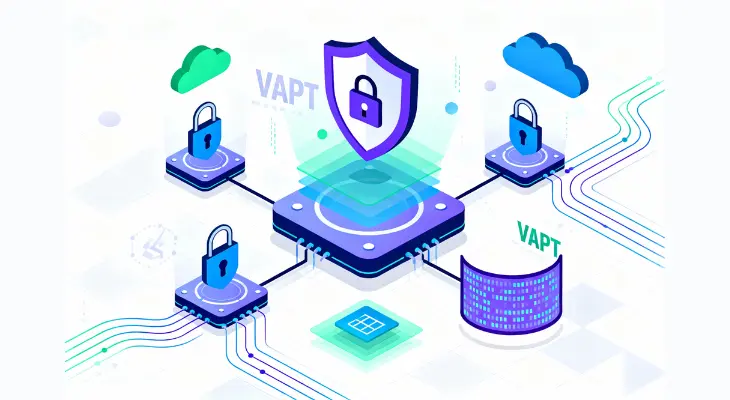
Find the Best Cybersecurity Solutions for Your Organization in 2025: Your Complete Guide to VAPT, SASE, and Network Security
The cybersecurity landscape has transformed dramatically. Organizations face unprecedented threats that demand sophisticated defense strategies. With the global network security market projected to reach $27.19 billion in 2025, choosing the proper protection has never been more critical. We're here to help you navigate this complex terrain. This comprehensive guide covers everything from campus network security to VAPT tools and healthcare cybersecurity solutions. Let's dive into what you need to protect your digital assets in 2025. Why Are Campus Networks Critical Security Targets? Campus networks serve as the backbone of educational institutions and large organizations. They connect thousands of users, devices, and applications daily. This massive connectivity creates vulnerabilities that cybercriminals actively exploit. Modern campus networks must handle Wi-Fi 6E/7 deployments, cloud-native architectures, and API programmability. These advanced technologies require equally advanced security measures. Without proper protection, your entire organization becomes exposed to data breaches and ransomware attacks. What Makes a Campus Network Secure in 2025? Zero Trust Architecture serves as the foundation for secure campus networks. This approach verifies every user, device, and application before granting access. No one gets in without proper authentication. Next-Generation Firewalls (NGFWs) provide advanced threat protection and traffic filtering capabilities. These intelligent systems operate across multiple network layers, offering deep packet inspection and application awareness. Network Access Control (NAC) solutions enforce security policies based on user roles and device compliance. Regular security audits and penetration testing proactively uncover vulnerabilities. You can't fix what you don't know exists. This preventive approach keeps you ahead of potential attackers. How Is Healthcare Cybersecurity Evolving? Healthcare has become a prime target for cybercriminals. The global healthcare cybersecurity market is projected to reach $82.90 billion by 2033. This explosive growth reflects the urgent need for protection in medical environments. Ransomware attacks on hospitals have surged 137% in 18 months. Attackers don't just encrypt data anymore. They engage in "double extortion," stealing sensitive patient information to demand higher ransoms. Why Are Healthcare Organizations So Vulnerable? Digital transformation has significantly expanded the attack surface. Hospitals now use cloud-based systems, electronic health records, and IoT medical devices. While these technologies improve patient care, they also introduce new vulnerabilities. Here's a shocking statistic: 68% of healthcare IoT devices run on unsupported operating systems. These outdated systems are easy prey for attackers. Telehealth platforms add another layer of complexity, requiring secure communication tools and strong identity authentication. In 2024, 92% of healthcare organizations experienced a cyberattack. This alarming figure underscores why healthcare cybersecurity spending continues to accelerate. We need robust solutions that address ransomware resilience, cloud security, and compliance requirements. Which Technologies Are Protecting Healthcare in 2025? AI-powered threat detection has become essential. Large academic medical centers report that 78% have deployed AI-powered anomaly detection tools. These systems spot unusual network behavior and insider threats faster than human analysts. Behavioral AI analytics reduce threat detection time by 40%. This speed advantage can mean the difference between containing an attack and suffering a devastating breach. Automated compliance platforms continuously monitor HIPAA controls and generate audit reports. What Is Unified SASE and Why Does It Matter? Secure Access Service Edge (SASE) represents a paradigm shift in network security. Gartner conceptualized SASE in 2019, and by 2025, it had matured into a comprehensive framework. The market has shifted decisively toward converged, single-vendor Unified SASE solutions. SASE combines networking and security services into a single cloud-delivered platform. This integration addresses the challenges of distributed work environments. You get consistent security policies regardless of user location. What Components Make Up Unified SASE? Component Function Benefit SD-WAN Optimized connectivity Faster application performance ZTNA Secure remote access Zero Trust verification SWG Web protection Blocks malicious sites CASB Cloud app security Protects cloud data FWaaS Network protection Comprehensive firewall Unified SASE provides a single pane of glass for policy management. This centralized interface consolidates previously siloed network and security tools. Your IT teams can manage policies, monitor performance, and respond to issues from one platform. Who Are the Leading SASE Vendors? Palo Alto Networks continues to dominate the SASE landscape. They've maintained leadership in Gartner's Magic Quadrant for three consecutive years. Their Prisma SASE platform combines industry-leading security with global network infrastructure. Fortinet has ascended to the leaders' quadrant in 2025. With annual recurring revenue of $1.15 billion in its SASE business, Fortinet offers excellent value. Their competitive pricing and strong SD-WAN integration appeal to cost-conscious organizations. Netskope excels in cloud security and data protection. Cato Networks pioneered the single-vendor SASE approach with cloud-native architecture. These vendors provide solutions that scale with your organization's growth. How Can You Find Vulnerabilities Before Hackers Do? Vulnerability Assessment and Penetration Testing (VAPT) forms the cornerstone of proactive cybersecurity. You need to identify weaknesses before attackers exploit them. VAPT combines automated scanning with manual testing to simulate real-world attacks. Networsys Technologies LLP stands out as a leading VAPT provider in India. We use industry-standard tools such as Nessus, Acunetix, and Burp Suite, along with manual security testing methods. This comprehensive approach ensures nothing gets missed. What Does a Complete VAPT Process Include? Our VAPT process covers four critical areas. Network VAPT identifies vulnerabilities in internal and external networks, protecting against unauthorized access. Web and mobile app VAPT simulates real-world attacks on applications to uncover security loopholes. Cloud security testing assesses your infrastructure's configuration, access controls, and data flow. We ensure end-to-end cloud protection across all platforms. Social engineering and phishing simulations test employee awareness using realistic scenarios. Which Free VAPT Tools Should You Know? Open-source VAPT tools provide enterprise-grade capabilities without licensing costs. OWASP ZAP offers full-featured DAST (Dynamic Application Security Testing) for web applications. This free tool includes automated scanning and manual testing features. Metasploit Framework remains the gold standard for penetration testing. Security professionals worldwide use this comprehensive platform for exploit development and vulnerability validation. Nuclei provides fast, customizable vulnerability scanning using templates. Here's a practical toolkit for different needs: For Professional Teams (Budget: $0): SAST: SonarQube Community + Semgrep DAST: OWASP ZAP + Nuclei API Security: Postman + mitmproxy Secret Detection: Gitleaks + TruffleHog Dependencies: OWASP Dependency-Check For Enterprises: Cloud Security: ScoutSuite + Prowler Advanced Testing: Kali Linux frameworks Reporting: Dradis + Faraday These tools cover everything from API testing to cloud security. You can build a world-class security program with zero licensing costs. What Are the Top Commercial VAPT Tools? Tool Type Best For Nessus Vulnerability Scanner Network assessments Acunetix Web App Scanner SQL injection, XSS detection Burp Suite Pro Web App Testing Manual penetration testing Qualys Cloud Platform Enterprise vulnerability management Rapid7 Nexpose Vulnerability Scanner Real-time vulnerability monitoring Commercial tools offer advanced features, dedicated support, and compliance reporting. They're ideal for organizations requiring extensive documentation and regulatory compliance. Why Choose Networsys Technologies for VAPT Services? Networsys Technologies LLP delivers comprehensive VAPT services tailored to Indian and global organizations. We're located at C-302, Tower C, Noida One, Sector 62, Noida, Uttar Pradesh 201301. Our team combines manual and automated testing to ensure comprehensive coverage. What Sets Networsys Apart? We focus on the OWASP Top 10 vulnerabilities that pose the most significant risks. Our experts prioritize the most critical web application security issues. You receive custom remediation plans tailored to your unique environment. Compliance reporting forms a core part of our service. We provide reports that meet ISO, SOC2, and PCI-DSS standards. These detailed documents help you maintain regulatory compliance and pass audits. Our experienced team brings deep expertise in vulnerability assessment. We've completed projects across various industries. Clients trust us for our proven track record and detailed reporting. How Do We Deliver VAPT Excellence? Our comprehensive approach combines cutting-edge tools with human expertise. We utilize automated scan tools alongside manual security testing methods. This dual approach launches attacks in real-life scenarios to uncover hidden vulnerabilities. You receive detailed reports with prioritized patching recommendations. We don't just identify problems—we help you fix them. Our actionable steps guide your remediation efforts efficiently. Contact us today: Email: [email protected] WhatsApp/Phone: +91-7827027504 Who Are the Top Cybersecurity Service Providers in India? India's cybersecurity market has grown exponentially. Organizations need trusted partners who understand local requirements and global standards. Several companies have established themselves as industry leaders. Which Companies Lead the Indian VAPT Market? Networsys Technologies ranks among India's most trusted cybersecurity firms. We offer world-class VAPT services with customization capabilities across industries. Our strength lies in detailed reporting and ongoing support. Other notable providers include Factosecure, which serves clients across 30+ countries. Tech Mahindra delivers VAPT and red-team services for telecom, finance, and government clients. Wipro's cybersecurity division provides services aligned with ISO 27001 and NIST standards. Indian Cyber Security Solutions and eSecForte Technologies also maintain strong reputations. These companies offer comprehensive vulnerability assessment and penetration testing services. Each brings unique strengths to different industry verticals. What Network Security Solutions Do You Need in 2025? Modern network security requires multiple layers of protection. No single solution addresses all threats. You need a comprehensive strategy that combines different technologies. How Do NGFWs Enhance Security? Next-generation firewalls have evolved beyond traditional packet filtering. Modern NGFWs identify specific applications and users and apply granular security policies. They detect sophisticated threats using advanced analytics and machine learning. Palo Alto Networks leads the NGFW market with comprehensive threat prevention. Their solutions excel in high-throughput environments with industry-leading detection accuracy. Fortinet's FortiGate series stands out for its performance-to-cost ratio. With over 50% global market share, FortiGate offers scalable solutions. Check Point Software maintains 22 years of Gartner recognition. Their proven threat-prevention capabilities excel in highly regulated industries. When Should You Consider XDR? Extended Detection and Response (XDR) breaks down silos between security tools. It collects and correlates data from endpoints, networks, cloud environments, and email systems. This holistic view helps you detect sophisticated, multi-stage attacks. CrowdStrike Falcon XDR leads with cloud-native architecture and comprehensive threat intelligence. Microsoft Defender XDR offers strong integration with the Microsoft ecosystem. SentinelOne Singularity XDR provides autonomous detection and response using AI. Organizations facing sophisticated threats benefit most from XDR. If you have limited security staff or struggle with alert fatigue, XDR's unified approach delivers significant value. How Should You Choose Your Security Solution? Selecting the right security solution requires careful evaluation. Consider your organization's size, industry, and existing infrastructure. Each solution type serves different needs. What Factors Should Guide Your Decision? Assess your current security maturity and available resources first. XDR solutions require mature security operations teams to leverage fully. SASE suits organizations with limited security staff better. Evaluate your existing technology investments and integration requirements. Organizations invested in specific vendor ecosystems find integrated solutions more cost-effective. Future-proofing matters—look for AI-driven capabilities and flexible licensing models. Compliance requirements vary by industry. Healthcare and financial services organizations need specific certifications and audit capabilities. Ensure your chosen solution provides necessary logging, reporting, and compliance features. What Does Implementation Success Look Like? Start with a comprehensive risk assessment. Understand your organization's unique threat landscape and security gaps. Consider your data types, user behavior patterns, and existing security controls. Implement a pilot program before full deployment. Test with a subset of users or applications to validate effectiveness. This approach identifies configuration issues and integration requirements early. Invest in training and change management. Security solutions work only as well as the people using them. Comprehensive training for IT staff and end-users ensures successful adoption. Your Next Step Cybersecurity threats aren't slowing down. You need proactive measures that identify and address vulnerabilities before attackers exploit them. Whether you need campus network security, healthcare cybersecurity, or comprehensive VAPT services, the right partner makes all the difference. Networsys Technologies LLP delivers the expertise, tools, and dedication you need. We combine manual and automated testing for complete coverage. Our OWASP Top 10 focus addresses the most critical vulnerabilities. Don't wait for a breach to take action. Contact us today for a comprehensive security assessment: Email: [email protected] WhatsApp/Phone: +91-7827027504 Location: C-302, Tower C, Noida One, Sector-62, Noida, Uttar Pradesh, 201301 Ready to find threats before hackers do? Let's secure your organization together. Reach out now for custom remediation plans and compliance reports that meet ISO, SOC2, and PCI-DSS standards.